Should You Free Feed or Schedule Your Dog’s Meals?
Dogs may love the idea of an all-day buffet, but free feeding isn’t doing them any favors.
Dogs may love the idea of an all-day buffet, but free feeding isn’t doing them any favors.
by Katie Koschalk, | October 8, 2025

Brothers91 / iStock
When it comes to feeding your dog, pet parents usually fall into one of two camps: those who keep the food bowl full all day (free feeding), and those who offer meals at set times (scheduled feeding). Each method has pros, cons, and no shortage of strong opinions (your dog likely votes for the always-full bowl option).
So, how do you know which one is best for your pup’s health, behavior, and routine? In this guide, we’ll break down the differences between free feeding and scheduled feeding, and explain why one option is typically recommended over the other by professionals. Plus, learn when hand feeding might be beneficial.
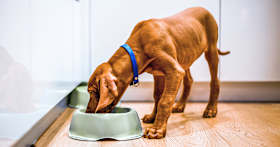
Most veterinarians and trainers recommend scheduled feeding for dogs. This means offering measured meals at consistent times each day. The best feeding schedule for a dog depends on their needs, but it’s usually twice or three times daily. You’d portion out your dog’s food, set it down for about 15 to 20 minutes, and then remove any uneaten food until the next scheduled mealtime.
Free feeding, on the other hand, means keeping your dog’s bowl full and accessible throughout the day. The idea is that they’ll eat only when hungry, like a canine version of intuitive eating. But in reality, most dogs aren’t good at self-regulating and end up eating more than they need.
Let’s take a closer look at both options and why scheduled feeding tends to be a better long-term choice.
The biggest benefit of free feeding dogs is convenience, especially for busy households. You don’t have to worry about setting mealtimes or rushing home to feed your dog. Although this setup can be appealing, it often comes at a cost to your dog’s health and routine.
Free feeding can lead to a range of issues.
Increased risk of overeating and weight gain: When food is always available, many dogs tend to eat more than they actually need. Over time, this can lead to unwanted weight gain and may contribute to digestive issues or other health problems.
Harder-to-spot health problems: When you free feed, it can be difficult to determine how much your dog is actually eating, so changes in appetite (a key sign of illness) may go unnoticed. This is especially true in multi-dog households.
Picky eating habits: Having food available at all times can cause some dogs to become picky or lose interest in certain types of food.
Training challenges: Using meals or treats as a reward is more difficult when your dog isn’t hungry or doesn’t associate food with rewards.
House training complications: With no set mealtime, it’s harder to predict when your dog will need to go to the bathroom.
Food guarding or resource issues in multi-dog homes: Leaving food out can increase competition or tension between dogs sharing a space.
Food going bad: Dry food left out too long can become stale or rancid, especially in warm or humid environments. Also, wet or canned food should never be left out for more than one to two hours, because it can spoil quickly and attract bacteria, leading to potential stomach upset or illness.

This may depend on your dog’s age and health, but it’s always important to set a routine.
Why do most veterinarians and dog trainers recommend scheduled feeding? Here’s what makes it the preferred choice.
Helps prevent overeating and obesity: Offering measured meals at specific times makes it easier to manage portion sizes and avoid weight gain.
Encourages better eating habits: Dogs are more likely to eat when food is offered if they know it won’t always be available. This can help minimize picky behavior.
Supports house training: Feeding on a schedule can regulate when your dog needs to go outside, making potty training easier.
Makes it easier to monitor appetite: With scheduled feeding, you’ll notice right away if your dog isn’t eating normally.
Improves training opportunities: Scheduled meals can be used as motivation during training sessions.
Reduces food guarding or resource issues in multi-dog homes: Meal times can be supervised, which can help prevent competition or conflict around food.
Strengthens your bond: Consistent mealtimes help your dog feel safe, supported, and connected to you.
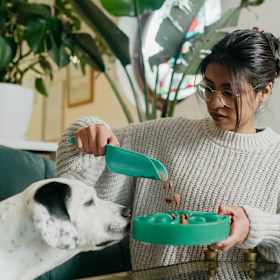
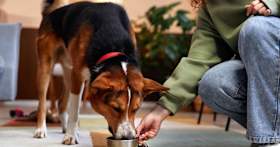
Hand feeding is when you offer your dog their meals (or parts of their meals) directly from your hand. Hand feeding isn’t something every dog needs, but in the right situations, it can be helpful. Here are some scenarios where you might consider hand feeding.
You’ve just adopted a new dog: This approach can help build trust and establish a strong bond, especially with shy, fearful, or rescue dogs adjusting to a new home.
Your dog shows signs of resource guarding: Feeding from your hand with training can reduce anxiety around food and teach your dog that meals come safely and calmly from you.
Your dog is a picky or anxious eater: Some dogs feel more comfortable eating from your hand, especially in unfamiliar environments or during stressful transitions.
You want to improve training and focus: Hand feeding allows you to reinforce cues and promote calm behavior during mealtime.
Your puppy needs help learning impulse control: Feeding small amounts at a time teaches patience and polite manners from a young age.
Your dog gulps down food too quickly: Hand feeding naturally slows down your dog’s eating, which can prevent digestive issues like bloating or vomiting.
Hand feeding doesn’t have to be a forever thing. In most cases, it’s a short-term tool used to build trust, improve behavior, or address specific issues. Once your dog reaches their goals, you can transition back to bowl feeding.
To wean your pup off hand feeding, start by offering only part of the meal by hand and placing the rest in their bowl. Over time, reduce the hand-fed portion until your dog is comfortably eating all their food on their own. You can still hand-feed occasionally during training sessions to reinforce good habits.
If your dog is used to the all-you-can-eat buffet lifestyle, they may not be too happy when you switch them to scheduled meals. But don’t worry — your pup will adjust.
Here’s how to transition them from free feeding to scheduled meals.
Start by picking mealtimes: For most adult dogs, two meals (morning and evening) works well.
Offer the food for a limited time: Put your dog’s bowl down for 15 to 20 minutes. If they don’t eat, pick it up and try again at the next scheduled mealtime.
Stick to consistent portions: Use a measuring cup or scale to portion out the correct amount based on your dog’s weight, age, and activity level. If you’re unsure how much to give them, ask your vet for guidance.
Make it positive: Use a cheerful tone and consistent routine to signal it’s time to eat. You can even use part of the meal as a training opportunity with basic cues.
Don’t cave to begging: Your dog may seem confused or try to beg for food outside of mealtimes, especially at first. Stay consistent and avoid giving in — this phase will pass.
It may take up to a week for your dog to fully adapt to their new mealtime routine. If you’re concerned that your dog is showing signs of distress during this transition, check in with your vet, a trainer, or a behaviorist.
Free feeding isn’t always harmful, but it often leads to overeating, obesity, and picky eating. This also makes it harder to spot appetite changes that could signal illness. Most vets and trainers recommend scheduled feeding for better long-term health and behavior.
Feeding a healthy adult dog once daily isn’t necessarily cruel, but it may not be ideal. Many dogs do better with two meals a day to maintain steady energy levels, support digestion, reduce hunger, and reinforce routine.
How much food your dog needs will depend on their age, weight, activity level, and the type of food you’re feeding them. Always start with the feeding guidelines on the dog food label, then adjust as needed. Your vet can help determine the right amount for your pup as well.
“Expert Q&A: Understanding Pet Food.” UW School of Veterinary Medicine, 6 May 2024, www.vetmed.wisc.edu/expert-qa-understanding-pet-food.
“How Often Should I Feed My Pet?” Petfoodology, 8 Feb. 2021, sites.tufts.edu/petfoodology/2021/02/08/how-often-should-i-feed-my-pet.
“Re-Evaluating Your Dog’s Diet.” Cornell Richard P. Riney Canine Health Center. www.vet.cornell.edu/departments-centers-and-institutes/riney-canine-health-center/canine-health-information/re-evaluating-your-dogs-diet.

Katie Koschalk is a freelance writer based in Northern California. Fusing her love and knowledge of animals with her journalism degree and years of professional writing, Katie is dedicated to improving the lives of pets and their caretakers by sharing helpful and accurate information. When she’s not at her desk, you can find her exploring trails with her Aussie, Hunter, cooking plant-based meals, and talking to her two cats, Jax and Sadie, in really ridiculous voices.
Pet Wellness
Pet Wellness

Shelters & Rescue
Behavior & Training
Is this actually possible, or an urban myth? We get the lowdown.

Adoption Advice
Help your underweight puppy achieve a healthy weight with these expert tips and feeding strategies.

Behavior & Training
Is your dog staring you down while you eat? Learn when and how to set boundaries.