Why Your Dog Doesn’t Listen to You Outside — and What You Can Do About It
It’s nothing personal — they’re just distracted. But there are ways to get them back on track.
It’s nothing personal — they’re just distracted. But there are ways to get them back on track.
by Karen B. London, PhD, CAAB, CPDT-KA, | August 20, 2026

S Fanti/peopleimages.com
You call your dog to come at the dog park, and…crickets. Not even an ear twitch. The same thing happens every time you clip on the leash: You step outside, and suddenly your sweet, attentive dog acts like you’ve been wiped from their memory. Your “sit” or “watch” cues? Background noise. Their own name — who’s that? They’re way too busy smelling every blade of grass, eyeballing the birds or squirrels, and barking a greeting to the entire universe.
If this sounds familiar, you’ve got plenty of company. Tons of pet parents watch their pups — so polite and responsive at home — forget every bit of training the second those paws hit the pavement. Why does that happen when they clearly know what to do at home?

Six tips and tricks to get your dog to listen to you.
Don’t panic. This is super-common. The key is remembering that your dog is not ignoring you to be difficult. They’re just incapable of doing what you’re asking (yet). The outside world is a whole new level of stimulation: new sights, sounds, and smells. It’s sensory overload central, and you can hardly blame your dog for being overwhelmed, distracted, overstimulated, or interested in something else. Let’s unpack why your dog tunes you out once you leave the house, and what you can do about it.

valbar STUDIO / Stocksy
Your dog may crush it indoors, but outside? It’s chaos out there. There are squirrels — actual squirrels — plus children running about, toys to play with, other dogs to chase, and oh, the smells (so many smells). Compared to all that, your “come” doesn’t even make the highlight reel.
Dogs don’t generalize well, so just because they’re nailing a cue in your living room doesn’t mean it automatically transfers to the wild outdoors. Training is about practicing in lots of places and situations, gradually increasing the difficulty. Repetition is your BFF when it comes to training dogs outside.
When your dog ghosts you outside, take a breath — and take notes. This is valuable info. The situation is too hard for your dog right now. Try to figure out what has your dog’s attention. Is it the breeze, the other dogs around, all the fresh smells in the grass, the sound of children playing?
Your dog cannot succeed in this moment, so stop repeating the cue. Saying “come” 50 times won’t suddenly make it work. Instead, adjust the situation in some way to make it easier for your dog. Maybe get closer to your dog, wait for the distractions to fade, or grab a squeaky toy to recapture their focus. The goal is to set them up to win, because you win when they do.

Alina Hvostikova / Stocksy
Don’t blame your dog. This isn’t them being bad. It’s just a gap in training, not a failure. And sure, it’s tempting to get frustrated (especially when people are watching), but resist the urge to lose your cool. Don’t be mean to your dog or get upset with them. Of course, you should never be mean to your dog or get upset with them — but I mention it here because in this situation, it can be so tempting to explode and become angry. Also in the “don’t” category: Don’t keep giving the cue. If it’s not working right now, repeating it dozens of times won’t magically change that.
It’s hard to stay calm when your dog ignores you, especially when it feels like people are watching and judging. But seriously, take a deep breath. This is normal. Training is always a work in progress. Instead of getting mad, take this moment as a chance for feedback, not as a failure. This incident — whatever it is — helps you learn where to focus your efforts next.
OK, a note on safety first: If your dog is ever off-leash, make sure they’re rocking a collar and an ID tag — and that ideally, they’re in a fenced area. No trust fall moments here, please — crossing your fingers and hoping everything goes well is not a plan. The better their recall gets, the more freedom they can enjoy. But it’s your job to keep them safe while they learn. Here’s how you can level up your training.
Start small — and I do mean small. Pick a low-distraction area — a quiet stretch of space when you are out walking, wherever your dog seems bored, the backyard, etc. — and practice a few cues there.
Add in more distractions slowly. Gradually work with more distractions as your dog improves, over weeks or even months.
Use awesome reinforcement. Top-shelf treats, favorite toys, even a car ride.
Keep your training lessons short. Keep sessions short (30 to 60 seconds of focus is plenty, especially in tough settings), and pay attention to your dog’s vibe. If they’re checked out, it’s not the time to push them. Either make things easier or take a break.

Offering fewer treats can actually be a good thing.
For your dog, outside has a completely different feeling than inside: It’s more interesting, more fun, and just plain better. They love it out there, and you are making their life amazing every time you leave your home and hit that fresh air for new smells, new sights, new adventures. (Yay, you.) But because the outside is so thrilling, it takes extra training to help your dog stay tuned in to you.
With an understanding of the reasons for the challenge, practice, patience, and of course, plenty of time outside with your dog, you’ll both get there. More walks, more progress, more joy. You’ve got this, and your dog does, too.
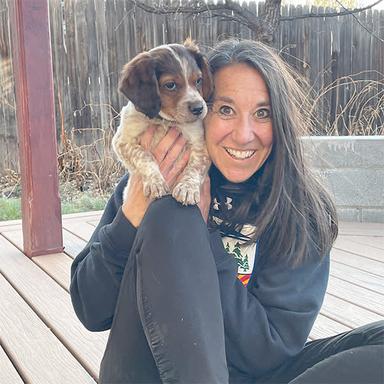
Karen B. London, Ph.D., is a Certified Applied Animal Behaviorist and Certified Professional Dog Trainer who specializes in working with dogs with serious behavioral issues, including aggression, and has also trained other animals including cats, birds, snakes, and insects. She writes the animal column for the Arizona Daily Sun and is an Adjunct Professor in the Department of Biological Sciences at Northern Arizona University. She is the author of six books about training and behavior, including her most recent, Treat Everyone Like a Dog: How a Dog Trainer’s World View Can Improve Your Life.

Behavior & Training

Behavior & Training

Behavior & Training

Behavior & Training
In between cuddle sessions, work on these eight basic cues with your pup.

Behavior & Training
You know those obstacle courses dogs do at competitions? Your dog can do that, too.

Behavior & Training
Dogs need attention, love, and a trusting connection with their pet parent.

Behavior & Training
A study says sleep may help your pup better retain new skills.

Behavior & Training
Offering fewer treats can actually be a good thing.

Lifestyle
You’re probably doing it without even realizing.