Mini Australian Shepherd: What to Know Before Adopting This Herding Breed
Energetic and eager to please, this pup can be a dream dog for an active family.
Energetic and eager to please, this pup can be a dream dog for an active family.
by Jackie Brown, | March 4, 2025
Helen Rose Gabriel / Adobe Stock
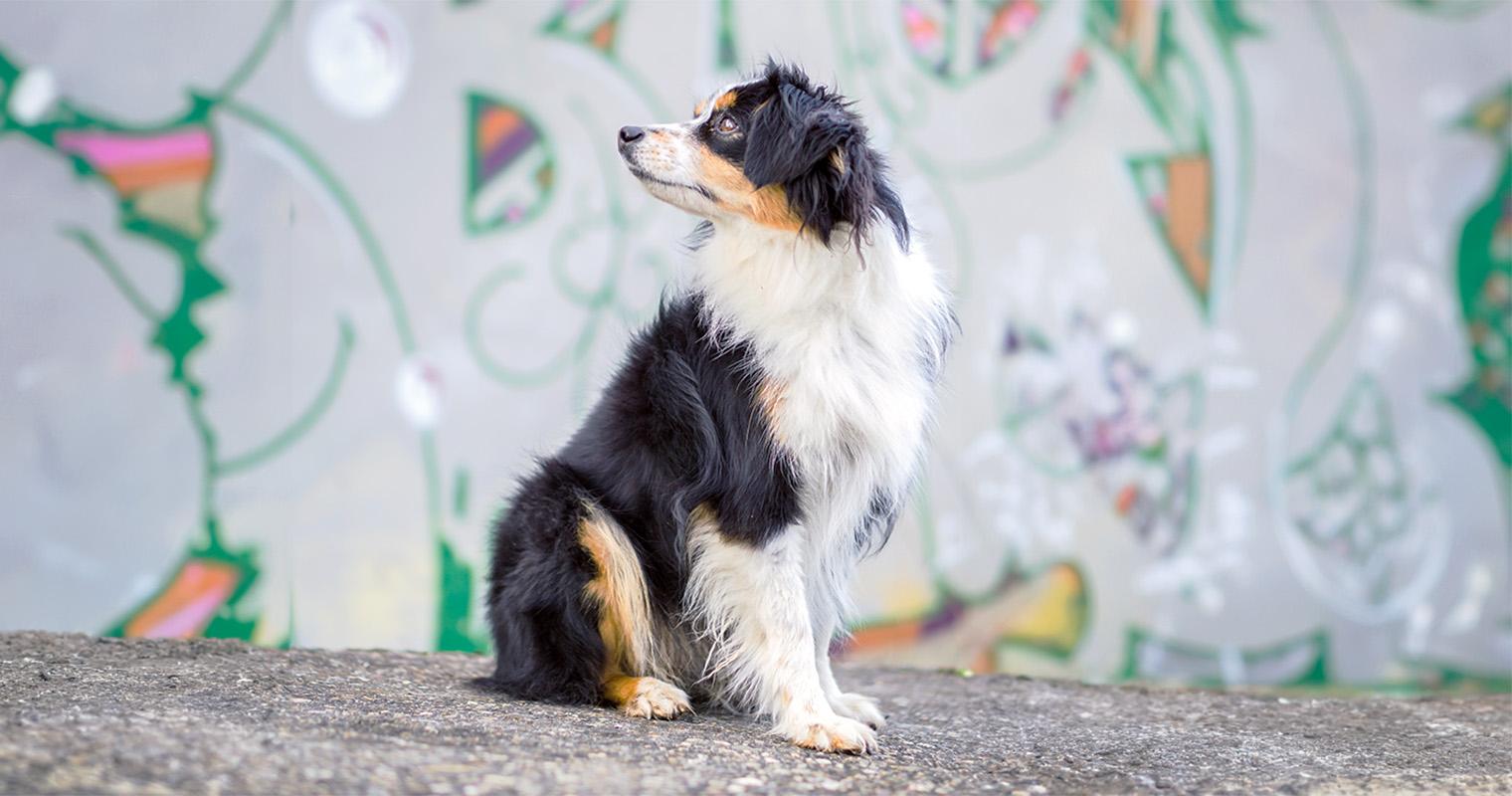
The Miniature Australian Shepherd (also called the Miniature American Shepherd) is a small-size herding breed similar to the larger Australian Shepherd, both in looks and personality. The Miniature Australian Shepherd is a popular pet thanks to their compact size as well as their intelligence, trainability, athleticism, and friendly nature. Despite their small statures, Miniature Australian Shepherds are far from low maintenance: They have lots of energy and require special attention and care to thrive. Read on to learn more.
Mini Aussies are a great fit for active families with plenty of time for training and exercise, and love to include their dog in everything they do. It’s important to understand both the positives and challenges before deciding to bring one into your home.
TL;DR: Mini Australian Shepherds are known for their intelligence, energy, and loyalty, making them great companions for highly active individuals or families. However, they require a lot of exercise, mental stimulation, and grooming, which may not be ideal for everyone.

Saving Hope Rescue
Mini Australian Shepherds are smart dogs who are both energetic and affectionate. They are well-suited for active families and individuals seeking a loving and highly trainable dog. Let’s explore some Miniature Australian Shepherd character traits.
Friendly, smart as a whip, and always up for an adventure, Mini Aussies get along with everyone, including kids and other pets. They are happiest when they are included in everything the family does.
Mini Aussies are highly intelligent and eager to please
They’re loyal and affectionate with family members
Plus, they’re good with children and other pets when socialized early
Like their larger cousins, the Australian Shepherd, the Mini Aussie is a herding dog with high energy levels and a drive for activities that challenge their mind and body. These pups love to stay active and typically need about an hour of exercise each day or more to keep them happy and healthy.
Great for outdoor activities such as hiking or as a running partner
Excellent companions for active individuals or families
Perfect partners for agility or flyball training
When it comes to grooming, Miniature Australian Shepherd care is fairly simple. Their medium-length, straight-to-wavy double coat is wash and wear, with no trimming necessary. Mini Aussies do shed, but you can keep this under control with regular brushing and the occasional bath.
Typical grooming for a Mini Aussie includes:
Regular brushing to manage shedding
Bathing every two months or so
Bi-weekly nail trimming and ear cleaning
Daily teeth brushing
Miniature Australian Shepherds are generally healthy, but like all breeds, they are prone to certain genetically linked diseases and conditions. Regular veterinary checkups and early detection of these conditions can lead to better outcomes.
Common health issues in Mini Australian Shepherds include:
Elbow dysplasia
Patellar luxation
Degenerative myelopathy
Von Willebrand disease
Multidrug resistance mutation (MDR1)
Eye disorders, including Collie eye anomaly, progressive retinal atrophy (PRA) resulting in blindness, and cataracts
Mini Aussies are quick learners and want to please their people, so training is usually quite easy. That being said, don’t be fooled by the “easy to train” label. Training dogs really takes time — think months (or even years), not just a few days. It’s not something that happens overnight, no matter what the breed is. Early positive exposure to lots of people, other animals, and various places helps them grow into friendly, adaptable pets.
Some of the best activities for Mini Australian Shepherds include:
Hiking
Fetch and Frisbee
Camping
Swimming
Agility
Flyball
Herding
Obedience training

Yuval Helfman / AdobeStock
Mini Australian Shepherds can make great pets, but their high energy and potential for behavioral issues can be challenging for some pet parents. This breed is not always ideal for first-time adopters who might not be well-positioned to provide the training, exercise, and attention the Mini Australian Shepherd needs to thrive.
Mini Aussies are smart and respond well to training, but they do need consistent training and clear leadership to be their best. Despite their smaller size, Mini Aussies need just as much physical activity and exercise as larger Aussies.
The breed also has high attention needs: A Mini Aussie will not be happy if left home alone for extended periods. Without enough daily exercise, mental stimulation, and attention, some Mini Aussies can develop behavioral issues, including excessive barking, destructive chewing or digging, or even separation anxiety.
Wondering if the Mini Australian Shepherd is right for you? Before adopting, consider if your lifestyle and personality traits are a good fit for a Mini Aussie.
Here is a checklist to determine if this pint-sized herding breed might work well with you and your family:
Active families or individuals who enjoy lots of outdoor activity
People who like bringing their dog with them everywhere they go
Pet parents willing to devote time for daily exercise, training, and mental stimulation
People with experience owning energetic and intelligent dogs
Pet parents who don’t mind a little dog hair in the house
The easiest way to find your future canine soulmate is to search on Adopt a Pet and sign up for Adopt a Pet’s New Pet Alerts, which will send you all the available Aussie puppies and dogs near you.
A Mini Australian Shepherd needs a minimum of 60 minutes of exercise every day, but more is always better. Also, you need to make sure they get an additional 30 minutes (or more) of mental stimulation each day in the form of training sessions or play.
Mini Australian Shepherds get to be about 20 to 40 pounds when full grown. Some might be smaller and others might be a little larger than this average.
Yes, Mini Australian Shepherds are healthy dogs in general. However, as with all purebred dogs, there are some health conditions common to the breed. Any health concerns can be managed with attentive care and regular veterinary exams.
Yes, Mini Australian Shepherds can be a good fit for apartment living due to their smaller size. But to make this arrangement work, they need large amounts of daily exercise and opportunities for playtime outdoors. Mini Aussies who don’t get enough exercise, brain stimulation, and attention might not be happy living in small spaces.
Yes, most Mini Australian Shepherds get along with other pets as long as they were well socialized in puppyhood. Some might chase or herd smaller pets, but if it’s problematic, this can be managed with training.
The biggest challenges to expect with a Mini Australian Shepherd are providing them with adequate daily exercise, training, and attention. Without these, Mini Aussies can develop unwanted issues such as excessive barking, chewing or digging, or separation anxiety.
A Mini Australian Shepherd might be right for you if you enjoy lots of daily activity outdoors and you like taking your dog with you wherever you go. Pet parents with experience training highly active and intelligent dogs are best for Mini Aussies.
Mellersh, Cathryn S., et al. “Mutation inHSF4Is Associated with Hereditary Cataract in the Australian Shepherd.” Veterinary Ophthalmology, vol. 12, no. 6, Nov. 2009, pp. 372–378, https://doi.org/10.1111/j.1463-5224.2009.00735.x. Accessed 30 July 2022.
Wilson, Bethany, et al. “Prevailing Clusters of Canine Behavioural Traits in Historical US Demand for Dog Breeds (1926–2005).” Animals, vol. 8, no. 11, 6 Nov. 2018, p. 197, https://doi.org/10.3390/ani8110197.
Yeh, Connie Y, et al. “Genomic Deletion of CNGB3 Is Identical by Descent in Multiple Canine Breeds and Causes Achromatopsia.” BMC Genetics, vol. 14, no. 1, 20 Apr. 2013, https://doi.org/10.1186/1471-2156-14-27.
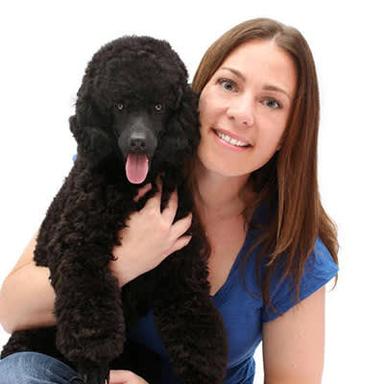
Jackie Brown lives in sunny Orange County, CA, where she works as a freelance writer and editor. When she’s not on deadline, you can find her paddling her outrigger canoe in the Pacific Ocean or hiking in the foothills with her miniature poodle and two young boys.
Breed Info
Breed Info

Breed Info

Shelters & Rescue
These dog breeds often fill shelters — discover the reasons behind their frequent surrenders.
Breed Info
If you love being outside and are looking for a pup who’ll share in that enthusiasm, check out these dogs who are happiest when they’re active.
Adoption Advice
New rescue dog? Don’t panic — here’s your survival guide for the first few days and how to connect with your new best friend.

Adoption Advice
Are you new to dog adoption? We’ve got you covered with this comprehensive checklist. It’s everything a first-time pet parent needs to prepare for their new pup.
Adoption Advice
Find out how to set your adopted rescue dog up for success.
Pet Wellness
Curious about how to feed your new dog? This guide will answer your questions.