Do Hypoallergenic Cats Exist? Tips to Manage Cat Allergies
Do you suffer from allergies? Some cat breeds may offer you relief from dander allergies.
Do you suffer from allergies? Some cat breeds may offer you relief from dander allergies.
by Kelly Villa, | June 28, 2025
BONNINSTUDIO / Stocksy
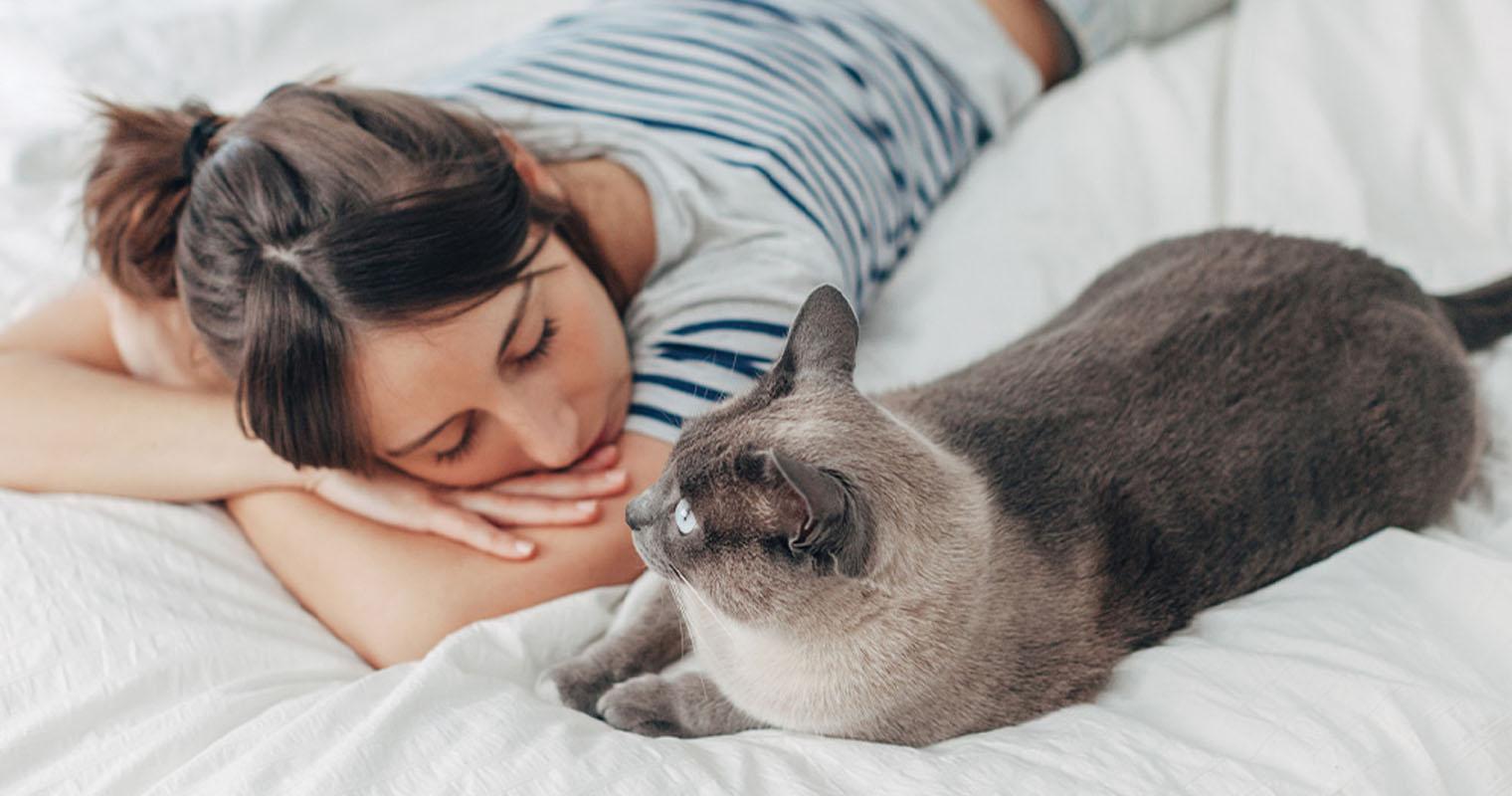
So, you love cats. But they make your eyes water and itch, and you sneeze your head off every time they walk into a room. You’re not alone: Allergies to dogs and cats affect 10 to 20 percent of the population. Sadly, research shows that nearly 19 percent of pet parents who have relinquished a cat reported doing so because of allergies. Here’s the good news: Cat parents (or aspiring cat parents) with allergies who are determined to bring a feline friend into their lives, and keep them for many years to come, can successfully do so.
The truth is, there’s no such thing as a hypoallergenic cat (or any other pet, for that matter). Some breeds might produce lower levels of the protein Fel d 1, which contributes to causing fewer allergy symptoms. Low-shedding cats can still trigger allergies but they may be better for some people with low-level allergies because cleaning up allergen-causing proteins might be easier when there is less fur floating around. Still, the dander in fur isn’t the only source.
Cat allergies are caused by a reaction to the proteins found in a cat’s dander, saliva, urine, skin, and even their feces. Some cats might produce less of these proteins or are less likely to shed them, but all cats lick themselves when grooming, making it easy for them to spread these allergy-inducing proteins to your body and cause a reaction. Allergens are also carried where they settle on carpets, furniture, and even a person’s hair or clothing.
Yes, ‘hypoallergenic cats’ can cause allergic reactions. And just because a cat breed is considered hypoallergenic doesn’t guarantee that every individual cat of that breed will be allergy-friendly or that they won’t cause an allergic reaction for you. Choosing a cat that doesn’t trigger your allergies will take some trial and error, but there are steps potential cat parents with allergies can take to help reduce the effect of their allergies before adopting a cat.
For example, age, neuter status, and sex all affect allergen levels. All female cats and neutered male cats tend to produce lower levels of the most common allergen (Fel d 1) compared with unneutered males, so those with allergies would do better to adopt a female cat or neutered male cat. People with allergies should also consider adopting an adult cat because kittens produce fewer Fel d 1 proteins and may give you a false reading on how your allergies will react once they grow into adults. You can and should also do trial petting sessions before committing to adoption and know exactly how you’ll react.
There are also tests that can determine a cat’s allergen levels using only their saliva, but they can cost hundreds of dollars.
Cat lovers with allergies should consider the following potential cat breeds. Still, it’s important to meet, play with, and interact with the individual cat you plan to adopt to be safe.
2059797446 / Shutterstock
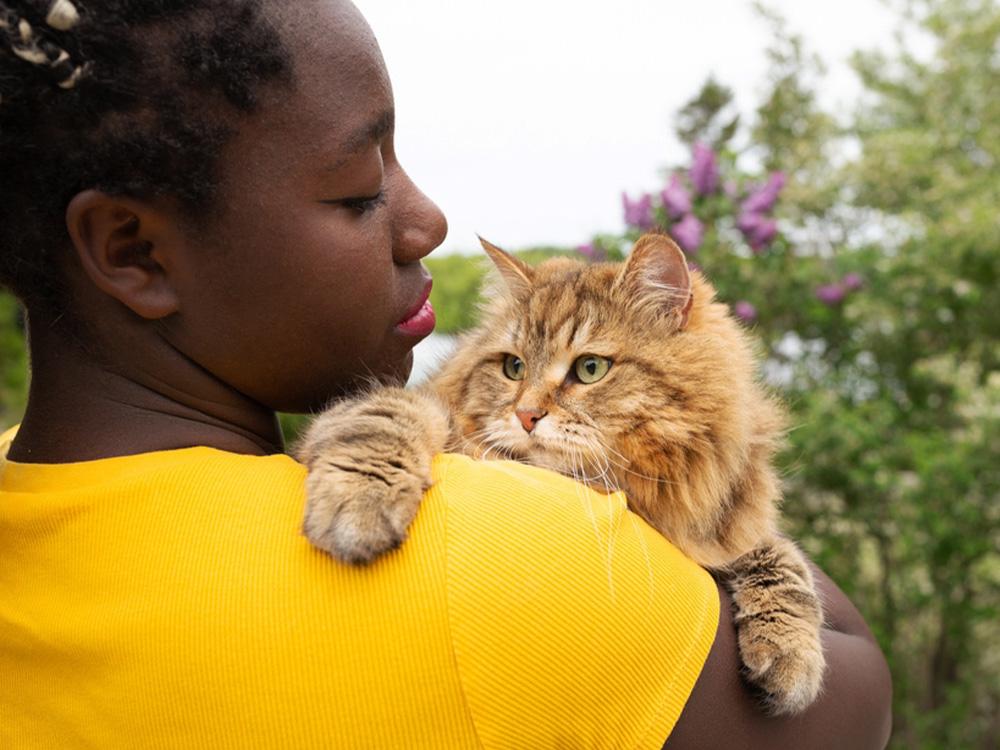
Despite the Siberian’s long, dense coat, some researchers suggest that this breed is the most allergy-friendly cat because they produce different levels of Fel d 1 protein, the main protein that causes allergies, than other cats. These Russian domestic cats, sometimes called Siberian Forest Cats, have very calm dispositions, are quite friendly, and are good with kids and other animals, but they’ll often pick one person in the household to be especially close to.
Height: 11 to 14 inches
Weight: 10 to 20 pounds
New Africa / Shutterstock
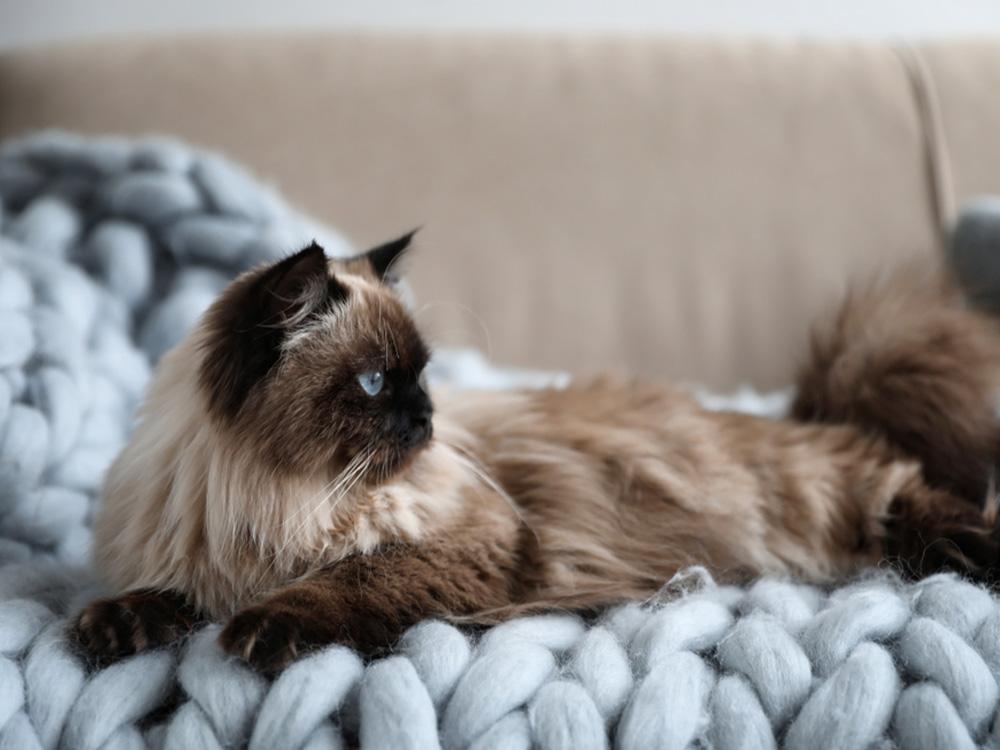
The Balinese, along with the Siberian, is one of a few cat breeds that might produce less Fel d 1 protein than other breeds. This long-haired cat breed has the point coloration as the Siamese and are bred to be very friendly and outgoing — they’re talkative and will let you know if they’re not getting enough pets.
Height: 8 to 13 inches
Weight: 5 to 12 pounds
Heng Yu / Stocksy
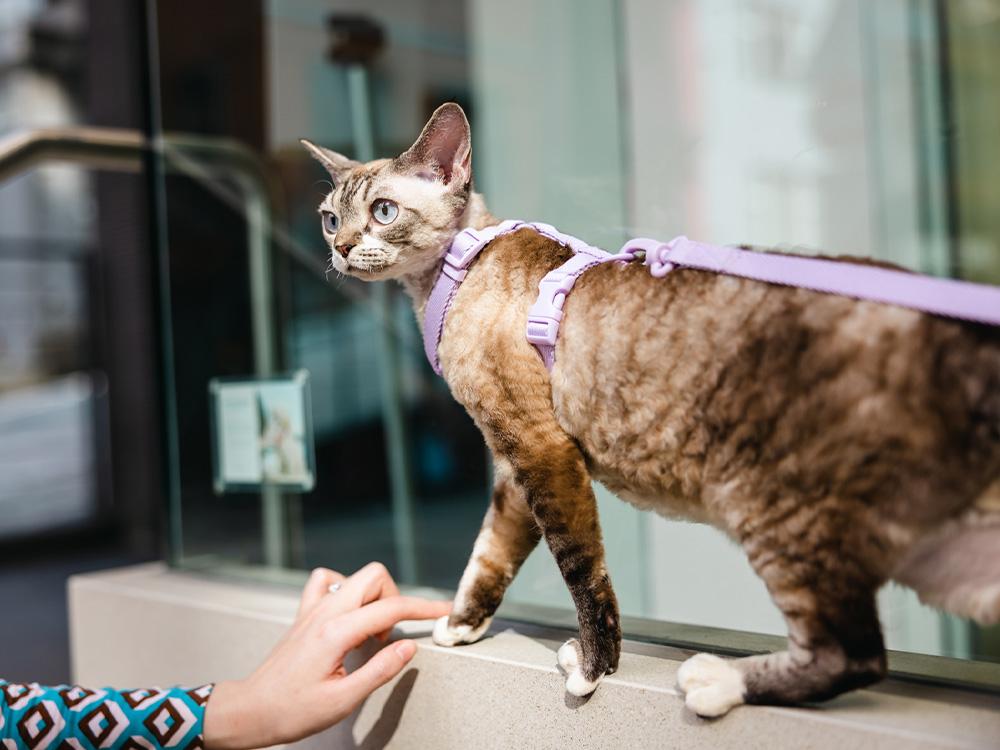
The Devon Rex has a very notable coat: their short, soft, curly, and resembles hair more than fur. These cats shed less than many other cat breeds and can even sometimes be patchy or partially bald. This breed requires regular bathing to prevent the build-up of oil on their skin (which also helps prevent the spread of allergens). They have a distinct look, with oversized ears and eyes and a narrow chin, and are often on the smaller side. They need mental stimulation and can enjoy learning new tricks.
Height: 10 to 12 inches
Weight: 5 to 10 pounds

Lucas Ottone / Stocksy
Sphynx cats are probably the most famous of the “hypoallergenic” cats because their hairlessness makes them instantly recognizable. These hairless cats still produce allergy-inducing dander. Because of their hairlessness, this breed needs help regulating their body temperature in cold weather but they are generally willing to wear fun outfits, so that’s a bonus. They require a skin care regimen that most other cats do not because their oily skin is not protected by fur. These cats need consistent maintenance from their pet parents, including regular baths and being checked for recurring acne. Yup, these cats get pimples.
Height: 8 to 10 inches
Weight: 6 to 12 pounds
547804313 / AdobeStock
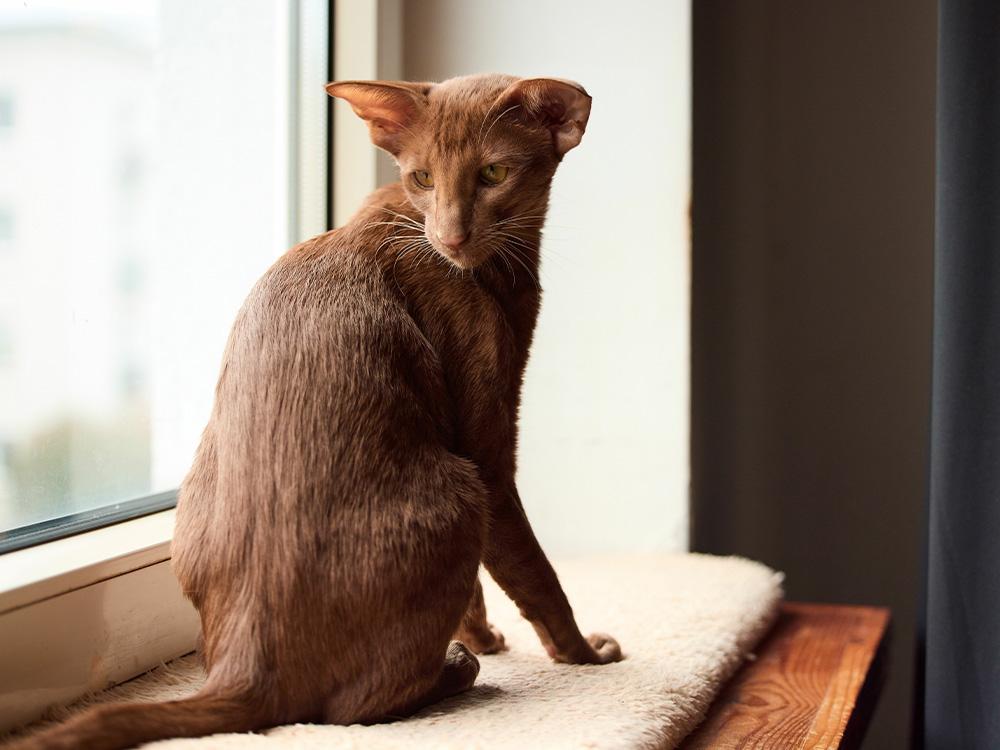
The lithe and muscular Oriental Shorthair cat may produce fewer allergens thanks to their short low-shedding coats. They self-groom but like to be brushed occasionally and appreciate focused attention from their pet parents and the company of other cats. These intelligent felines have batwing-like ears, long tapered noses, and meow with a distinctive honk.
Height: 8 to 10 inches
Weight: 6 to 12 pounds
Chelsea Victoria / Stocksy
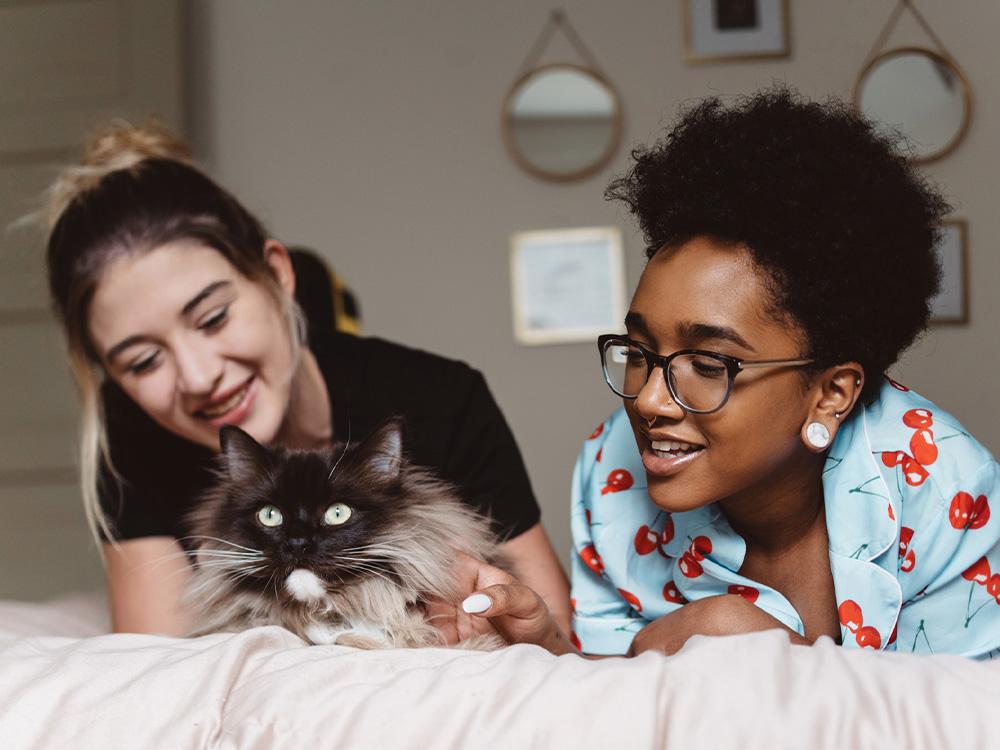
The Ragdoll’s plush coats are as soft as a cloud, making them irresistible to snuggle up with, but their semi-long coats shed minimally, so allergy sufferers may find that they have a milder reaction to this breed. These cats have a gentle and affectionate nature and are always eager to be by your side and shower you with love.
Height: 9 to 11 inches
Weight: 10 to 20 pounds
oxico / iStock
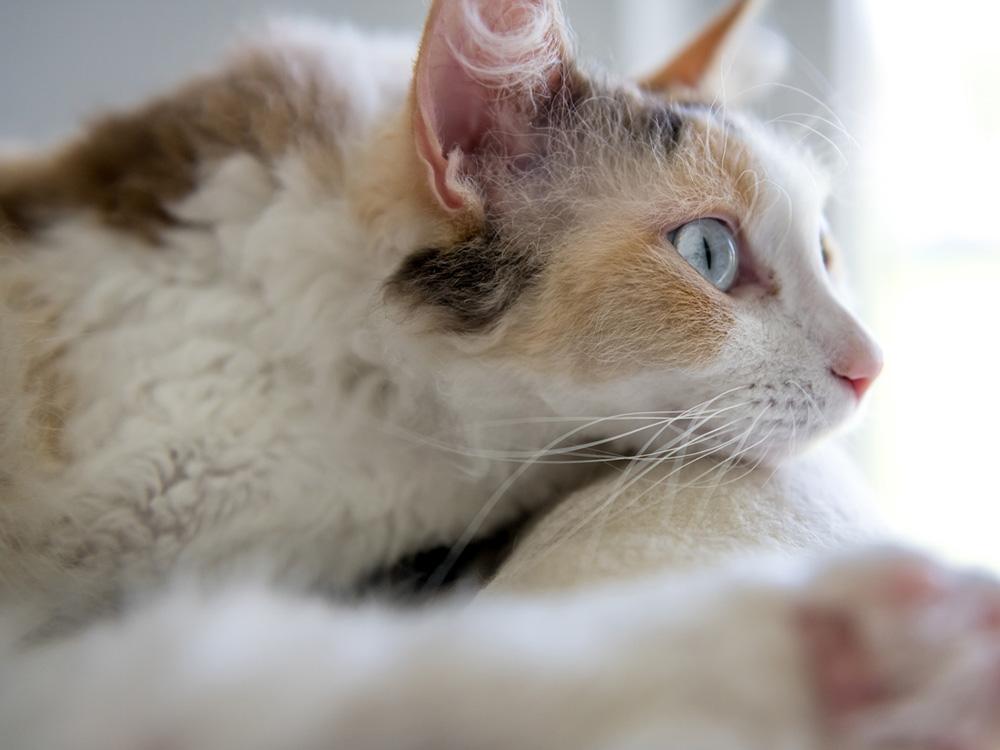
With short, low-shedding, curly coats, LaPerms are not very high maintenance and may be ideal for some allergy sufferers. They’re a hardy breed and aren’t associated with any particular health problems outside of what one would normally expect from any pet. Brushing them once a week or more during high shedding seasons will help keep them free of mats.
Height: 6 to 10 inches
Weight: 6 to 12 pounds
Michela Ravasio / Stocksy
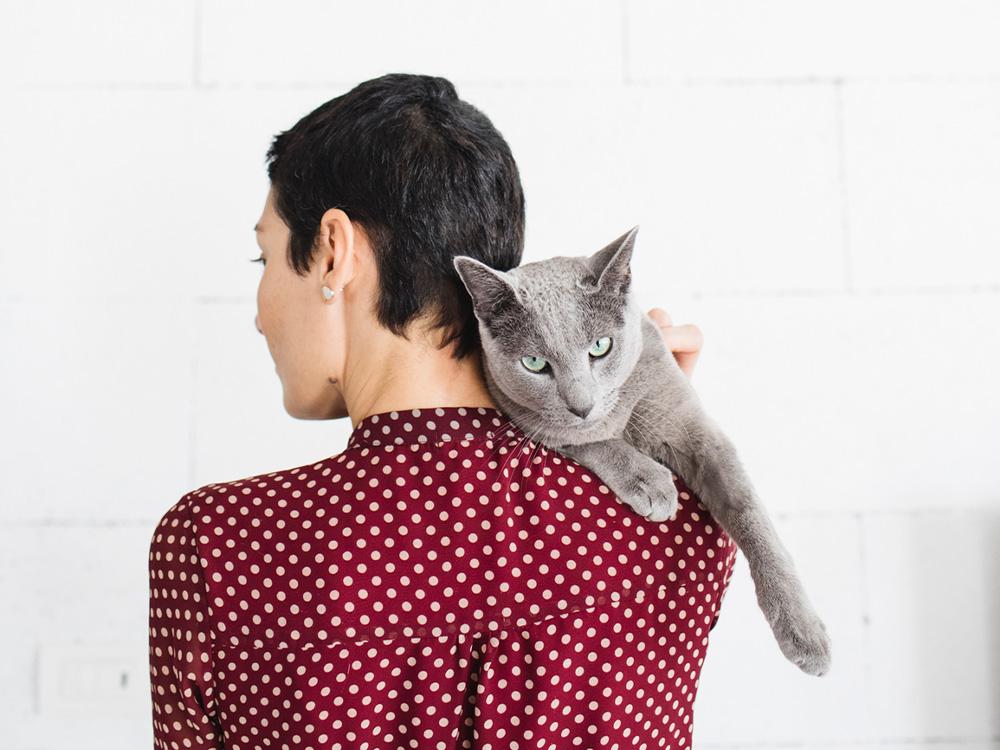
The Russian Blue can be a cool gray or a vibrant silver shade and often looks like a more elegant house cat in size and muscularity. They have high cheekbones and big, round eyes that are usually a lovely green shade. Though they have thick coats, they don’t shed very much and may produce low levels of the protein allergen most people react to. They like to talk but aren’t terribly loud, so you can enjoy many quiet back-and-forth convos together.
Height: 10 to 12 inches
Weight: 7 to 15 pounds
pyrozenko13 / AdobeStock
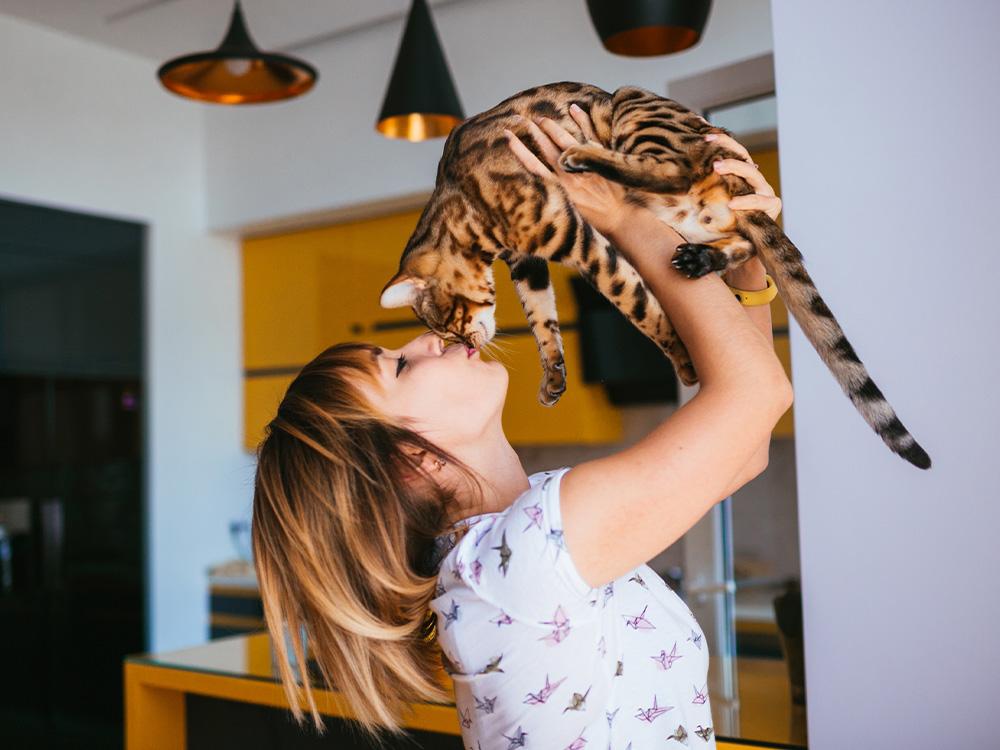
Bengal cats not only look different than most other cats thanks to being a wild hybrid cross with an Asian Leopard Cat, but they also don’t shed as much as other breeds. They also only have a single coat, so regular brushing should help contain their fur, and they do not self-groom as much as typical domestic cats, so they may spread fewer allergens. These strong, high jumpers have beautifully distinct, spotted coats, striped tabby-like bellies, and large pointed ears.
Height: 13 to 16 inches
Weight: 6 to 15 pounds
TaniaVdB / Pixabay
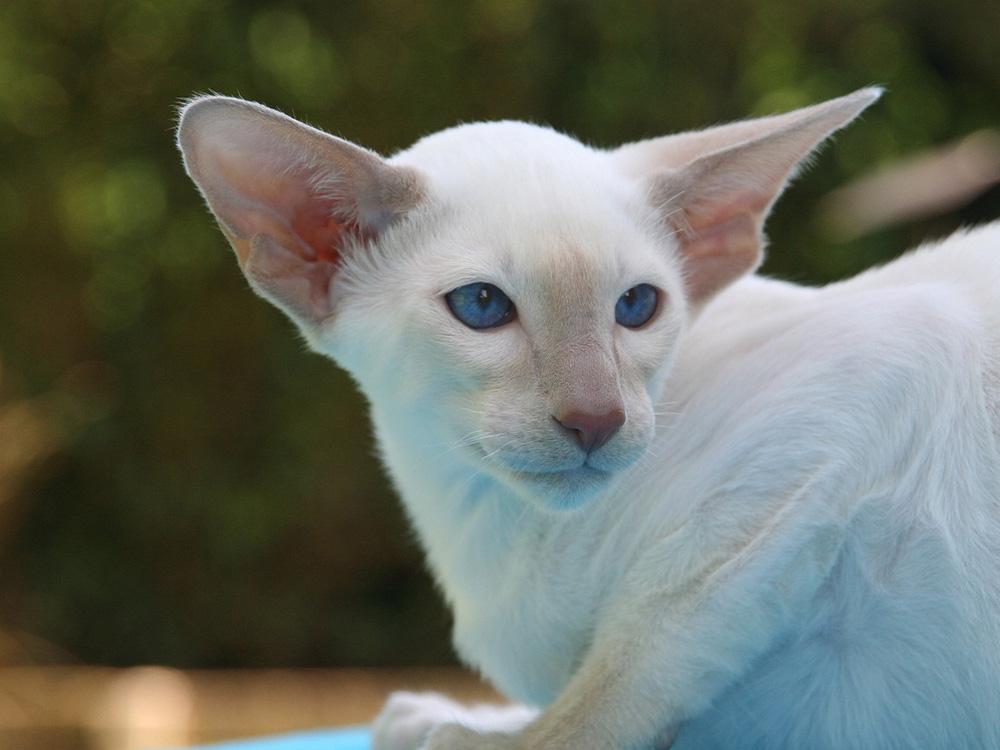
Javanese cats have short coats, no undercoats, and typically shed less than other cats, which leads them to produce fewer allergens than other cats. Related to the Siamese, this breed is very loyal to their people and good-natured but has a serious demeanor. They like to snuggle and sleep by your side and can have all different color coats, including white.
Height: 8 to 10 inches
Weight: 8 to 12 pounds
LARISA SHPINEVA / Shuterstock
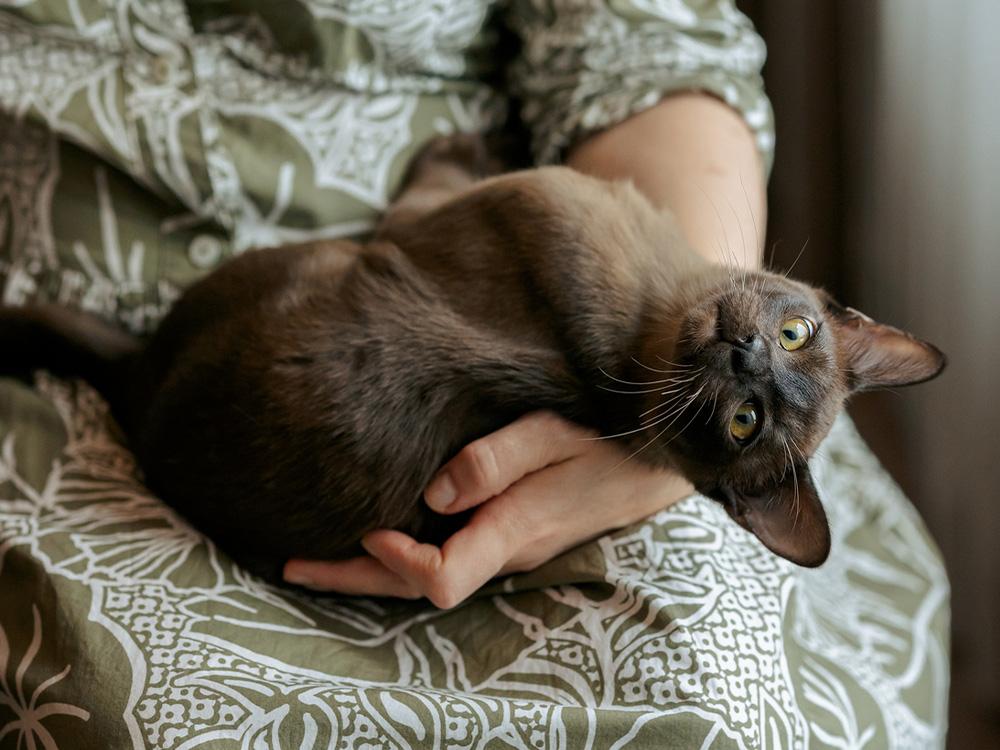
Burmese cats are also related to the Siamese and have short low-shedding coats, which might be suitable for some allergy sufferers. This breed is often compared to dogs because they love learning tricks and playfulness. They will also talk your ear off; Burmese cats love to meow to get your attention and be cuddled. They tend to like other cats and even dogs, so they’re good for a home with a lot of stimulation and available attention.
Height: 10 to 12 inches
Weight: 8 to 12 pounds
There are a lot of strategies you can employ to minimize a reaction to cat allergens. Regularly cleaning your home, including frequently vacuuming and using a high-efficiency particulate air cleaner or HEPA filter for your HVAC will go a long way toward helping reduce allergy symptoms. So will washing your hands after petting or playing with your cat.
You can also consider keeping at least one room cat-free; the bedroom is a good choice because you spend hours at night breathing heavily with your mouth open there. At least keeping your bed off limits to your cat is worth considering, as allowing them to roll around on it spreads allergen proteins where you put your face for hours.
Bathing your cat once a week reduces allergens, but remember — not all cats are bred to be bathed, and most are not into it. For finicky cats, try cat wipes. It’s always a good idea to check with your vet before adopting a bubble bath regimen.
Vacuum frequently
Invest in HEPA filters
Keeping at least one room cat-free
Wash your hands frequently
Groom your cat outside of the house
There are hypoallergenic cat breeds that are likely to produce fewer allergens, including the Siberian, Balinese, and the Russian Blue. Some (but not all) cats within certain breeds, deemed “hypoallergenic” breeds, have been found to produce lower allergen levels, but, again, not all cats within the same breed produce the same levels of proteins. What’s more, any cat can have lower allergen levels, including those of “non-hypoallergenic” breeds such as Maine Coons, Persians, Savannahs, Bombays, and Domestic Shorthairs. Allergen levels are individual to each cat — you just may be more likely to find a match with a “hypoallergenic” breed.
Just note: A cat’s coat color, pattern, and length do not affect their level of allergens.
To help manage your cat allergies, choose a low-allergen cat, create a cat-free zone, do frequent grooming of your cat, clean your home regularly, and wash your hands after petting your cat.
People with allergies should look for low-shedding cat breeds that reduce the spread of dander. Adult cats are a good choice because they have stable allergen levels and spay or neuter your cat because it reduces allergen levels.
Yes, hypoallergenic cat breeds still produce Fel d 1 proteins and may cause allergic reactions.
Yes, there are several over-the-counter and prescription medications that can help manage cat allergies, including antihistamines, nasal sprays, eye drops, and allergy shots. Consult your doctor to determine the best treatment option.
Schmitt, Kristen A. “There’s No Such Thing as a Hypoallergenic Cat.” Smithsonian Magazine, 17 Apr. 2018, www.smithsonianmag.com/science-nature/theres-no-such-thing-hypoallergenic-cat-180968819. Accessed 30 June 2025.
“Polymorphism Analysis of Ch1 and Ch2 Genes in the Siberian Cat.” Veterinary Sciences, vol. 4, no. 4, 1 Dec. 2017, p. 63, https://doi.org/10.3390/vetsci4040063.
“Best Pets for People with Allergies.” VMBS News, 27 Feb. 2009, vetmed.tamu.edu/news/pet-talk/best-pets-for-people-with-allergies/.
tamuvetmed. “Allergy Sufferers Can Have Pets Too.” VMBS News, 30 Mar. 2017, vetmed.tamu.edu/news/pet-talk/allergy-sufferers-can-have-pets-too. Accessed 30 June 2025.
The race to deliver the hypoallergenic cat
Zavrel, Emily. “Do Hypoallergenic Cat Breeds Exist? Best Cat Breeds for Allergy Sufferers.” ElleVet Sciences, 22 Nov. 2023, www.ellevetsciences.com/pet-care/do-hypoallergenic-cat-breeds-exist-best-cat-breeds-for-allergy-sufferers/. Accessed 30 June 2025.
Butt, Ahmed, et al. “Do Hypoallergenic Cats and Dogs Exist?” Annals of Allergy, Asthma & Immunology, vol. 108, no. 2, Feb. 2012, pp. 74–76, www.annallergy.org/article/S1081-1206(11)00938-0/abstract, https://doi.org/10.1016/j.anai.2011.12.005. Accessed 20 Nov. 2019.
Sparkes, Andrew H. “Human Allergy to Cats: A Review of the Impact on Cat Ownership and Relinquishment.” Journal of Feline Medicine and Surgery, vol. 24, no. 1, 8 Oct. 2021, pp. 43–52, https://doi.org/10.1177/1098612x211013016.
doctormmdev. “Hypoallergenic Cats: The Best Breeds for Allergy Sufferers - Ambassador Animal Hospital.” Ambassador Animal Hospital, 6 July 2021, www.ambassadoranimalgreenville.com/hypoallergenic-cats-the-best-breeds-for-allergy-sufferers/. Accessed 30 June 2025.
“Study Shows a Change in Feline Diet Could Curb Cat Allergies in People.” Www.aaha.org, www.aaha.org/publications/newstat/articles/2019-06/study-shows-a-change-in-feline-diet-could-curb-cat-allergies-in-people/.
Center, Animal Health. “The Truth about Black Cats - Animal Health Center of Iowa.” Animal Health Center of Iowa, 18 Oct. 2022, animalhealthcenteria.com/the-truth-about-black-cats/. Accessed 30 June 2025.
Bastien, Berenice Camille, et al. “Influence of Time and Phenotype on Salivary Fel D1 in Domestic Shorthair Cats.” Journal of Feline Medicine and Surgery, vol. 21, no. 10, 28 May 2019, pp. 867–874, https://doi.org/10.1177/1098612x19850973. Accessed 19 Sept. 2021.
Fel d 1 levels in domestic living rooms are not related to cat color or hair length

Kelly Villa is a freelance writer and contributor to various pet publications.
Breed Info
Breed Info

Breed Info

Breed Info
Black cats are just as talkative, affectionate, curious, and loyal as their multicolored counterparts — not to mention gorgeous.
Breed Info
Here are five facts about these secret orange kitties and five breeds that come in this unique color.

Breed Info
Thinking of adopting a cat but wondering if they’ll get along with your pup? Find out which cat breeds are more dog-friendly — and dog-like.

Breed Info
Learn about the most charming and friendly cat breeds who love human company

Adoption Advice
Are you ready to bring a new cat home? These tips will help you prep your kid for their new BFF.

Foster & Volunteer
Thinking about fostering a cat? Here are 6 things you should consider before making the decision.