Do House Cats Need to be Vaccinated?
Do indoor cats really need vaccines? Here’s what you should know about cat shots.
Do indoor cats really need vaccines? Here’s what you should know about cat shots.
by Naomi Strollo, RVT, CPDT-KA, | February 24, 2024
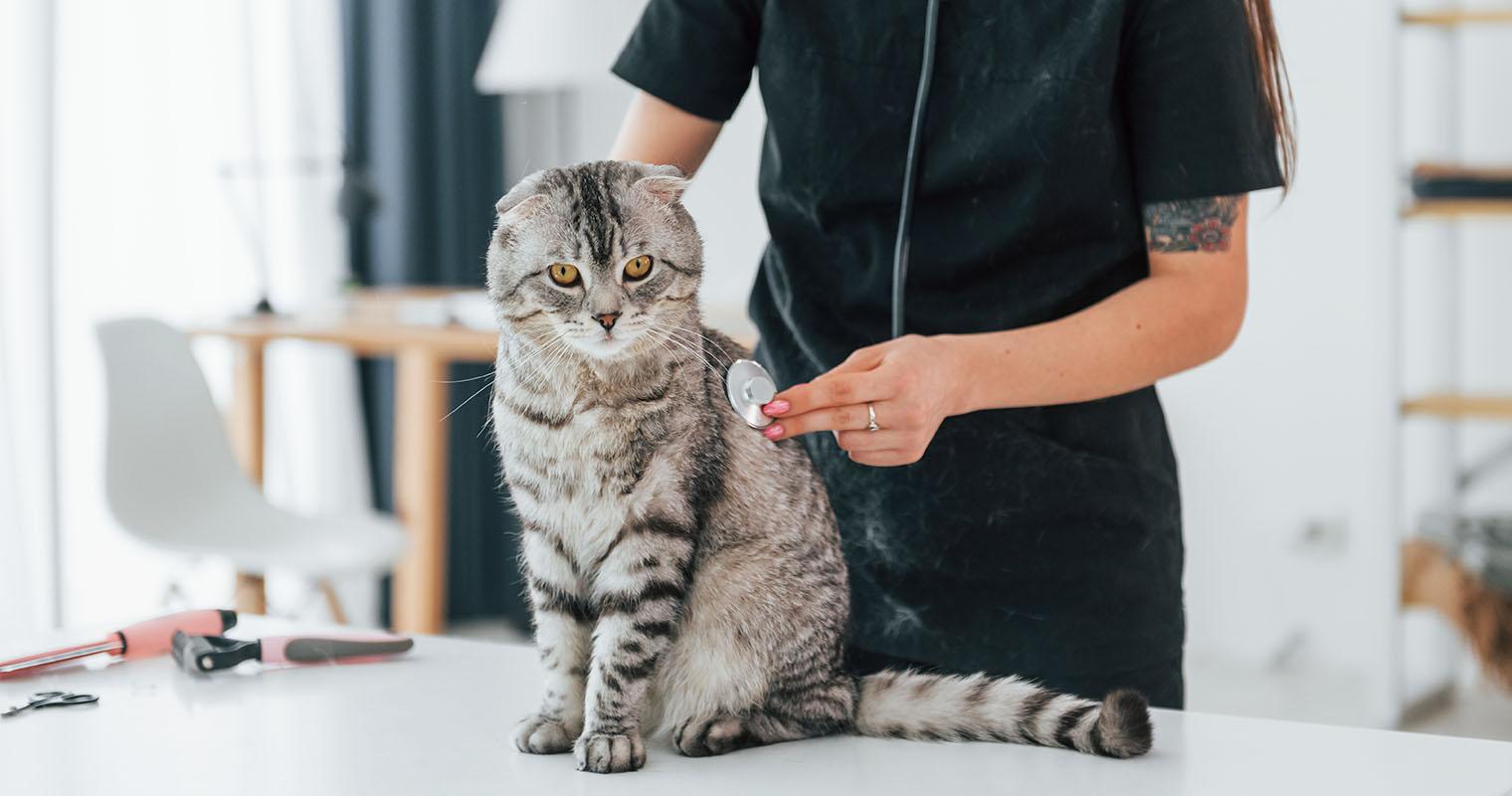
standret / AdobeStock
Does your indoor cat really need shots? And if you don’t get them immunized, will they get sick? FPV? FHV1? FeLV? Let’s face it, cat vaccines are confusing. Deciding what’s best for our pets can be a bit of a challenge, especially when healthcare information can be so confusing. But your cat depends on you to decide what medical care is best for them.
So if you’re considering adopting a house cat (or have already adopted one), here’s a breakdown of the core cat shots and why they’re needed to help you make a decision that you feel comfortable and confident with, all while keeping your cat healthy and safe.
Even if your cat lives indoors, vaccines are still a must. Many states require certain shots, such as the rabies vaccine, by 6 months old, and your vet will give you a certificate to prove it.
But legal stuff aside, vets recommend core vaccines for all cats, indoor or not. Why? Because contagious diseases are out there, and your cat could still be exposed — during a surprise escape, a grooming visit, or a stay at a boarding facility. Better safe than seriously sick.
The core vaccines, as recommended by the American Association of Feline Practitioners (AAFP) for kittens and adult cats, include the following:
Rabies (RV): Rabies is a viral infection that spreads quickly through bite wounds and exposure of an open wound from the saliva of an infected animal. Rabies is a serious disease that causes neurological abnormalities, and humans are at risk of getting this deadly infection, so it’s very important for cats (and dogs) to be vaccinated against it.
Feline distemper shot (FVRCP): The FVRCP vaccine is a combination shot that protects against more than one disease and is commonly known as the feline distemper shot. But this shot actually covers many different diseases, including feline panleukopenia virus, feline calicivirus, and feline rhinotracheitis. Each of these three diseases can be easily transmitted, so it’s important to get your cat vaccinated.
Feline Calicivirus (FCV)
Feline Rhinotracheitis, also known as Herpesvirus (FHV1)
Feline Panleukopenia (FPV)
Feline Leukemia (FeLV): The FeLV vaccination is considered a core vaccine for all cats less than one year of age. During the early stages, it is common for cats to exhibit no signs of leukemia at all. Any close contact with other cats can easily spread this difficult virus. FeLV spreads through the saliva, nasal secretions, feces, urine, and even the milk of infected cats. Casual contact, bite wounds, and nursing can all transmit the infection.
Yes, indoor cats need to be vaccinated. The feline distemper vaccines protect cats from viruses that are airborne, and the rabies vaccine is required by state law. Cats need a series of two distemper vaccines three to four weeks apart, if they are older than 16 weeks of age. If they are under 16 weeks of age, they need a series of three distemper vaccines. They would need to return one year later to get a booster.
FVRCP Combination (FPV, FCV, FHV1)
First visit: Six to eight weeks old
Second visit: 10 to 12 weeks old (or three to four weeks after the first shot)
Third visit: 14 to 16 weeks old (or three to four weeks after the second shot)
Yearly schedule: One year after the first series, then every three years
Rabies
First visit: 14 to 16 weeks old (or upon intake)
Yearly schedule: The rabies shot for cats lasts for one year after the first injection, and then three years after each subsequent booster shot, depending on state laws.
Feline Leukemia Vaccine (FeLV)
First visit: Eight weeks old (or upon intake)
Second visit: 12 weeks old (or three to four weeks after the first shot)
Yearly schedule: One year after the last dose, then every year (booster if high risk)
*Feline Leukemia Test (FELV) must be done prior to the feline leukemia vaccine. When the FeLV test is negative, then you can proceed with the vaccine.
Some shots for cats are optional and are only recommended for cats in a higher-risk environment, such as cats with outdoor access, shelter cats, cats homed with an infected cat, or a multiple-cat household (consisting of eight to 10 cats or more). With these non-core vaccines, the vaccine-specific risk must be weighed against the potential benefit that is unique to each cat’s situation.
Feline leukemia in adult cats: The FeLV vaccine is a non-core vaccine for cats one year of age and older, who have no possibility of exposure to FeLV-infected cats, or other cats with an unknown FeLV status. So if your cat is indoor-only and over one year old, this would be a non-core vaccine.
Chlamydia felis: Chlamydia felis is an optional vaccine for high-risk cats and not recommended for low-risk cats. It may be included in the distemper combination vaccine.
Feline immunodeficiency virus (FIV): FIV is passed to other cats through direct contact (bite wounds and scratches), with outdoor cats and stray cats being the most at risk. The FIV vaccine is no longer available in North America because there were numerous problems, including the vaccine only offering limited protection. Vaccinated cats would often come up false positive when tested for FIV, which could lead to euthanasia if found in a possible stray. For this vaccine, the risks outweigh the benefits.
Feline bordetella bronchiseptica vaccine: The bordetella bronchiseptica shot for cats is an optional vaccine. Bordetella bronchiseptica is a bacteria that is spread between cats in the sneezing secretions of one that is infected. Young kittens are at risk because they develop pneumonia rapidly. Adult cats rarely get it, and if they do, it’s like the common cold. Not recommended as a routine vaccination.
Feline infectious peritonitis vaccine (FIP): FIP vaccination is not usually recommended because the feline infectious peritonitis vaccine is not effective. Although FIP can occur in cats of any age, it is most often seen in young cats (less than two months of age). Early signs of FIP are usually very vague, with fever, lethargy, and reduced appetite. The vaccine is only showing a small percentage of efficacy, and can only be given to kittens over 16 weeks of age, so by the time the kitten could be vaccinated, they have already been exposed to the virus. So, this vaccine has little or no value.
The distemper shot for cats is a combination vaccine that includes protection against panleukopenia, calicivirus, and rhinotracheitis (also known as herpesvirus).
A cat booster shot is an additional dose of a vaccine given after the initial vaccination series. Booster shots prolong a cat’s immune response to diseases.
The most important vaccine for cats is the rabies vaccine. The rabies shot is actually required by law and is transmissible to humans.
The cost of a rabies shot for cats varies from location to location. On average, a rabies shot can cost $20 to $30.
No cat is too old to get shots. Older cats have weakened immune systems and need shots to support being able to fight off different feline viruses.
“Feline Vaccines: Benefits and Risks.” Cornell University College of Veterinary Medicine, 16 Oct. 2017, www.vet.cornell.edu/departments-centers-and-institutes/cornell-feline-health-center/health-information/feline-health-topics/feline-vaccines-benefits-and-risks.
Gardiner, John. “Vaccination Guidelines for Dogs and Cats.” School of Veterinary Medicine, 27 Mar. 2019, healthtopics.vetmed.ucdavis.edu/health-topics/feline/vaccination-guidelines-dogs-and-cats.
AVMA. “Feline Panleukopenia.” American Veterinary Medical Association, 2024, www.avma.org/resources-tools/pet-owners/petcare/feline-panleukopenia.
Baker Institute for Animal Health. “Feline Calicivirus.” Cornell University College of Veterinary Medicine, 15 May 2019, www.vet.cornell.edu/departments-centers-and-institutes/baker-institute/our-research/feline-calicivirus.
College of Veterinary Medicine. “Feline Leukemia Virus.” Cornell University College of Veterinary Medicine, 11 Oct. 2017, www.vet.cornell.edu/departments/cornell-feline-health-center/health-information/feline-health-topics/feline-leukemia-virus.
Teller, Lori. “Feline Leukemia Virus Vaccination.” Today’s Veterinary Practice, 6 Oct. 2021, todaysveterinarypractice.com/preventive-medicine/feline-leukemia-virus-vaccination/.

Naomi Strollo R.V.T, CPDT-KA, has been a Registered Veterinary Technician for over 20 years. Working in general practice and emergency medicine. With a special interest in behavior, she went on to become a certified Fear-Free professional dog trainer. She has participated in therapy dog, confirmation, and CGC certifications with her dogs. With positive-reinforcement training, her Akita, Pitbull, and Shiba Inu know how to be friends. Living in Ohio, she enjoys sharing her knowledge through writing contributions.
Adoption Advice
Adoption Advice

Pet Wellness

Adoption Advice
Thinking of adopting a cat? Learn more about the costs of pet parenthood.

Adoption Advice
Dealing with high vet bills? See assistance options for affordable pet care. Get the support your pet needs without breaking the bank.

Adoption Advice
Adopting a new cat? Learn more about how you should introduce your adopted friend to their new home.


Adoption Advice
Learn about the key vaccinations and environmental considerations that go into determining when it’s okay for your kitty to venture out of your home.