Puppy Mills: What You Need to Know
These cruel, unethical businesses are often hiding in plain sight. Here’s how to spot them.
These cruel, unethical businesses are often hiding in plain sight. Here’s how to spot them.
by Janelle Leeson, | August 5, 2025
Gillian Vann / Stocksy
So, you want a puppy. Not just any puppy, but the puppy you’ve been dreaming of. Although this kind of puppy is next to impossible to find without getting on a long breeder waitlist, a website pops up: photo after photo of cuties, all matching your wish list to a “T.” There’s even a pet store nearby with a batch of puppies arriving next week. If it all sounds too good to be true — when it comes to puppies in surplus — it is.
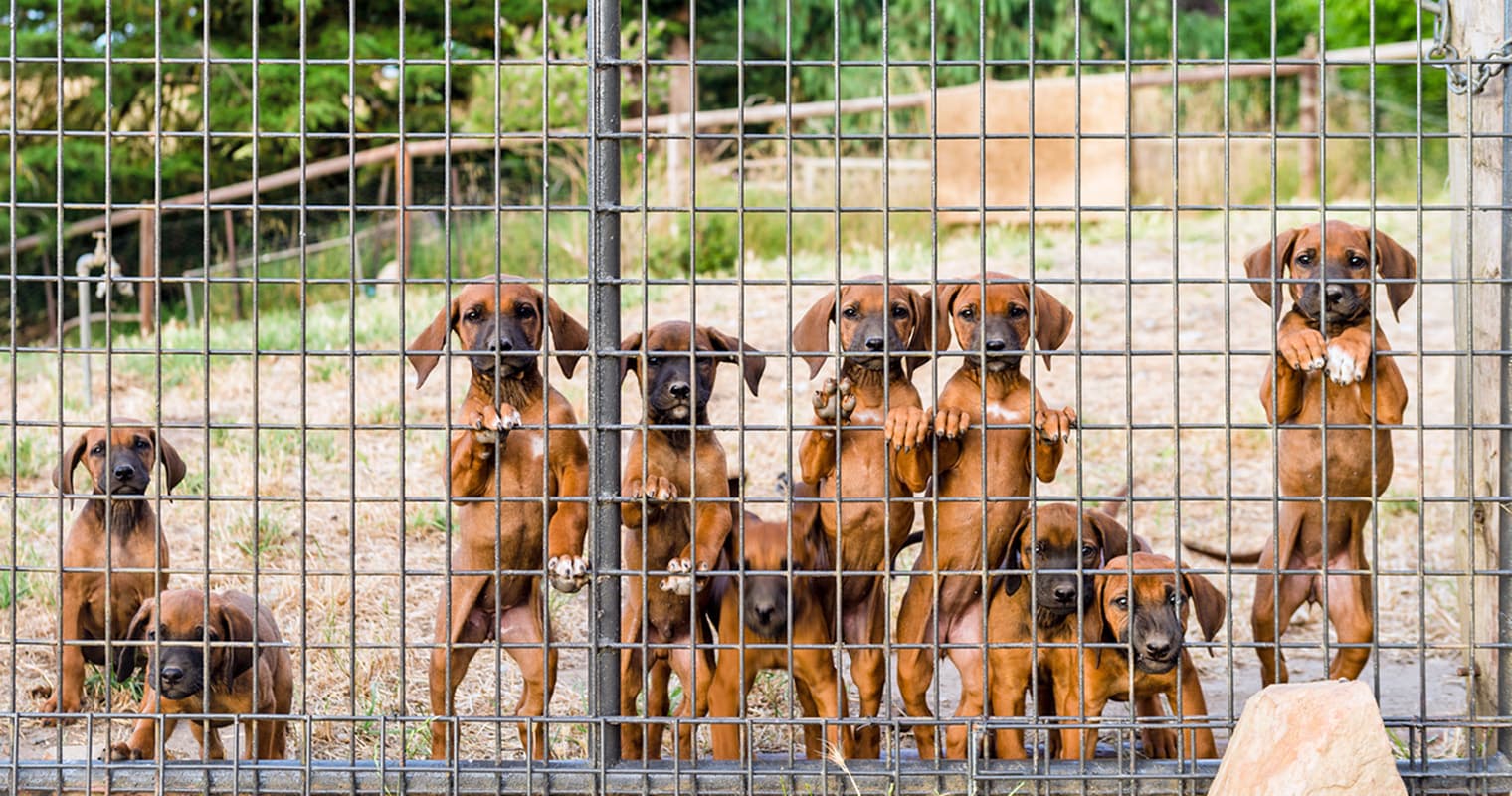
Large-scale commercial breeding operations, better known as puppy mills, use inhumane practices to churn out as many puppies as possible. The repercussions of buying from a puppy mill can be heartbreaking, from serious health and behavioral issues to supporting an unimaginable cycle of animal cruelty.
That’s why we’re giving you the tools to avoid inadvertently falling into the puppy mill trap. Ahead, the red flags to watch for, plus ethical ways to find the puppy of your dreams.
When searching for a puppy, you’ll find plenty of options — but not all of them are equal. What’s the difference between a puppy mill, a backyard breeder, and a responsible breeder? And how do you know which one you’re dealing with? Here’s a closer look at what sets responsible breeders apart from the rest.
“A puppy mill is a for-profit business that mass-produces puppies under poor health and living conditions with little concern for the dogs’ well-being,” Lisa Kauffman, Senior Campaign Strategist at Best Friends Animal Society, says. The purpose is to make the highest profit possible.
In contrast, “responsible breeders are individuals who breed dogs with the goal of improving the breed, and producing healthy, well-tempered puppies,” Kauffman says. “They prioritize the health and welfare of their dogs over profit.” These pups will get vet care, be socialized, and usually be a member of a national breed club. Meanwhile, the breeder will screen potential buyers and allow in-person meetings.
Puppy mills operate in inhumane conditions and emphasize the large-scale breeding of dogs at the expense of these animals’ health and livelihoods.
Inside, you’ll frequently see:
Hundreds of dogs in one facility, kept in small, overcrowded cages
Filthy living conditions with little to no protection from extreme weather
Animals receiving minimal to no veterinary care
Dogs bred without regard for compatibility, temperament, or inherited health issues
Unsocialized puppies
Puppy mills are high-volume operations. They emphasize the quick sale of dogs to often-unwitting pet parents. They are often compared to factory farms, in which large numbers of cattle and poultry are raised in crowded, unsanitary conditions.
Here are some common signs a young dog may have been born in a puppy mill:
No health guarantees or support once you take the puppy home
Puppies sold in pet stores or through websites that ship them sight unseen
Sellers who refuse to let you meet the breeding dogs (the puppy’s parents) or visit their facility
Puppies with vague or missing health records and no documented vaccinations
Puppies sold before they’re eight weeks of age
The seller doesn’t screen buyers for lifestyle, experience, or home suitability
Sellers who push for a fast sale and quick commitment
Cash-only sales
Communication only via text or online ads, with no phone calls or in-person meetings before purchase
Refusing to provide references from past buyers or veterinarians
The puppies appear fearful, dirty, or poorly socialized
The absence of a contract with spay-neuter terms, health guarantees, or a return policy
“Too good to be true” deals or promises of quick delivery
“Unlike puppy mills, backyard breeders may not operate on a large scale, but the outcomes can still be harmful,” Kauffman says. Backyard breeders usually breed dogs for extra income, as a hobby, or simply because they think their dog should have puppies. Like puppy mills, they are, more often than not, inhumane.
Health and safety issues
Genetic testing, bloodwork, and health screenings are rare.
Dogs are often bred without regard for compatibility, temperament, or inherited health issues.
Many puppies are not vaccinated or dewormed.
Living conditions are questionable.
Some breeders attempt DIY vaccinations without documentation.
What else to watch for:
Puppies are often advertised or sold through social media, Craigslist, or flyers.
Buyers are not screened for lifestyle, experience, or home suitability.
Breeders usually won’t let you visit their home or meet the puppy’s parents.
Registration papers are rarely provided.
There is no return policy if the puppy gets sick or isn’t a good fit.
Puppies have vague or missing health records and no documented vaccinations.
The seller allows puppies to go home before they are eight weeks of age.
If you’ve never seen a puppy mill firsthand, it can be hard to grasp just how grim the living conditions truly are. Kauffman puts it plainly: “Imagine the worst living hell for a dog.”
In puppy mills, overcrowding is taken to a horrifying extreme. “Puppy mill operations often have hundreds of dogs who are all kept in small, cramped, and filthy wire cages,” Kauffman says. This isn’t an exaggeration: In 2021, the American Society for the Prevention of Cruelty to Animals (ASPCA) rescued more than 500 dogs from a single USDA-licensed puppy mill in Iowa.
To maximize space, many mills stack cages on top of each other, piling puppies and dogs. “These cages are kept outside in all weather conditions, in the middle of blazing hot summers and freezing winter temperatures,” she adds. Many of these dogs never see grass or enter a home. They spend every day in these cages.
The situation can be even more dire for small-breed dogs and puppies. They can slip their tiny legs through the wire mesh and become stuck, Kauffman says. They’re rarely handled or even checked on. Some become trapped in place and die in their cages.
With hundreds of dogs confined to cages, you might assume that staff work around the clock to keep everything clean. Sadly, that’s not the case. Many puppy mills keep dogs and puppies in wire mesh cages, such that waste falls through the grates rather than being cleaned up.
“Unfortunately, a lot of these breeders stack their cages, so the waste falls onto the puppies in the cages below them,” Kauffman says. “Flies and fleas are a common and constant source of irritation.”
Those wire cages are where puppies spend their lives until they’re sold. “There are no treats, warm beds, grooming to remove the mats, or even kind words given to the breeding females,” Kauffman says.
The neglect doesn’t end there. In that same Iowa puppy mill, conditions were so dire that dogs were found eating not only moldy food but also the remains of other dogs.
Female dogs typically go into heat two to three times a year. Yet, responsible breeders limit breeding to once every year or two. Sure, this reduces their profits, but limiting litters helps protect the health and well-being of the mother dogs.
In puppy mills, it’s a very different — and heartbreaking — story. Females are bred each time they go into heat, forced to produce litter after litter.
“They are bred until their bodies wear out and then are tossed aside when they can no longer produce,” Kauffman says. “There are no toys for them to play with, just the same day-to-day existence inside of a wire cage with dirty water and low-quality food, trying their best to care for their puppies.” When they can no longer reproduce, they are often killed or sold for cheap.
It might seem obvious that breeding dogs need veterinary care to produce healthy litters. But in puppy mills, that’s money breeders refuse to spend.
Breeding dogs get no routine vet care between litters, and their puppies often aren’t examined at all. Diseases and parasites run rampant. Even if contagious illnesses like parvovirus don’t strike, genetic disorders can appear years after buying a puppy, because neither breeding dogs nor their puppies undergo health screenings.
Imagine spending your entire life trapped in a tiny, filthy phone booth with barely any room to move. That’s what life is like for dogs in puppy mills, Kauffman says. It’s no surprise, then, that dogs born from puppy mills often suffer serious health problems and struggle with lifelong behavior issues.
Malnutrition, neglect, and filthy living conditions take a serious toll on a dog’s body. The list of health problems linked to puppy mills is long, but Kauffman says these are just a few of the conditions she’s seen firsthand:
Hip dysplasia
Luxating patella
Epilepsy
Progressive retinal atrophy
Deafness
Autoimmune diseases
Parasitic infections (roundworms, hookworms, giardia, coccidia)
Ear mites or mange
Weakened immune systems
Respiratory infections (kennel cough, pneumonia)
Brittle bones
Digestive issues
Cancer
Untreated dental disease
The damage from puppy mills isn’t just physical. Dogs are bred without any consideration for temperament, so fearfulness, aggression, or anxious tendencies may be inherited by the puppies. On top of that, many puppies spend most of their critical socialization window confined in cages with almost no human interaction and constant neglect.
Some of the most common behavioral issues seen in dogs from puppy mills include:
Extreme fear or anxiety around people and other animals
Aggression or reactivity
Difficulty with house training
Destructive chewing or digging
Severe separation anxiety
Obsessive or compulsive behaviors (such as spinning or pacing)
Trouble adapting to new environments or routines
Resistance to handling or grooming
You’ve probably heard the phrase “adopt, don’t shop” — and it’s the simplest way to avoid unintentionally supporting puppy mills. There are a lot of ethical options out there, from shelters and rescue organizations to online platforms like Adopt a Pet.
If you do choose to go through a responsible breeder, follow these steps.
Do thorough research. Search the websites of shelters and respected rescues. Read about the dogs to learn more about their personalities and needs.
Visit in person. Shelters and rescues will let you meet potential pets in person, which will give you a sense of the dog’s personality and how you interact with them.
Ask the right questions. Ask about their health, history of socialization, activity needs, and any other relevant lifestyle information.
Avoid pet stores or online sales. Reputable organizations never sell puppies through pet stores, Craigslist, or unverified online sites. Instead, reach out to shelters and rescues, which are filled with puppies in need of loving homes. (Note: Some reputable pet stores will partner with rescues and shelters to offer adoptable pets.)
Large-scale commercial breeding operations are legal in the United States, as long as breeders obtain a USDA commercial kennel license. This license requires yearly inspections to ensure compliance with minimum standards for housing, sanitation, food, water, and veterinary care. But in practice, enforcement is often weak and ineffective.
Consider the Iowa case. The USDA-licensed mill racked up 190 violations of the Animal Welfare Act (AWA). The ASPCA cites this case as a clear example of the USDA’s unwillingness to hold commercial dog breeders accountable.
According to Kauffman, an estimated 10,000 puppy mills and commercial breeding facilities are operating in the U.S. These facilities confine around 500,000 breeding dogs and produce between two and 2.6 million puppies each year.
So what can you do? “The public is aware of puppy mills but often doesn’t take the time to understand the difference between them, a backyard breeder, and a responsible breeder,” Kauffman says.
Now that you know the signs, you can help others make more informed choices, too. “Be vocal in your community and with friends and family,” Kauffman urges. “Encourage them to adopt from local shelters or rescues — and never support backyard breeders or dogs sold in pet stores.”
No. Large-scale commercial breeding operations are legal in the U.S., as long as breeders obtain USDA commercial kennel licenses and pass yearly inspections that ensure compliance with minimum standards for housing, sanitation, food, water, and veterinary care.
Puppy mills keep dogs and puppies in inhumane, often overcrowded and filthy conditions. If a puppy is being sold before they are eight weeks old, is missing health certificates, vaccination records, or registration papers, those are red flags. You should be able to meet the breeder in person, see the puppy’s parents, and view their living conditions. If the breeder refuses a visit or makes excuses to avoid showing you where the dogs live, they may be operating a puppy mill. Puppies sold through pet stores, online classifieds, social media, or for cash-only transactions are also commonly sourced from mills.
According to Kauffman, you should never purchase a pet from a pet store. “Pet stores source all their purebred puppies from puppy brokers, who buy them from puppy mills,” she explains. Instead, look for pet stores that partner with shelters and rescues. These stores offer prospective pet parents the chance to adopt animals in need, while picking up their first pet supplies.
“A backyard breeder is different from a puppy mill, but they share some concerning similarities,” Kauffman says. While backyard breeders typically operate on a smaller scale than puppy mills, they often provide equally inadequate housing, little to no veterinary care, and fail to screen their dogs for genetic conditions. Many backyard breeders sell their puppies through Craigslist ads, flyers, or parking-lot meetups.
Communicable diseases, including parvovirus, distemper, kennel cough, and parasitic infections, are all common. Breeding females frequently suffer from severe dental disease, and all dogs from chronic malnutrition. Puppies born in puppy mills often have lifelong health issues that can shorten their lifespans, including inherited genetic disorders and weakened immune systems.
Thinking about rescuing a puppy mill dog? Every dog deserves a loving home, and none should be born or bred in a puppy mill. Whether or not a dog can fully recover from the trauma depends on many factors, including how long they were confined, the severity of their neglect, and their individual temperament. Recovery also relies heavily on the resources available to adopters or rescue organizations. “These issues can be serious, long-lasting, and expensive for their new owners to manage,” Kauffman says.
According to Kauffman, “A responsible dog breeder is one who has ethical practices and puts the welfare of the puppies before profit.”
ASPCA. (2024, June 13). USDA-licensed breeder surrenders more than 500 dogs to the ASPCA. https://www.aspca.org/news/usda-licensed-breeder-surrenders-more-500-dogs-aspca-scene
Janelle Leeson is a Portland, Oregon-based freelance writer. Her work has been featured in magazines such as Inside Your Dog’s Mind, Inside Your Cat’s Mind, and Paw Print, as well online at Insider Reviews, NBC Select, Shop Today, PetMD, and Daily Paws. She has two adventure cats, a flock of urban chickens, and a soon-to-be-husband who doesn’t mind housing the occasional foster cat — or five.

Adoption Advice

Shelters & Rescue

Pet Wellness

Adoption Advice
Despite good intentions, many pet parents inadvertently support puppy mills. Here are the telling signs of puppy mills and how to stop these abusive breeders.

Adoption Advice
Unfortunately, the term “adopt, don’t shop” exists for a reason, because buying a puppy can unwittingly come with a host of problems.

Adoption Advice
Learn the many benefits of adopting a shelter dog, and why giving a dog a second chance at a home is truly rewarding.

Shelters & Rescue
Inside all the safeguards, limitations, and obstacles of the state and federal laws aimed at protecting animals — and how this may affect you.
Adoption Advice
Want to ensure your dog adoption goes smoothly? Keep watch for these common red flags.

Adoption Advice
Falling victim to a pet scam is bad for you and the animals whom scammers are trying to sell. Here’s how to avoid them.

Adoption Advice
Learn what a rescue dog is and why these pups make the best buddies.

Adoption Advice
Deliberating between the two? One is more affordable, comes with fewer health issues, and saves a life.

Adoption Advice
Adopting a pet is a process that factors in everything from your age to living situation. Here’s what you need to know.