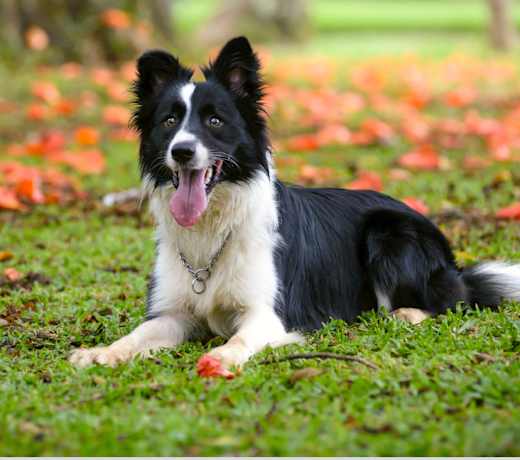
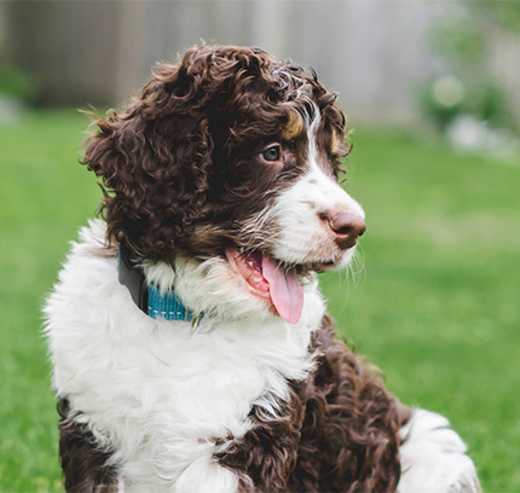
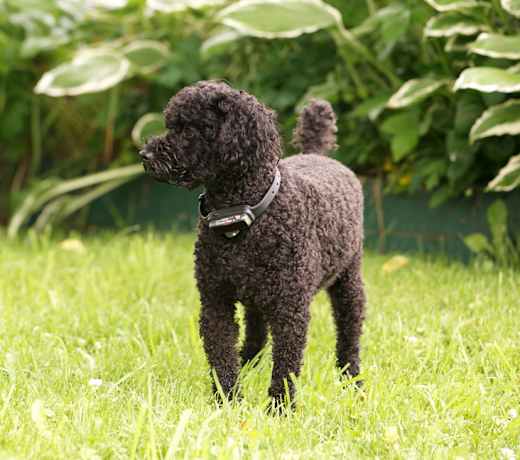
Bordoodles are quick learners and ideal for active individuals or families. But there are a couple of things to consider before adopting one.
Bordoodles vary quite a bit.
Bordoodles are often described by “generation”, which helps explain why their coats and shedding levels can vary so much. Some have curlier, lower-shedding coats, while others have looser waves.
The terms F1 and F1b refer to the generations and indicate how the dog is bred.
An F1 Bordoodle is a first-generation hybrid, meaning one parent is a purebred Border Collie and the other is a purebred Poodle.
An F1b Bordoodle is the result of breeding an F1 Bordoodle (first-generation mix) back to one of the parent breeds — either a Border Collie or a Poodle.
The coat of an F1 Bordoodle can vary greatly. It might take after the Border Collie parent with a wavy or straight coat, or it might have the Poodle’s curly coat. The coat can be a mix of both, and it may shed more or less depending on which parent’s traits dominate. Whereas if the F1 Bordoodle is bred to a Poodle, the resulting puppies are more likely to inherit the Poodle’s curly, hypoallergenic coat and reduced shedding.
Bordoodles can be high shedders.
Depending on their coat type, some Bordoodles shed a lot while others are low-shedding. If a Bordoodle inherits more of the Poodle’s curly coat, they are likely to shed very little. If a Bordoodle takes after the Border Collie more, they might shed a little or a lot. Shedding can also increase seasonally in spring or fall, but regular brushing helps remove loose hair from your pup’s coat.
Bordoodles will need haircuts.
Bordoodles usually need regular haircuts, especially if they inherit the curly or wavy coat from their Poodle parent. Their coat type can vary depending on whether they take after the Border Collie or Poodle side more, but most Bordoodles will require grooming to keep their coats healthy and prevent matting.
Regular brushing is also essential to keep a Bordoodle’s coat from matting. Brush your Bordoodle at least two to three times a week to remove tangles and prevent mats from forming. Some coat types might even need daily brushing.
Bordoodles might not be good with cats.
Some Bordoodles get along with cats, but others not so much. Bordoodles can be tolerant and patient with cats, but some — especially those who inherit a stronger Border Collie herding instinct — may be more likely to chase or try to herd cats, which can create challenges in a multi-pet home.
Bordoodles raised with cats are more likely to get along with them, but this mix is so clever that you have a good chance of training them to coexist peacefully with feline friends.
Bordoodles are high-energy dogs.
Bordoodles are high-energy dogs. Both of their parent breeds are known for their high activity levels and need for regular physical and mental stimulation. Most Bordoodles usually need at least 60 to 90 minutes of exercise per day. Combine physical activities (such as walking, running, fetch, and swimming) with mental stimulation (such as training, puzzle toys, and problem-solving games).
Without enough physical activity, they can become bored or restless, leading to undesirable behaviors such as chewing or excessive barking.
Bordoodles can have a strong herding instinct.
One thing to keep in mind is the herding instinct that comes from the Border Collie side. This instinct might lead a Bordoodle to try to “herd” or nip at kids and other pets. Herding can be annoying to other dogs and cause issues with kids if not kept in check.
Most Bordoodles are gentle and patient, but kids must be taught how to properly interact with the dog, and dogs should be taught how to gently interact with children. Always supervise interactions to make sure dogs and kids are safe and happy.
Bordoodles need plenty of companionship.
Bordoodles can typically handle being left alone for short periods of time, but due to their intelligence, social nature, and high energy levels, they shouldn’t be left alone for long stretches. Bordoodles thrive on companionship and mental stimulation, so being left alone for too long can lead to boredom, anxiety, or even destructive behavior.
Adult Bordoodles can be left alone for about four hours without too much trouble, as long as they’ve been well-exercised and have toys or activities to keep them busy.