How Can I Stop My Dogs From Fighting?
Consider this your guide to keeping the peace in your home, from spotting conflicts between your dogs to stopping them and preventing them in the first place.
Consider this your guide to keeping the peace in your home, from spotting conflicts between your dogs to stopping them and preventing them in the first place.
by Mia Nguyen, CPDT-KA, FFCP, | November 11, 2025

Petra Richli / Adobe Stock
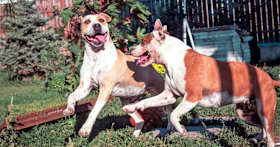
Even the most well-behaved dogs can have disagreements. A growl, a snap, or a full-blown fight can happen in seconds, and it’s scary when it does. Whether it’s a sudden scuffle at the dog park or tension between pets at home, knowing how to safely stop and prevent fights is an essential skill for every pet parent.
Understanding why fights happen, how to intervene without getting hurt, and how to reduce future conflicts can help keep everyone safe and your dogs’ relationships peaceful.
Dogs may fight for a variety of reasons, and understanding the cause is key to preventing future conflicts. Many fights stem from competition over valuable resources such as food, toys, territory, or attention from their pet parents. Others may be triggered by fear, frustration, or miscommunication between dogs, especially if one feels threatened or trapped. Some dogs also have poor social skills or past negative experiences that make them more likely to react aggressively in stressful situations.
In multi-dog households, tension can build gradually due to changes in routine, hierarchy, or health issues. Recognizing what motivates a fight helps pet parents address the underlying problem rather than just the behavior itself.
When dogs in the same household fight, it’s not only distressing but also potentially dangerous. Managing and preventing future conflicts requires a calm, structured approach that addresses both immediate safety and the underlying causes of aggression.
If you are introducing dogs, the best thing you can do to prevent a fight is to take things slowly, introduce them on neutral grounds, and do this over multiple sessions before beginning to fully integrate them into the same area.
Never reach directly between fighting dogs or grab their collars. This can result in serious injury. Instead, try to interrupt the fight safely by making a loud noise (such as banging a pot or using an air horn), spraying water, or placing a large object, such as a chair or blanket, between them. If two people are present, each can use the “wheelbarrow method,” lifting the back legs of each dog and pulling them apart while turning in opposite directions to redirect their attentions.
Once separated, give the dogs space and move them to completely different rooms or areas to cool down. Give each dog a calming activity, such as a snuffle mat, a lick mat, or a chew, to help them self-regulate. Allow at least 24 to 48 hours of decompression time before reintroducing them. Stress hormones like cortisol can remain elevated for days after a fight, which increases the risk of another conflict if they’re reintroduced too soon.
Observe and record when and why fights occur (around food, toys, people, rest areas, or during high arousal situations). Identifying these triggers can help you manage the environment and prevent situations that provoke fights. Veterinary behaviorists often recommend keeping a detailed behavior log to track patterns and progress.
Use physical barriers such as baby gates, crates, or exercise pens to separate dogs during meals, play, or rest times. Remove high-value items if they are a source of conflict. Maintain predictable routines to reduce stress and competition.
When both dogs are calm and stress levels have subsided, begin controlled reintroductions on neutral ground. Keep both dogs on leashes and reward calm, neutral behavior with treats and praise. Short, positive sessions under threshold are key. Progress should be gradual and supervised.
Schedule veterinary exams for both dogs to rule out pain, illness, or hormonal imbalances that could contribute to irritability. If fights persist or escalate, consult a certified professional dog trainer, certified behavior consultant, certified applied animal behaviorist (CAAB), or veterinary behaviorist for a personalized plan involving desensitization and counterconditioning.
Here are some tips to help avoid further physical confrontations.
Maintain consistent rules and structure for both dogs.
Ensure each dog has their own space, feeding station, and resting area.
Provide regular physical and mental enrichment to reduce boredom and tension.
Supervise play closely, and intervene early at the first signs of tension (stiff posture, hard stares, lip curling).
Inter-household aggression often worsens without professional guidance. Early intervention from a qualified trainer, behavior consultant, or behaviorist can dramatically improve safety and long-term outcomes.
Dog fights can happen suddenly, even between well-socialized dogs, and intervening incorrectly can lead to serious injuries to both you and the dogs involved. Understanding how to safely interrupt and manage a fight protects both people and pets. The goal is always to end the conflict without escalating it or putting yourself in harm’s way.
Fights can sound and look more violent than they are. Shouting or panicking often intensifies the dogs’ arousal, potentially making the situation worse. Take a deep breath and quickly assess whether it’s a brief scuffle or a sustained fight. If either dog is latched onto the other, they will likely need to be physically separated, and you will need to intervene.
Never reach between fighting dogs or grab collars, faces, or necks. Doing so is a leading cause of human bite injuries. Studies have shown that pet parents are frequently bitten when they intervene physically without a barrier or distraction.
If the fight is not yet fully engaged, a sudden distraction may interrupt it.
Loud sounds: Bang a pot, blow a whistle, or use an air horn.
Water: Spray them with a hose or dump water from a bucket to surprise (not harm) them.
Objects: Throw a blanket, jacket, or large cushion over the dogs to break their focus and provide a brief visual barrier.
Avoid using aversive tools such as citronella or pepper spray: These can worsen aggression or cause injury.
If distraction fails and two adults are present, each person should grab the hind legs of one of the dogs (never the front or collar), lift them like a wheelbarrow, and pull backward while turning in a semicircle. This movement unbalances the dogs and reduces their ability to turn and bite. Once separated, direct them into different enclosed areas.
If you’re alone, use a solid barrier such as a chair, baby gate, or even a trash can lid to separate the dogs. You can also slide an object between them, or open a door to allow one of the dogs to leave. Avoid using your own body to block, push them apart, or separate them in any way.
Once separated, move the dogs into different rooms or crates, and do not let them interact for at least 24 to 48 hours. Keeping them apart for this time period allows adrenaline and cortisol levels to normalize. Check for injuries and seek veterinary attention immediately, even if wounds seem minor, punctures can become infected or be worse than they appear.
After any fight, schedule a veterinary exam and consider consulting a behavior consultant, certified applied animal behaviorist (CAAB), or veterinary behaviorist. Recurrent fights, even if mild, indicate underlying issues such as resource guarding, fear, or pain that require professional assessment and long-term behavior modification.
It’s natural to want to jump in when dogs fight, but some reactions can make the situation worse or cause serious injury.
Never reach for or put yourself between fighting dogs, because redirected bites are common in these instances.
Avoid hitting, kicking, or yelling, which can escalate aggression and fear.
Outdated dominance or alpha techniques are also dangerous. Research shows that confrontational methods increase the risk of defensive aggression.
Even if no one seems hurt, treat every fight seriously. Unaddressed tension often leads to repeat incidents.
If fights between household dogs are frequent, intense, getting worse/escalating, or cause injury, it’s time to seek professional help. Even a single serious incident can permanently damage the dogs’ relationship, and repeated conflicts rarely resolve on their own. Warning signs such as tense body language, hard staring, growling, or one dog avoiding the other indicate rising tension that needs intervention.
You can start with a certified behavior consultant. If necessary, a veterinary behaviorist (DACVB) or certified applied animal behaviorist (CAAB) can evaluate underlying medical, emotional, or environmental factors, then design a customized behavior-modification plan. Early professional involvement not only improves safety but also increases the likelihood of restoring a stable, peaceful household.
Dogs can often learn to live peacefully again, but this process requires behavior modification, management, and sometimes professional intervention. Training alone isn’t a quick fix, since fights are typically symptoms of deeper emotional or environmental issues, such as fear, frustration, or resource guarding.
Through structured desensitization, counterconditioning, and management, dogs can be taught to form positive associations with being in each other’s presence. Still, some dogs — especially those with a long history of severe aggression or serious injuries — may never be fully safe together without strict separation or ongoing supervision. With patience, professional guidance, and a focus on safety, many dogs can learn to coexist peacefully, even after a conflict.
In many cases, dogs can continue to live together after a fight, but only if the situation is handled carefully and the underlying causes are addressed. Whether or not peaceful coexistence is possible depends on factors such as the severity and frequency of the fights, the dogs’ relationship history, and the triggers involved.
Some conflicts are situational and can be managed through environmental changes, training, and behavior modification. Others, especially those involving repeated or injurious aggression, may require long-term separation or strict management for safety.
While dogs don’t forgive in the human sense, they can often move past conflict once tension and arousal have subsided. Their social relationships are fluid and driven more by immediate emotional states than by long-term grudges. After a fight, however, it’s crucial to recognize that residual stress hormones and fear can linger for days, increasing the risk of another incident if they’re reintroduced too soon.
Using a shock collar to stop or prevent dog fights is not recommended and can be extremely dangerous. During a fight, dogs are in a state of high arousal. This means applying an electric shock is unlikely to stop the behavior and often makes aggression worse. Additionally, shock collars can increase fear, pain, and confusion, causing dogs to associate that discomfort with the other dog, further damaging their relationship.
In some cases, the shock can intensify aggression or be redirected towards nearby people. Safe interruption methods such as startling noises, barriers, or the wheelbarrow technique are less risky and more humane. Ultimately, long-term success comes from behavior modification, management, and professional guidance — not punishment or pain-based tools.
Bamberger, Michelle, and Katherine A. Houpt. “Signalment Factors, Comorbidity, and Trends in Behavior Diagnoses in Dogs: 1,644 Cases (1991–2001).” Journal of the American Veterinary Medical Association 229, no. 10 (November 15, 2006): 1591–1601. doi.org/10.2460/javma.229.10.1591.
Borg, Joanne A. van der, Matthijs B. Schilder, Claudia M. Vinke, and Han de Vries. “Dominance in Domestic Dogs: A Quantitative Analysis of Its Behavioural Measures.” PLOS ONE 10, no. 8 (August 26, 2015). doi.org/10.1371/journal.pone.0133978.
Delamarter, Marissa. “Aggression in Dogs: Etiology, Signalment, and Management.” Today’s Veterinary Practice, August 11, 2023. todaysveterinarypractice.com/behavior/aggression-in-dogs-etiology-signalment-and-management.
Feltes, Elizabeth S., Jason W. Stull, Meghan E. Herron, and Lore I. Haug. “Characteristics of Intrahousehold Interdog Aggression and Dog and Pair Factors Associated with a Poor Outcome.” Journal of the American Veterinary Medical Association 256, no. 3 (February 1, 2020): 349–61. doi.org/10.2460/javma.256.3.349.
Herron, Meghan E., Frances S. Shofer, and Ilana R. Reisner. “Survey of the Use and Outcome of Confrontational and Non-Confrontational Training Methods in Client-Owned Dogs Showing Undesired Behaviors.” Applied Animal Behaviour Science 117, no. 1–2 (February 2009): 47–54. doi.org/10.1016/j.applanim.2008.12.011.
Jacobs, Jacquelyn A., Jason B. Coe, David L. Pearl, Tina M. Widowski, and Lee Niel. “Factors Associated with Canine Resource Guarding Behaviour in the Presence of People: A Cross-Sectional Survey of Dog Owners.” Preventive Veterinary Medicine 161 (December 2018): 143–53. doi.org/10.1016/j.prevetmed.2017.02.005.
Jacobs, Jacquelyn A., Jason B. Coe, Tina M. Widowski, David L. Pearl, and Lee Niel. “Defining and Clarifying the Terms Canine Possessive Aggression and Resource Guarding: A Study of Expert Opinion.” Frontiers in Veterinary Science 5 (June 11, 2018). doi.org/10.3389/fvets.2018.00115.
Kleszcz, Aleksandra, Paulina Cholewińska, Greta Front, Jakub Pacoń, Robert Bodkowski, Marzena Janczak, and Tadeusz Dorobisz. “Review on Selected Aggression Causes and the Role of Neurocognitive Science in the Diagnosis.” Animals 12, no. 3 (January 24, 2022): 281. doi.org/10.3390/ani12030281.
Wrubel, Kathryn M., Alice A. Moon-Fanelli, Louise S. Maranda, and Nicholas H. Dodman. “Interdog Household Aggression: 38 Cases (2006–2007).” Journal of the American Veterinary Medical Association 238, no. 6 (March 15, 2011): 731–40. doi.org/10.2460/javma.238.6.731.

Mia is a Certified Professional Dog Trainer and Behavior Consultant with a deep passion for helping dogs and their families build positive, lasting relationships. As the owner and trainer of Ace’s Pace based out of Sacramento, CA, she focuses on fear-free, science-backed techniques to guide pet parents through the nuances of dog behavior, training, and enrichment. Through a gentle, positive approach rooted in understanding and trust, Mia strives to help every dog live their best life, with the support and guidance that pet parents need to be successful. You can follow Mia and her life with dogs on Instagram at aces.pace.sacramento.

Behavior & Training

Behavior & Training

Shelters & Rescue

Adoption Advice
If your dog is intense about protecting their food, it’s important to address their behavior. Here’s how.
Adoption Advice
Here’s everything there is to consider before adopting a second dog.

Behavior & Training

Behavior & Training
Not all people are receptive to a dog showering them with attention by jumping on them. Here’s how to encourage your dog to curb this instinct, without losing their playful spirit.

Breed Info
Are Pit Bulls dangerous? Uncover the truth behind stereotypes and myths surrounding these misunderstood dogs

Behavior & Training
Vivian Zottola, MSc, CBCC, has all the answers (not to mention helpful dog-training tips) to transform your unhappy pooch into a calm, content dog.

Behavior & Training
Behavior & Training

Behavior & Training
Behavior & Training