How Do I Stop My Cat From Running Outside?
Your cat’s attempts to make a run for it are usually pretty normal. Here’s how to prevent their temptation to explore the great outdoors.
Your cat’s attempts to make a run for it are usually pretty normal. Here’s how to prevent their temptation to explore the great outdoors.
by Cammi Morgan, | January 22, 2026
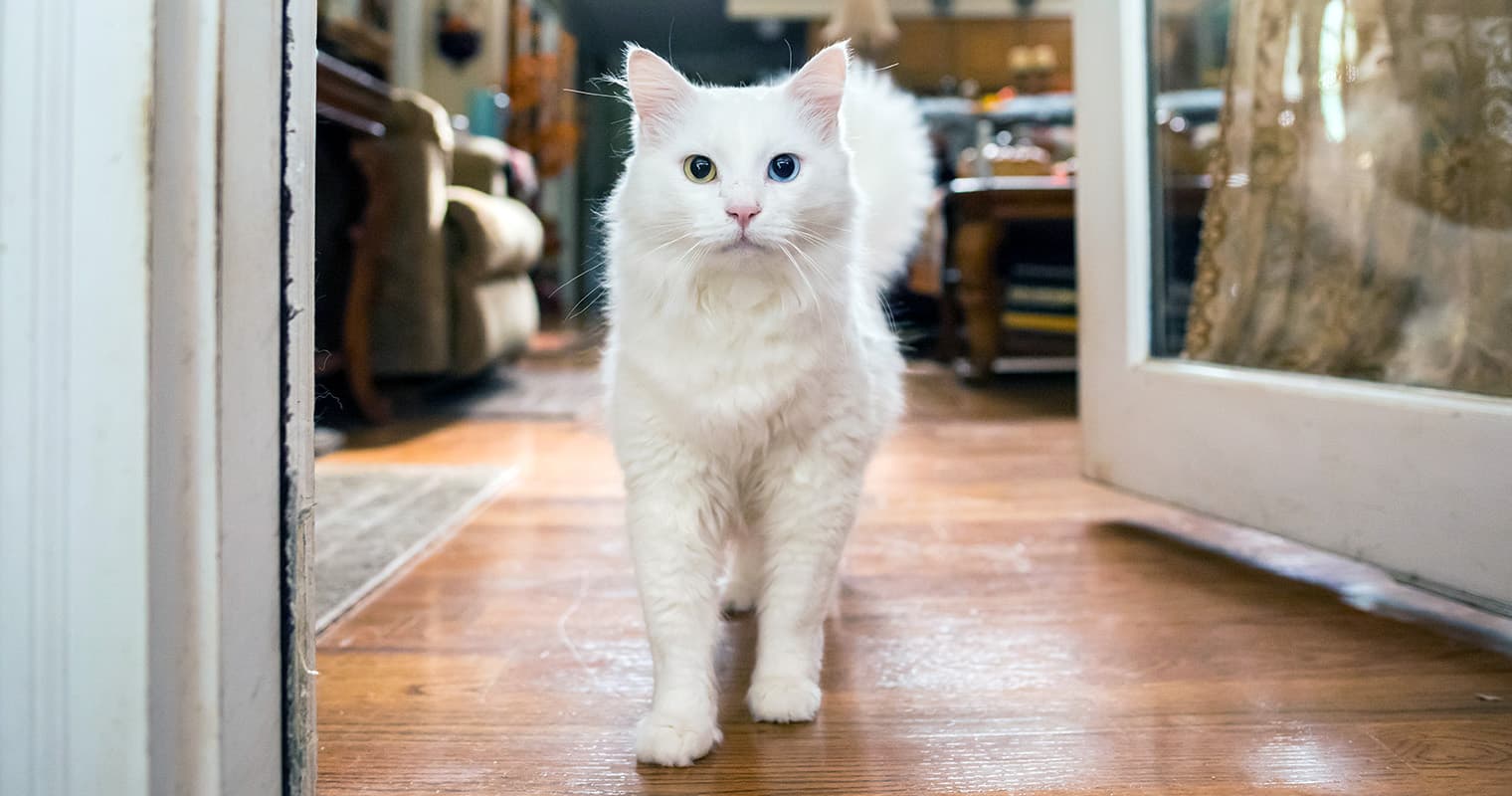
Page Light Studios / Adobe Stock
Seeing your cat bolt towards the door can turn an ordinary moment into a stressful scramble. By understanding what fuels your cat’s door-dashing behavior and knowing how to properly address those root causes, you can help them stay safer and more enriched — while giving yourself greater peace of mind.
Learn about why your cat may be drawn to the outdoors, how to prevent them from escaping, and ways to satisfy their natural curiosity safely — both indoors and out. Also, learn techniques for door training and enrichment strategies, as well as steps that you can take in order to ensure that, if your cat slips out, they can return home safely.

This Is Me / Shutterstock
Cats are naturally curious animals, and the outdoors are an endless playground of enticing sounds, sights, and scents. It’s perfectly natural for your cat to be drawn to the outdoors, and that desire can be increased by factors such as boredom, understimulation, and other unmet social, physical, mental, or emotional needs.
For those who have not been spayed or neutered, there’s also a drive to mate that can make them prone to roaming. If your indoor cat is fixated on darting out the door, consider the reason behind this behavior, such as a desire for more environmental enrichment, exercise, or play.
Your cat’s attempt to bolt through the door may be unwanted, but that does not make it a bad behavior. Ask yourself, “Does my cat have a need or desire that is not being addressed inside the house?” Once you figure out what they’re after, you can help reduce their need to run outside by consistently meeting their needs, providing environmental enrichment that mimics outdoor experiences, and using positive reinforcement training.
Some pet parents may feel inclined to resort to deterrents (such as spray bottles, loud noises, sticky mats, aluminum foil, or other scaring tactics) to discourage their pets from behaviors that they deem unwanted — but research and feline welfare guidelines strongly advise against using these tactics. Such deterrents might temporarily suppress unwanted behaviors, but they do not teach your cat what you do want them to do or address their needs. Instead, your cat associates the unpleasant, uncomfortable, or fear-inducing stimulus with the person, home, or environment, which often leads to fear, anxiety, or mistrust.
Over time, this can erode the bond between a cat and their pet parent, trigger stress-induced behaviors (such as hiding, over-grooming, displacement urination, and aggression), and make a cat more likely to bolt when the deterrent is removed.
In some instances, the layout of a home allows for a simple physical barrier to prevent your cat from running through the door. Buffer zones can be created in entryways using baby gates or screens. Distractions can also be employed with something simple, such as tossing their favorite toy or treat across the room so that you have sufficient time to slip out.
However, barriers and distractions often serve only as Band-Aids that do not address the reason a cat wants to run outside. Use physical barriers and distractions with other factors, such as increasing exercise and enrichment, door training with positive reinforcement, and engaging in supervised or contained outdoor play.

The good news: They probably won’t go far. The bad: There are many dangers outdoors. Read on for tips to prevent your indoor cat from slipping outside.
You can use positive reinforcement training to reduce the number of times your cat darts through the door. An effective way to do so is to set up an area in the same room, but moderately distant from the door. Designate it as the area where you greet your cat when coming and going. Try to choose an area where your cat already enjoys hanging out, and consider placing a comfy bed there. Give your cat all of your hellos and goodbyes in this spot.
Here are a few steps you can take to door-train your cat. Your cat should get the hang of it pretty quickly, but make sure that you’re moving at their pace.
Start by guiding your cat to the designated area with your arm extended, and reward them with treats and attention as soon as they touch the spot.
Repeat to build a positive association, then reward them with treats and attention when fully settled on the bed.
Once they associate this place with rewards, you can start adding in a word like “place” as you guide them over.
The end goal is to be able to point your arm to the designated spot away from the door, say “place,” and have your cat happily trot over for treats and pets. This process will take time and patience. Work in short, one- to two-minute training sessions.
Once they get the hang of going to their spot, you can slowly add in other incremental factors, such as putting on your shoes and coat, having a friend knock on the door from the outside, then coming in and out of the door in short increments.
If your cat still tries to dart for the door when you turn to leave the spot, try offering them a treat that takes a little longer to eat, so that you have sufficient time to exit. These include things like soft food spread on a lick mat, or hard treats stuffed into a ball toy that dispenses them when rolled around.
Remember, a cat’s desire to dart is communicating a need, and door training with positive reinforcement alone does not address this. Cats who are mentally and physically enriched are less likely to attempt to run outside.

A bored cat can develop everything from behavioral issues to physical ailments. Here’s how to keep your kitty mentally stimulated.
Also consider which types of environmental enrichment your cat gets from being outside and how you can create an indoor equivalent. Climbing trees, sunbathing, hunting, listening to and watching birds (and small critters like squirrels), finding interesting places to hide and observe, scratching posts and tree trunks, and nibbling on plants are all examples of activities your cat may enjoy when outside. Consider adding interactive and novel enrichment to their space to mimic these activities, such as:
Climbing perches
Crinkle tunnels
Cat trees near sunny windows or window-mounted perches
Wall-mounted climbing systems and runways
Bird feeders installed near windows for bird viewing
Interactive toys that encourage stalking and hunting behaviors
Cat TV with the sights and sounds of nature
Scratching posts
Windowsill garden with cat-safe plants, such as catnip and oatgrass
Puzzle feeders
Treat-dispensing toys
Interactive play with feather wands to encourage running, jumping, and hunting behaviors
Installing screens and opening windows for fresh air

Alba Vitta Studio / Stocksy
Sometimes the best way to address your cat’s desire to go outside is to let them go outside safely. Most cats will benefit from supervised and/or enclosed outdoor experiences.
Here are a few potential ways to offer your cat safe outdoor time.
Harness-train your cat so that they can safely navigate the outdoors at home.
Build them a catio.
Use some other enclosed outdoor space that allows for sunlight, fresh air, and wildlife watching.
These approaches satisfy your cat’s natural desire to be outdoors without the risks and uncertainty of unsupervised, unenclosed free-roaming. Adding perches, tunnels, and hiding spots, wooden scratching posts, and grassy areas with twigs and leaves can really amplify the outdoor catio experience for your feline friend.
Cats who are allowed outside will not necessarily run away. Some cats are content exploring a confined home territory, if their environmental and social needs are met. Cats who are anxious, not spayed or neutered, or otherwise have unmet needs inside the home may feel inclined to roam further.
Of course, there are risks that come with unsupervised and unenclosed outdoor time that may prevent your cat from returning — such as traffic accidents, predators, and disease. Indoor cats tend to live longer, so making sure they’re content to stay inside can help ensure they reach their golden years.

Many pets can find their way home but not all dogs and cats are successful — here’s how to ensure they come home.
But if your cat does run through the door, stay calm. Try not to startle them with quick movements or loud noises. Many cats will stay within view and return once they have taken a sufficient look around. Even if your cat does leave your eyesight, you can try to lure them back with the sound of their food container, their favorite toy, or a bag of treats. Sometimes, walking around the area and gently calling for your cat will coax them back. If not, you can place their favorite bedding and their food and water bowl outside near the door, and many cats will return on their own time.
Some preventive measures should be taken to encourage your cat’s return if they do slip out.
Microchip your cat and keep their registration information (phone numbers, addresses, and so on) up to date.
Have your cat wear a breakaway collar with an information tag on it. Only breakaway collars should be used, because they prevent the risk of strangulation that standard collars present when caught on a branch, fence, or other object.
Keep recent photos of your cat in case you need an image for missing-pet posts or posters.
If your cat does not return soon, you may need to take more active steps to locate them. Posting on local groups and neighborhood forums, notifying local shelters, and hanging missing posters can all increase the likelihood that your cat will return home safely.
If your cat continues escaping, they may have unmet needs — and this is their way of communicating that. Enrichment strategies, supervised and/or enclosed outdoor time, and door training can help to meet those needs and lessen your cat’s desire to dart outdoors.
Cats have a strong sense of smell and can detect familiar scents over significant distances. That said, exactly how far away a cat can smell their pet parent depends on a number of other factors, such as weather, physical landmarks, and stress levels.
It’s normal to feel panicked the moment your cat slips out of an open door and disappears from view. Although many cats can find their way back on their own — sometimes within a few hours — it’s not safe to assume they’ll just show up. If your cat has gone missing overnight or has been gone for more than a few hours, it’s time to start implementing additional measures.
AAHA. (2021, February 18). Behavior and Environmental Needs: Young Adult Cats. American Animal Hospital Association. www.aaha.org/resources/2021-aaha-aafp-feline-life-stage-guidelines/behavior-and-environmental-needs-young-adult-cats.
Indoor Pet Initiative. (n.d.). Basic indoor cat needs. The Ohio State University College of Veterinary Medicine | Indoor Pet Initiative. indoorpet.osu.edu/cats/basic-indoor-cat-needs.
Tamuvetmed. (2022, March 11). Eating Your Greens: The Basics of Cat Grass. VMBS News. vetmed.tamu.edu/news/pet-talk/eating-your-greens-the-basics-of-cat-grass.

Cammi Morgan is a nature and pet care writer living off-grid with her pack of rescue and foster dogs in the mountains of Southeast Appalachia. In addition to her work with Adopt a Pet, she has contributed to Animal Wellness Magazine, PetsRadar, Global Comment, A-Z Animals and other online publications. Her passions include animal rescue, mycology, hiking, and caving.

Behavior & Training

Behavior & Training
Behavior & Training
Behavior & Training

Behavior & Training
Behavior & Training

Adoption Advice
These giant guinea pigs are smart and social, so what could go wrong? Read on to better understand why these animals don’t make good pets, and why they’re outlawed in several places.

Behavior & Training

Adoption Advice
For the most part, they are. But here are some important things to consider while looking for that perfect kitty collar.

Adoption Advice
The benefits and challenges of adopting an outdoor cat, plus tips to keep them happy and healthy

Adoption Advice
Ear-tipped cats might be friendly — but they shouldn’t always come home with you. Learn what their ears indicate, and when it’s okay to adopt them.
Adoption Advice
Your guide to everything you need to know — because preventing kitten health problems is far less expensive (and easier) than treating illnesses
Behavior & Training
Cats may not need a lot of space, but it’s what you do with it that matters. Read on for tips to keep your cat mentally and physically at ease.

Behavior & Training