Cat-Friendly Dogs: Perfect Pals for Feline Households
Looking for a dog who gets along with your cat? Here are some cat-friendly dog breeds who are gentle, sociable, and perfect for a peaceful multi-pet household.
Looking for a dog who gets along with your cat? Here are some cat-friendly dog breeds who are gentle, sociable, and perfect for a peaceful multi-pet household.
by Jackie Brown, | June 30, 2025

vvvita / Adobe Stock
If you have a cat at home and are hoping to adopt a dog who gets along well with them, you’ll be happy to learn that many dogs are naturally cat-friendly. Of course, each dog is different, but gearing your pet adoption search towards feline-friendly breeds (and their mixes) can lead to a great match. Good news: Plenty of those cat-compatible pups are waiting at shelters, and a reputable rescue can help you meet them. They’ll steer you toward pups with the right temperament.
This guide covers what key traits make some breeds and mixes cat-friendly, some of the best dog breeds for multi-pet homes, as well as practical tips on introducing a new dog to your cat so they get along from day one.
TL;DR: Cat-friendly dogs are gentle, sociable, and adaptable to life with cats. Breeds such as Golden Retrievers, Beagles, and Basset Hounds are known for being calm and friendly. Proper introductions and supervision are key to fostering a positive relationship between your dog and cat.
Dogs who get along with cats have certain traits in common. Some dogs are naturally inclined to be friendly and gentle with cats due to their temperaments and instincts.
Low prey drive: One of the biggest predictors of a dog’s compatibility is their prey drive, the instinct to chase and capture smaller animals. All dogs have some level of prey drive, but it’s much higher in breeds who were developed to hunt and kill small creatures. Low-prey-drive dog breeds are much less likely to chase or bother a cat.
Calm and gentle temperament: Cats don’t love a lot of boisterous activity, so they are more inclined to feel comfortable around a dog who is calm and gentle. A cat is also less likely to be accidentally stepped on or mishandled by a calm dog, regardless of their size.
Sociability: Friendly, social dogs tend to look upon other pets, including cats, with curiosity rather than aggression. The best dogs for multi-pet families, including cat-friendly homes, respond to other animals with respectful interest.
Adaptability: An adaptable dog can adjust to new and changing circumstances with ease. Breeds known for their adaptability are more likely to accept all family members, including cats.
Trainability: Training dogs to live with cats goes much more smoothly with a highly trainable dog. Managing dogs and cats in one home is generally easier with a dog breed known for their intelligence and eagerness to please their pet parents.
Small-dog breeds good with cats are ideal for those with limited space or a more relaxed lifestyle. These small breeds are known for being gentle and cat-friendly.

boggy22 / iStock
The Bichon Frise is small, fluffy, and extremely friendly and well-mannered. Bichons have low prey drives and are very adaptable and accepting of all family members, including those of the feline species. Bichons are also intelligent and trainable, which makes it easy to teach them how to coexist peacefully with cats.
Height: 9 to 11 inches
Weight: 6 to 16 pounds
Browse for Bichon Frises (and their mixes) for adoption

valdisskudre / Adobe Stock
Cavaliers are sweet, gentle dogs who enjoy spending time with their pet parents and tend to get along with just about everyone they meet, whether human or animal — cats included. These toy spaniels are far enough removed from their bird-hunting ancestors that they no longer have much of a prey drive, and they are calm and well-mannered little pets.
Height: 12 to 13 inches
Weight: 11 to 23 pounds
Browse for Cavalier King Charles Spaniels (and their mixes) for adoption

Tamara Bellis / Unsplash
Although the Chihuahua can be a bit feisty, these dogs are extremely tiny, which means they are unlikely to be a threat to cats, who could potentially outweigh them by twofold. Chihuahuas are generally more bark than bite, so any initial grumbling between cat and dog is likely to evolve into mutual tolerance or even friendship in some cases.
Height: 6 to 9 inches
Weight: 2 to 9 pounds
Browse for Chihuahuas (and their mixes) for adoption

The French Bulldog is a laid-back, friendly, and highly adaptable breed. Frenchies tend to have a low prey drive, so they are not inclined to chase cats, especially those who are part of their household. This brachycephalic breed does have some health issues and can be a little stubborn, but if that’s not a deal breaker, they are not likely to need too much training to live peacefully with the family cat.
Height: 12 to 13 inches
Weight: 19 to 34 pounds

SeventyFour Images / Alamy Stock Photo
The Shih Tzu is a charming little dog who has never met a stranger. Loving and accepting of all people and pets, a Shih Tzu is not likely to pester or bother your cat, though they might want to cuddle up or play. Luckily, their small size and gentle nature make the Shih Tzu a good match for cat homes.
Height: 10 to 11 inches
Weight: 10 to 21 pounds
Browse for Shih Tzus (and their mixes) for adoption
Large dog breeds who are cat-friendly tend to be calm and social, with a mellow energy cats can appreciate. These larger breeds are surprisingly gentle and adaptable, making them excellent choices for households with cats and other pets.
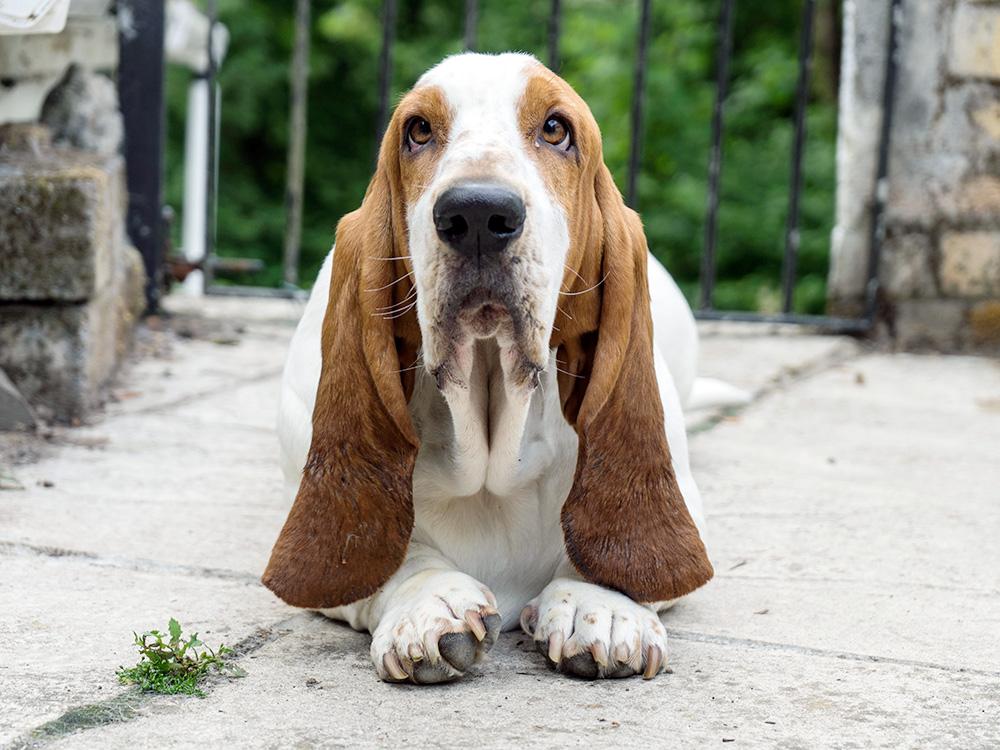
andreac77 / Shutterstock
The Basset Hound was originally used for hunting, but unlike some hounds with high prey drives, Bassets are more laid-back and unlikely to chase the family cat. Basset Hounds are friendly and accept all in the household as part of the pack — feline family members included. Cats will appreciate their slow-moving and relaxed personalities.
Height: 11 to 15 inches
Weight: 49 to 77 pounds
Browse for Basset Hounds (and their mixes) for adoption

FernandoPardo / Pixabay
Collies take it upon themselves to look after all members of the family, cats included. Although some herding breeds are too energetic and intense for cats, the Collie is very calm and gentle, and is unlikely to chase or otherwise bother the family cat. Collies are friendly and trainable, making them great choices for families with cats.
Height: 20 to 24 inches
Weight: 44 to 79 pounds
Browse for Collies (and their mixes) for adoption

Samantha Gehrmann / Stocksy
Although the Golden Retriever was originally a hunting dog, their prey drive is not high and is more specific to retrieving than chasing. Golden Retrievers are gentle and calm in the home when they get enough daily exercise. They are super smart and very trainable: If treating the family cat with kindness is what you want, a Golden is more than happy to do that.
Height: 20 to 24 inches
Weight: 46 to 80 pounds

Raymond Forbes LLC / Stocksy
Like the Golden Retriever, the Labrador Retriever typically does well in households with cats, especially if they’re raised together or introduced properly. Labs tend to have a bit more energy than Goldens, but this can be toned down with enough exercise. They are friendly and social with humans and animals, including cats.
Height: 21 to 24 inches
Weight: 49 to 77 pounds
Browse for Labrador Retrievers (and their mixes) for adoption

Korneeva Kristina / Shutterstock
If you’re looking for (mostly) hypoallergenic dogs who are good with cats, you can’t go wrong with Poodles of all sizes, from the large Standard Poodle to the medium-sized Miniature Poodle, and even the tiny Toy Poodle. Poodles are calm, well-behaved, and very tolerant of other animals, including cats. Many ’doodles and other Poodle mixes are also great with cats, especially those who are mixed with another breed known to be cat-friendly.
Height: 14 to 24 inches
Weight: 45 to 75 pounds
Browse for Poodles (and their mixes) for adoption
We’ve talked about some of the best dog breeds for cat parents, but what about those to avoid? Some dogs have traits that make them less compatible for homes with cats. When choosing a dog for a home with cats, avoid dogs who are territorial, have high prey drives and hunting instincts, and are overly active and energetic. Of course, every dog is different, but generally, you might want to avoid some breeds when you have a cat in your household. These include:
Alaskan Malamute
Australian Cattle Dog
Border Collie
Boxer
Chow Chow
Dachshund
German Shepherd Dog
Greyhound
Jack Russell Terrier (and many other terrier breeds)
Siberian Husky
If you already own a cat (or two) and are thinking about adopting a dog, take some time to consider these important topics before bringing a new pet home.
Not all cats enjoy the company of dogs. For some cats, living with a dog can be too stressful. In such cases, the cat might even develop behavioral issues, such as aggression toward other cats or humans, or peeing or pooping outside the litterbox. Cats who are shy or introverted, or those with a tendency to become stressed by chance, might not do well with a canine friend. On the flip side, outgoing, curious, energetic cats might enjoy the novel interactions a new dog will provide.
Dogs who have lived peacefully with cats in the past are ideal candidates for adoption into a cat home. If the dog is being fostered, you might be able to find out how they feel about cats. Additionally, dogs who have had some training — or are responsive to training — are a better bet for households with cats.
Think about the dog’s size, age, and energy levels. A large-breed puppy might be too boisterous for your cat, so a calmer adult dog or smaller puppy might be a better fit. A kitten will be more accepting of a new dog friend. But the older the cat, the more they might oppose a dog in the house.
Make sure you will be home enough to monitor interactions between your cat and your new dog, so you can help them grow used to each other. For times you won’t be home, set up separate spaces for your pets so they have safe places to relax when you can’t supervise.
The easiest dog breeds to introduce to cats are those with low prey drives who are calm, gentle, adaptable, friendly, and trainable. Examples of cat-friendly dog breeds include the Basset Hound, Bichon Frise, Cavalier King Charles Spaniel, Chihuahua, Collie, French Bulldog, Golden Retriever, Labrador Retriever, Poodle, and Shih Tzu.
Yes, dogs and cats can live together peacefully, especially when they are raised together from a young age or introduced properly with supervision and guidance. It also helps to choose a cat-friendly dog breed or mix.
If your dog chases your cat, take steps to protect the cat from harm or stress. Separate them when you’re not able to supervise and provide a safe area (which the dog cannot access) where your cat can retreat. Work with a dog trainer or animal behaviorist to teach your dog not to chase the cat.
It can be hard to know if a dog will get along with your cat. But in general, dogs who are calm, gentle, non-territorial, and have low prey drives usually get along with cats. If the dog is being fostered, ask if the dog has ever been around cats, and if the interactions were positive.
Yes, some specific breeds should never be kept with cats, though there may be exceptions based on an individual dog’s personality. Breeds not recommended in cat households include the Alaskan Malamute, Australian Cattle Dog, Border Collie, Boxer, Chow Chow, Dachshund, German Shepherd Dog, Greyhound, Siberian Husky, and most terriers.
Yes, you should worry about size differences between your cat and dog, especially if the dog is overly energetic, rough, aggressive, territorial, or has a high prey drive. However, large dogs who are calm, gentle, and have a low prey drive tend to live harmoniously with cats.
Gray, Peter B., et al. “The Roles of Pet Dogs and Cats in Human Courtship and Dating.” Anthrozoös, vol. 28, no. 4, Dec. 2015, pp. 673–683, https://doi.org/10.1080/08927936.2015.1064216.
Menchetti, Laura, et al. “My Dog Is Not My Cat: Owner Perception of the Personalities of Dogs and Cats Living in the Same Household.” Animals, vol. 8, no. 6, 24 May 2018, p. 80, https://doi.org/10.3390/ani8060080.
Jackie Brown lives in sunny Orange County, CA, where she works as a freelance writer and editor. When she’s not on deadline, you can find her paddling her outrigger canoe in the Pacific Ocean or hiking in the foothills with her miniature poodle and two young boys.
Adoption Advice
Adoption Advice

Adoption Advice
Behavior & Training
Cats may not need a lot of space, but it’s what you do with it that matters. Read on for tips to keep your cat mentally and physically at ease.

Adoption Advice
Curious about cat-proofing? Learn how to make your home safe and enjoyable for your cat.

Behavior & Training
Is your cat hiding? Don’t worry, it’s totally normal. Here’s how to help them adjust.

Breed Info
Are you thinking of adopting a small dog? Learn more about small dog breeds and what it takes to keep them happy.

Behavior & Training
What does it mean when your pup raises their eyebrows, pulls their ears back, or yawns a lot? Read on for all the answers.

Breed Info
Pedigreed pups are tied with mixed breeds for some disorders — but mutts reign supreme.