12 Flat-Faced (Brachycephalic) Dog Breeds: What You Need To Know
They’re awfully cute, but they also come with some health risks you should never ignore.
They’re awfully cute, but they also come with some health risks you should never ignore.
by Alicia Kort, | May 9, 2025

Katarina Radovic / Stocksy
Flat-faced dogs, such as French Bulldogs, Pugs, and Shih Tzus, are admittedly very cute with their big, cartoonish eyes and short snouts. It’s no surprise that French Bulldogs have been named the most popular breed in America. We get the hype. But that signature squished face? It didn’t happen naturally.
Their adorably wrinkled visage is the result of selective breeding for a specific look, leading to a brachycephalic skull shape. And that comes with baggage. Here’s what you need to know about flat-faced dog breeds before you adopt one.
Brachycephaly refers to a skull that’s shorter and broader than what’s typical for the average member of a species. “Flat-faced dogs with short noses are known as brachycephalic dog breeds. The word brachycephalic comes from the Greek words brachy, meaning short, and cephalic, meaning head,” says Dr. Boaz Man, medical director and owner of Boca Midtowne Animal Hospital.
The concept of a purebred dog arrived centuries ago during the Victorian era. Breeders began selectively shaping dogs to fit specific aesthetic ideals. Many breeds, especially flat-faced ones, were increasingly developed to tap into the appeal of baby-like features: big eyes, round heads, and tiny snouts.
And now, thanks to pure-breed conformation standards, this is considered cosmetically desirable for certain breeds of dogs (and cats) — but it’s not natural or healthy for them. As their snouts have become increasingly shorter and their skulls have become wider, these dogs have become flat-faced, ultimately shortening their lifespans.

Shutterstock
While brachycephalic dogs often face a range of health issues, including eye, heart, neurological, and dental issues, according to Humane World for Animals, the biggest challenge they face is just being able to breathe normally.
“Brachycephalic dogs known as ‘extreme brachycephalics’ essentially have too much stuff in too small of a space, which predisposes them to a myriad of health issues,” Dr. Man explains. It’s imperative that pet parents of these breeds bring them to the veterinarian regularly for check-ups and follow any guidance the vet gives about lifestyle changes.
“The most common health issue is Brachycephalic Obstructive Airway Syndrome (BOAS), which involves several structural abnormalities in the upper airways, including narrowed nostrils, elongated and thickened soft palate, narrow hypoplastic trachea, tonsillar hyperplasia, everted laryngeal saccules, and laryngeal collapse, “ Dr. Man says.
BOAS makes it difficult for them to breathe because their abnormal airways obstruct their breathing, increasing their risk for hyperthermia (or making it difficult for them to cool themselves off). Every single breath becomes an effort for these pups, and they might even feel like they’re suffocating. BOAS can also affect their sleep. Some flat-faced dogs struggle to breathe even when they’re resting, and that means snoring, restless sleep, or other respiratory issues.
“Symptoms of BOAS include noisy breathing, gagging, hacking, snorting, snoring, coughing, open mouth breathing, change of color in tongue or gums (indicating oxygen deprivation), lethargy, and exercise intolerance,” Dr. Man says.
Due to their shortened skulls, dogs from this breed group tend to have protruding eyeballs. This protrusion can cause all sorts of ocular issues, including dry eyes, damage to the surface of the eye, abnormal tear production, or even blindness. In extreme cases, trauma or pressure can cause the eye to prolapse, which can lead to permanent eye loss.
Flat-faced dogs have the same number of teeth as other dogs, but they have less space in their skulls to store them. This can cause the overcrowding of teeth, tooth decay, chronic discomfort, and infections in the mouth. Dental issues can be painful for pets, which is not something they can easily communicate to their pet parents.
Because brachycephalic dogs have trouble getting oxygen into their lungs, they often have heart issues as well. The continuous lack of oxygen over time can strain the heart, increasing the risk of conditions such as cardiovascular disease.
Face folds and wrinkles are desirable traits in dog breeds like Pugs, Frenchies, and Bulldogs, but they may come with difficulties as well. “These breeds often have deep skin folds, which trap moisture, dirt, and debris. This increases the risk of bacterial and fungal infections, particularly in the folds around the face, neck, and tail,” Dr. Man explains.
Dr. Man also says that these breeds are more likely to develop chronic skin allergies. These are not just annoying — they can be painful and persistent, causing a lot of discomfort for your pet.
Most likely as a result of their compressed skull and an overall strain on the body, flat-faced dogs are more prone to neurological problems. They can develop syringomyelia, which is a painful condition where the spine develops cysts or cavities, or lumbosacral disease, where the nerves are compressed at the base of the spine.
It’s important to note that every dog is different. “Not all brachycephalic dogs face the same health challenges,” Dr. Man says. Before bringing a brachycephalic breed into your home, you should talk to your veterinarian about potential health concerns and how to both prevent and prepare for them.
Many flat-faced dog breeds have varying levels of brachycephaly. “The top three ‘extreme brachycephalic’ dog breeds include the French Bulldog, English Bulldog, and Pug,” Dr. Man says. “Extreme brachycephalic dog breeds can have health issues related to their airway and breathing, and are also prone to eye problems, skin and ear infections, dental issues, neurological diseases, gastrointestinal disorders, and difficulty giving birth.” Despite their many issues, flat-faced dogs have become increasingly popular in recent years.
Below, we round up 12 of the most common brachycephalic dogs.

Jake Go / Shutterstock
Despite their gruff and grouchy countenance, these family-friendly, medium-sized dogs get along with just about everyone. English Bulldogs love to spend time snoozing around the house. With their many facial wrinkles, they need to be monitored closely for skin infections.
Height: 12 to 16 inches
Weight: 32 to 68 pounds
Considered an extreme brachycephalic breed

Alexander Nadrilyansk / Pexels
Affectionately known as “Frenchies,” this breed of pup has won the title of most popular dog breed in America for the past three years running. These sweet, low-energy pups are popular for a reason, but they are also susceptible to breathing and skin issues (thanks to their famous face wrinkles).
Height: 12 to 13 inches
Weight: 19 to 34 pounds
Considered an extreme brachycephalic breed

Tymoshenko Olga / Shutterstock
Pugs are massive cuddle bugs with cute personalities and curly tails. Pugs face health challenges. These sweet dogs do best in controlled, cooler environments because they tend to overheat due to their short snouts. Their diet and exercise routines are extremely important, due to the fact that they are prone to obesity.
Height: 12 to 16 inches
Weight: 12 to 24 pounds
Considered an extreme brachycephalic breed
Browse for Pugs (and their mixes) for adoption

katamount / Shutterstock
Affenpinschers are tiny black dogs who come in under just 10 pounds. Despite their small stature, they have the confidence of a St. Bernard and a lot of energy to burn. These flat-faced dogs can suffer from hip dysplasia and breathing issues from their narrow nostrils.
Height: 9 to 11 inches
Weight: 5 to 14 pounds

Sean Brannon / Pexels
One of the few breeds who originated in the United States, the Boston Terrier is known as the “American Gentleman,” perhaps due to their jaunty little trot. Playful, funny, and friendly, Boston Terriers make great companions, though they are prone to patellar luxation (knee dislocation) and eye issues.
Height: 14 to 16 inches
Weight: 15 to 29 pounds

Chris / Pexels
One of the bigger breeds on this list, the Boxer is known for being extremely energetic, meaning that pet parents better be game for multiple walks and lots of playtime. These pups are prone to heart problems and hip dysplasia.
Height: 21 to 25 inches
Weight: 49 to 77 pounds
Browse for Boxers (and their mixes) for adoption

Lelechka / Shutterstock
Boasting quite an impressive beard, the Brussels Griffon looks like a petite grandpa. Despite this breed’s older appearance, this 10-pound dog is quite energetic and loves to play. Because they are so small, they do need to be handled delicately. Brussels Griffons are prone to heart, eye, and breathing issues.
Height: 7 to 8 inches
Weight: 6 to 14 pounds

Ivan / AdobeStock
The Chow Chow, which is a medium-sized dog breed with a lion-like coat of thick, golden fur, is a loyal companion but can be aloof and shy with new people and animals. This breed is predisposed to hip and elbow dysplasia, eye issues, and skin issues.
Height: 18 to 22 inches
Weight: 42 to 69 pounds
Browse for Chow Chows (and their mixes) for adoption

primipil / AdobeStock
The Dogue de Bordeaux, sometimes called the French Mastiff, is a giant flat-faced dog, reaching up to 120 pounds. This big buddy hails from Bordeaux, France, and originated as a working dog. They can suffer from heart, joint, and skin problems.
Height: 23 to 27 inches
Weight: 93 to 151 pounds
Browse for Dogue De Bordeauxs (and their mixes) for adoption
GoranH / Pixabay
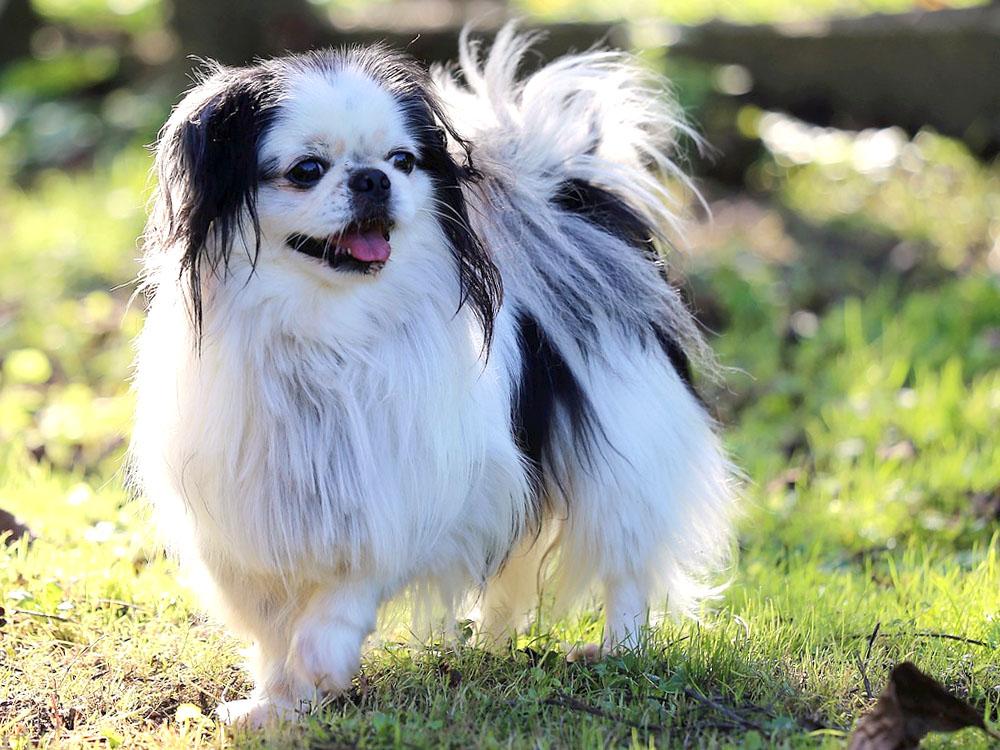
The Japanese Chin has a royal history and was favored by Japanese aristocrats. So yes, they do expect that same treatment. These sophisticated, dainty pups are often praised for being catlike and love to lounge in high-up places. They often suffer from heart problems, patellar luxation, and eye issues.
Height: 8 to 11 inches
Weight: 6 to 15 pounds

Known for their large stature, the Bullmastiff used to help guard English estates. This breed requires a lot of exercise, mental stimulation, and training to stay happy. They are prone to joint and skin issues.
Height: 24 to 27 inches
Weight: 78 to 144 pounds
Browse for Bullmastiffs (and their mixes) for adoption

Olga Skred / iStock
This “Lion Dog” might resemble a mighty predator, but actually makes for a very gentle little lap dog. Shih Tzus are known for their magnificent manes (which do need quite a bit of taming and grooming) and for being great family pets. Although they might not be the first dog you think of when you think of flat-faced breeds, they do also have smushed snouts.
Height: 10 to 11 inches
Weight: 10 to 21 pounds
Browse for Shih Tzus (and their mixes) for adoption
There are up to 24 breeds considered brachycephalic; others include Cavalier King Charles Spaniel, Lhasa Apso, and Brasileiro.
Dogs are a lifetime commitment, so pet parents need to be proactive in preventive care, as well as financially and emotionally prepared if health problems do occur. Many people don’t realize the challenges these dogs can face or the costs that can come with them.
Sadly, many dogs end up in shelters and rescues when their pet parents are unable to care for them. Here are a few more things you should consider before adopting a flat-faced dog.
Brachycephalic breeds will need regular check-ups with their vets, and pet parents will need to be proactive about asking for advice about how to avoid the various health issues that come with these breeds. And if their dog does need treatment, they should have a pet emergency fund with thousands of dollars set aside.
Flat-faced dogs, especially ones with wrinkles or skin folds on their faces and bodies, are prone to skin and allergy issues. They might need additional care to prevent infections. Dogs with long fur, such as the Chow Chow and the Shih Tzu, will need daily brushing to keep their coats in good condition.
Some flat-faced dogs, such as French Bulldogs and English Bulldogs, have issues with their joints and spines, so they may need help climbing stairs or getting onto a bed or couch. You might need to make adjustments to your home and your daily routines to accommodate your dog.
Some brachycephalic breeds, such as Pugs and English Bulldogs, can be prone to obesity. This is one of the reasons why it’s so important to ensure your dog is getting enough exercise. Extra weight will put even more pressure on their lungs and hearts, which might inadvertently shorten their lives.
It’s important that your dog is eating the best possible food and the right amount for their breed. If you’re unsure of what to feed your dog, work with your vet to establish a healthy diet for them. A good diet and good quality food can help keep your dog happy and healthy.
Instead of supporting breeders who continue to prioritize looks over health, consider adoption. You can find many amazing flat-faced pups on Adopt a Pet.
Some animal welfare groups believe that breeding brachycephalic breeds should be stopped. And it’s already banned in Norway and the Netherlands. Further breeding of these dogs without adapting to the clear health data continues to narrow the gene pool, making them more susceptible to health problems, resulting in more exaggerated features — and thus, more health issues.
If a new pet parent has done their homework and is fully prepared (both financially and emotionally), a flat-faced dog could be a good fit for them. Flat-faced breeds can come with a higher risk of health issues and aren’t necessarily a low-maintenance option. Research, planning, and a strong relationship with a trusted vet are musts.
Some signs that your flat-nosed dog is sick include severely interrupted sleep, wheezing and snort, panting constantly (even when resting), and difficulty eating.
Boston Terriers are considered one of the healthier brachycephalic breeds because their snouts are slightly longer. But this breed has also been influenced more recently by poor breeding practices, pushing for shorter noses.
Some flat-faced dogs, such as English Bulldogs and Shih Tzus, are recommended pets for families. However, kids should be taught how to interact safely with dogs. Smaller dogs have delicate joints, and their bodies are already under stress, so kids need to be taught how to be gentle with them.
Beuoy, Chris. “Spare Flat-Faced Pets the Respiratory Distress - Veterinary Medicine at Illinois.” Veterinary Medicine at Illinois, 29 Mar. 2024, vetmed.illinois.edu/2024/03/29/brachycephalic-flat-faced-pets-health-problems.
“Brachycephalic Dog Breeds and Health Insights | ASPCA Pet Health Insurance.” Aspcapetinsurance.com, 2022, www.aspcapetinsurance.com/resources/brachycephalic-dogs.
“Certain Dog Breeds Prone to Losing Eyeballs.” ASPCA, 2015, www.aspca.org/news/certain-dog-breeds-prone-losing-eyeballs.
England, Adam. “Vets Welcome Introduction of Mandatory Health Testing for Three Flat-Faced Breeds at Crufts This Week.” Aol.com, AOL, 5 Mar. 2025, www.aol.com/vets-welcome-introduction-mandatory-health-123000375.html.
Paul, Elizabeth S., et al. “Are Brachycephalic Dogs Really Cute? Evidence from Online Descriptions.” Anthrozoös, vol. 36, no. 4, 27 Feb. 2023, pp. 1–21, https://doi.org/10.1080/08927936.2023.2176590.
“Pug and French Bulldog Health Issues.” Humane World, 2019, www.humaneworld.org/en/resources/pug-and-french-bulldog-health-issues.
Texas A&M University College of Veterinary Medicine and Biomedical Sciences, “When Hearing Hurts: Managing Middle Ear Problems in Flat-Faced Dog Breeds.” Tamu.edu, 6 Mar. 2025, today.tamu.edu/2025/03/06/when-hearing-hurts-managing-middle-ear-problems-in-flat-faced-dog-breeds.
Weir, Malcolm, et al. “Brachycephalic Airway Syndrome in Dogs.” Vca_corporate, 2009, vcahospitals.com/know-your-pet/brachycephalic-airway-syndrome-in-dogs.

Alicia Kort is a writer and editor living in Brooklyn. She’s currently the senior commerce editor at Apartment Therapy. She’s been published in StyleCaster, Electric Literature, Newsweek, Interview, Brooklyn magazine and more. In her free time, she runs, reads, and spends time with her dog-nieces, Maya and Lady, and her cat-niece, Pepper.

Breed Info
Adoption Advice

Breed Info
Breed Info
Are you thinking of adopting a French Bulldog? Find out what makes Frenchies so irresistable.

Breed Info
With their squishy, adorable faces and gentle dispositions, these Bulldog mixes can make amazing family pets.

Breed Info
From Pugs to French Bulldogs, squishy-face dogs are pretty hard to resist. Here is your guide to these loving, adorable breeds.
Adoption Advice
If your pup has asthma, minimizing allergens and getting the right meds make this a pretty easy-to-treat condition.
Adoption Advice
Stumped on what to call your loveably squish-faced, loyal Bulldog? Start your search here, with this endless list of fun names for your new pup.

Pet Wellness
Regular vet visits are key to keeping your pet healthy. Here’s what happens during a checkup, when to get them, and what to bring.