Feral vs. Stray Cats: What You Should Know
There are distinct differences between the two, which will shape your interactions with them. Here’s how to tell them apart.
There are distinct differences between the two, which will shape your interactions with them. Here’s how to tell them apart.
by Janelle Leeson, | August 4, 2025

Kristina Blokhin / Adobe Stock
People often confuse feral cats and stray cats, and it’s easy to understand why. You might think you’re looking at a feral cat because the cat is living outside and hesitant to approach you. But a truly feral cat will do their very best to avoid any possibility of interaction with people, Dr. Robyn Jaynes, director of veterinary affairs at PetSmart Charities, says.
Whether you’re feeding outdoor cats, offering shelter, or working with a community cat program, understanding if you’re dealing with feral or stray cats helps you help them. This also means you’re less likely to accidentally traumatize the cat — or end up with bites and scratches. Once you know what to look for, you’ll have a better chance of distinguishing a feral vs. a stray cat before getting too close.
Feral and stray cats are part of the same domesticated cat species, Felis catus. By domesticated, we mean that, over thousands of years, cats have been bred to live alongside humans. Whether a cat is feral or stray depends on how much interaction or socialization they’ve had with people.
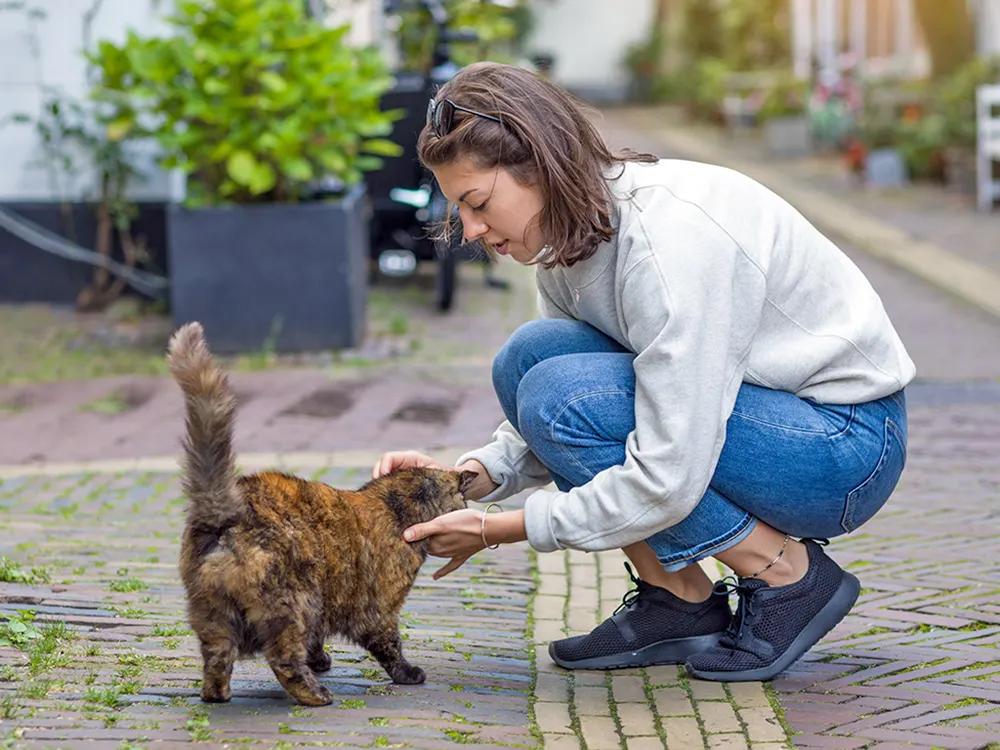
Stray cats are familiar with people and tend to be socialized, or at least semi-friendly toward, humans. “They may have had a home, though not always an indoor one. And they’ve learned to tolerate, and sometimes even enjoy, human company,” Dr. Jaynes says.
Feral cats have had little to no human interaction, so they avoid people at all costs. They’re much more like wild animals than pets.
Stray cats can theoretically become feral over time. However, they’re much more likely to become shy and less social than truly feral, Aurora Velazquez, an animal welfare professional and director of the East Region at Best Friends Animal Society, says.
papa / Adobe Stock
Stray cats and feral cats have a lot in common, so you’re definitely not the first to mix them up. They’re both part of the same domesticated species, and they might even look alike at first glance. Both live outside, and probably in your neighborhood. But despite those similarities, each is quite different. Here are a few differences between them.
“Vocalization is a primary way that we tell feral and stray cats apart,” Lindsay O’Gan, instructional design manager at Austin Pets Alive!, says.
Stray cats make the same sounds as pet cats: meows, chirps, trills, and even purrs. If you call them, they might come over or meow back to get your attention or engage with you.
Feral cats are unlikely to do any of that, Velazquez says. The only sounds you’ll hear from them are defensive ones, like hissing, growling, or spitting. And even then, this is only when they’re cornered and have no other choice.
“Like all wild animals, feral cats want to hide, blend in, or disappear to stay safe,” O’Gan says. “You can't hide if you’re yowling.”
Dr. Jaynes says it can be tough to tell if a cat is feral or stray when they’re stressed out. For example, a stray cat in a shelter might be so scared that they look feral. But once they’ve had a chance to relax, you’ll start to see some clear behavioral differences between the two.
Behavior | Stray cat | Feral cat |
Approach to people | Likely to approach, even if they don’t want to be touched | Avoids any interaction whenever possible |
Play | May knead or engage in playful behavior | Rarely, if ever, kneads or plays around people |
Posture | Holds tail high in a relaxed way | Body is stiff, crouched low to the ground, with limbs and tail tucked in close |
Eye contact | May make eye contact or give a slow blink | Avoids eye contact, instead looking for ways to escape the encounter |
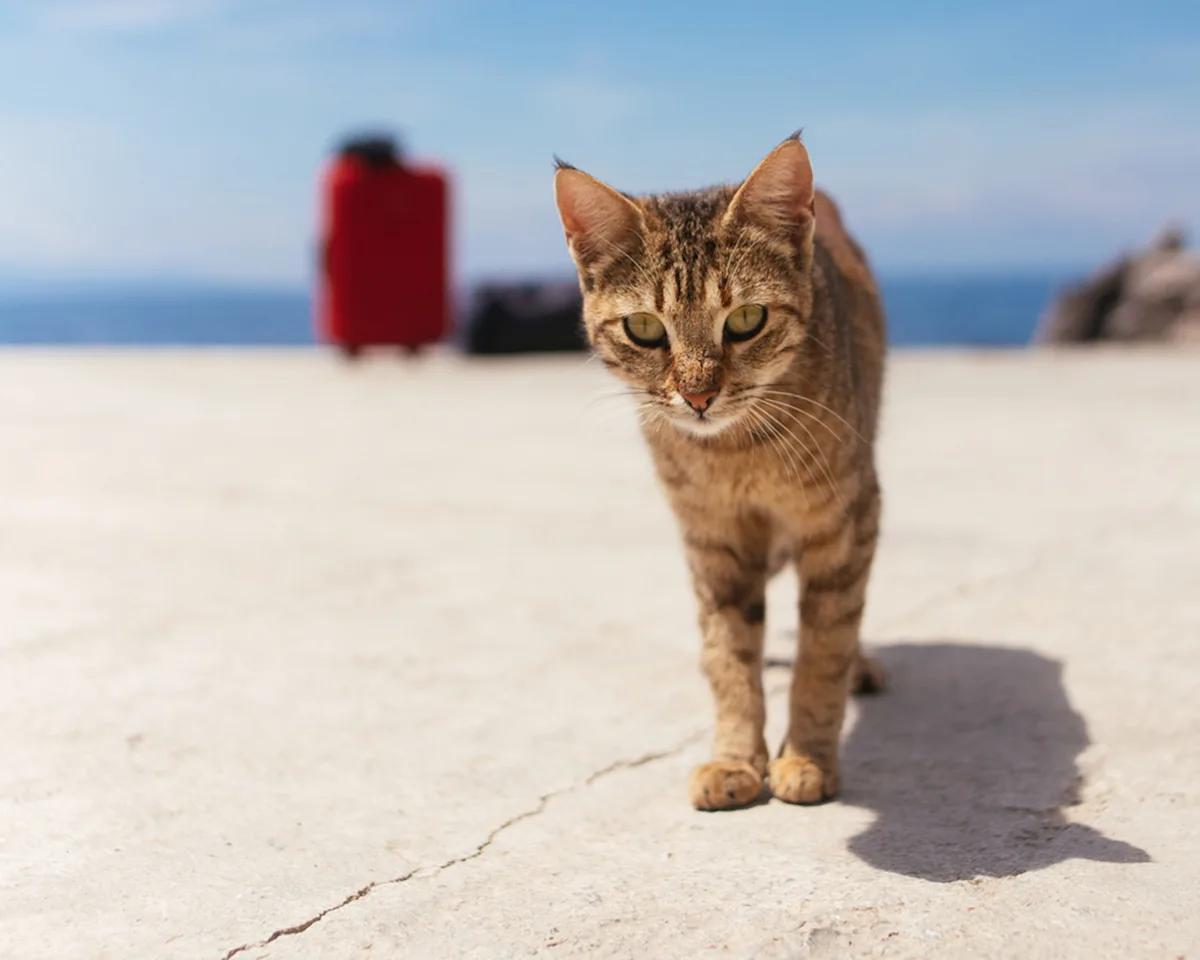
Dr. Jaynes says many factors can affect how a cat looks when they’re living outside: how long they’ve been on their own, if they have a steady food source, and whether or not they’ve been fixed. So, appearance alone isn’t always the most reliable way to tell if a cat is stray or feral.
Still, Velazquez offers a helpful rule of thumb: “Feral cats are more likely to appear in good condition than a lost pet, especially if they’ve been spayed or neutered,” Velazquez says.
That's because feral cats tend to be part of a colony with a consistent territory. They likely have regular access to food and some form of shelter. These steady resources, along with natural adaptations like growing thicker coats in winter, help feral cats survive without human care. “Lost pets, on the other hand, are not used to finding resources like food and shelter on their own, and they may be less adept at avoiding dangers,” she says.
However, feral cats who are not spayed or neutered often look scruffier or may have injuries from fighting over territory or mates. Un-neutered male cats frequently develop a heavier, more muscular build and broad cheeks, a trait that’s more common among feral tomcats.
Marko / Stocksy
Before you assume every cat you see roaming around — called community cats — is lost or abandoned, it’s worth taking a moment to consider that they might have a perfectly good home nearby.
“Oftentimes, what we think of as stray cats actually have owners that love them, but let them go indoors and outdoors,” O’Gan says. Dr. Jaynes adds, “Some cats like to ‘claim’ multiple people.”
To put this into perspective, O’Gan shares the results of an eye-opening study. Researchers placed paper collars with a phone number on every friendly outdoor cat they encountered — cats thought to be strays. Surprisingly, about 90 percent of the owners called in to say their cat wasn’t lost at all. They were simply enjoying their usual outdoor adventures, often a mile or two from home.
“If you would like to adopt a cat that you have been feeding, first, always have your pet evaluated for any health issues by a veterinarian,” Jaynes recommends. “At that time, they can scan your new pet for a microchip to see if one is present.”
A truly stray cat may have become lost (or abandoned) and couldn’t find their way home. Sometimes, a door is left open, and the cat slips out unnoticed. Other times, people move away and leave their cats behind, or they release them intentionally. Stray cats often still crave human companionship and may approach you for help.
Feral cats are typically born outdoors and grow up without any positive interaction with humans, which causes them to avoid people rather than trust them. But cats can also become feral in other environments — like severe hoarding situations — where they don’t have meaningful human interaction, Velazquez says. Feral cats often gather and live in groups called colonies, which form around reliable food sources and shelter.
The longer a kitten goes without positive human contact, the harder it becomes to socialize them. According to O’Gan, the sweet spot for socialization ends at about three to four months of age. “After that point, it is unlikely that they are ever going to truly enjoy being around humans,” she says.
If you spot a cat who looks clean, healthy, and well fed, leave them where they are — they likely have a family nearby. Check with neighbors, post on local community boards, or put up a few flyers to see if anyone recognizes the cat. “We don’t want to steal our neighbors’ cats that they love,” O’Gan says.
If you come across kittens who look healthy and clean, resist the urge to scoop them up — leave them be. Their mother is probably out searching for food and will return soon. You can watch from a distance to confirm if she comes back.

With some patience and a well-informed approach, it is absolutely possible to adopt a stray cat.
However, if you find a cat or kittens who appear sick, injured, thin, disheveled, or in distress, that’s the time to step in. Take them to a veterinarian for care and have them scanned for a microchip, which could help reunite them with their family.
“No one, including experienced folks, should actually try to touch or handle a feral cat,” O’Gan says. “It’s terrifying for the cat and risky for the human.” Instead, ask local rescue groups and organizations how you can get involved with their Trap-Neuter-Return (TNR) program.
TNR is a humane, effective approach to managing outdoor cat populations. In a TNR program — sometimes called Trap-Neuter-Vaccinate-Return (TNVR) — cats are humanely trapped, then spayed or neutered and vaccinated. After recovery, they’re returned to where they were found.
TNR prevents litters of kittens — one unspayed female can produce upwards of 100 kittens in her lifetime — and also helps reduce mating-related fighting and limits the spread of disease.
An easy way to tell if a cat has been through a TNR program is to look at their ear. Sterilized cats will have the tip of one ear removed. These cats are usually feral, but sometimes friendly strays are ear-tipped before they’re returned, too, O’Gan explains.
A cat becomes feral when they are not socialized with humans before three to four months of age.
It’s unlikely that a stray cat will become feral. A truly feral cat is essentially a wild animal. Although a stray cat who has been socialized and is used to people might become wary or frightened if left outside long enough, it’s unlikely they would become feral.
“Feral cats are not aggressive unless they have no other option,” O’Gan explains. Their instinct is to avoid humans altogether — they’ll usually hide rather than approach or draw attention to themselves. When cornered, “They often react explosively, like a deer suddenly bolting from cover. That burst of energy can involve claws and teeth if they feel cornered,” she says.
Feral kittens can be socialized if they’re less than three to four months old. At that age, they’re still in the critical socialization window. After that point, it becomes much more difficult to socialize a kitten, and trying to socialize an older feral cat often does more harm than good.
“Most of our friendly outdoor cats actually have an owner,” O’Gan says. “That means many of these cats are already getting fed by multiple houses.”
A clean, healthy, and friendly cat is usually someone’s pet. Look for a collar or ID tags. Rather than immediately pick up the cat, check in with neighbors, put up flyers, or post on local community boards to see if anyone recognizes them (and ask for proof of pet parenthood, of course). If the cat appears sick, injured, or unkempt, take them to a veterinarian for care. The vet can also scan the cat for a microchip and contact the registered owner.
“The Cat Socialization Continuum: A Guide to Interactions between Cats and Humans.” Alley Cat Allies, www.alleycat.org/resources/cat-socialization-continuum-guide.
LeFew, Claire. “Did You Know? What Is Kitten Season.” Lynchburg Humane Society, 8 Feb. 2023, lynchburghumane.org/did-you-know-kitten-season.
Janelle Leeson is a Portland, Oregon-based freelance writer. Her work has been featured in magazines such as Inside Your Dog’s Mind, Inside Your Cat’s Mind, and Paw Print, as well online at Insider Reviews, NBC Select, Shop Today, PetMD, and Daily Paws. She has two adventure cats, a flock of urban chickens, and a soon-to-be-husband who doesn’t mind housing the occasional foster cat — or five.

Foster & Volunteer

Rehome

Adoption Advice
Rehome
Found a stray cat? Follow these steps to ensure their well-being while you search for their people.


Rehome
These many signs will indicate that a vet visit is in order for a possible litter of kittens.

Shelters & Rescue
Found a stray dog in your neighborhood? Read more to learn how to help safely.


Rehome
Animal control agencies will never charge you for calling them, but some of their services do come with fees.

Rehome
Learn what factors affect how long cats stay in humane societies and shelters.


Pet Wellness
Think your cat may be pregnant? Here are some signs that indicate she may be, as well as a guide to what comes next.