
Posted over 3 weeks ago | Updated over 2 weeks ago


This helps Angel of Hope Animal Rescue with pet care costs.
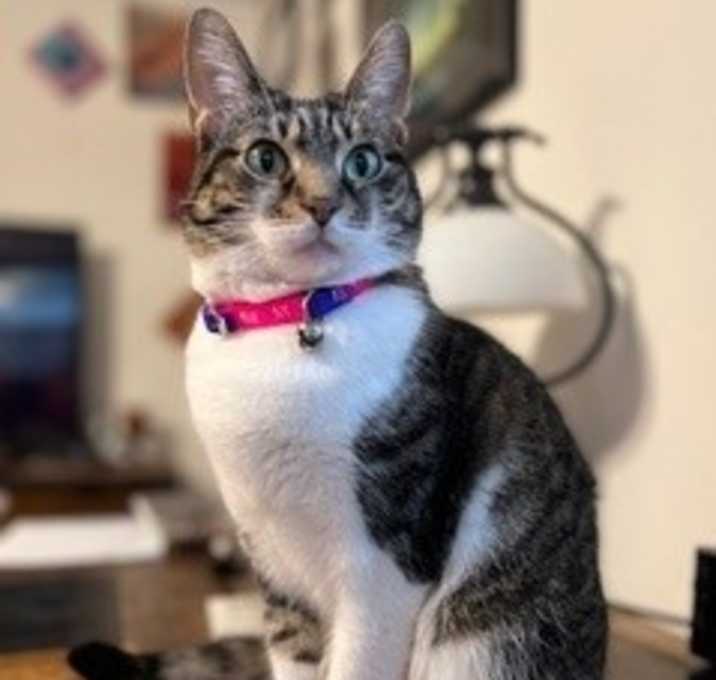
Meet Holly! Holly is a super sweet 5 month old black and white kitten. She adores humans and loves any attention she can get! She also gets along great with other cats!
Holly and her siblings 2 siblings Fern and Laurel, are felv positive. What does this mean?
Feline leukemia virus (FeLV) is a retrovirus that affects the immune system of cats. It can cause an increased chance of other viruses or illnesses and can increase the risk of certain types of cancer to develop. FeLV is only transmissible from cat to cat and is not transmissible to humans, dogs, or other species. Unfortunately, there is no cure for FeLV.
While it is impossible to accurately predict the life expectancy of a cat infected with FeLV, several stages of the virus can impact the lifespan by making the cat more susceptible to particular illnesses or diseases. Research has shown that cats that have tested positive as adults tend to live longer than cats that have tested positive as kittens. Regular vet care is recommended for the appropriate management of FeLV.
Because FeLV can be transmitted between cats, it is recommended that FeLV-positive cats live as single cats or in FeLV-positive households only.
Cats with FeLV should be housed indoors to prevent the spread of infection to other cats in the neighborhood and to prevent injuries or illnesses. These cats should be fed a high-quality diet and see a vet regularly to catch any illnesses early. It is recommended that you develop a relationship with a vet who is experienced with FeLV. Because cats with FeLV tend to get sick faster than non-infected cats, it is important to take your cat to the vet at the first sign of illness.
Holly is located at the Maplewood PetSmart. Please visit the store to apply for her!
Meet Holly! Holly is a super sweet 5 month old black and white kitten. She adores humans and loves any attention she can get! She also gets along great with other cats!
Holly and her siblings 2 siblings Fern and Laurel, are felv positive. What does this mean?
Feline leukemia virus (FeLV) is a retrovirus that affects the immune system of cats. It can cause an increased chance of other viruses or illnesses and can increase the risk of certain types of cancer to develop. FeLV is only transmissible from cat to cat and is not transmissible to humans, dogs, or other species. Unfortunately, there is no cure for FeLV.
While it is impossible to accurately predict the life expectancy of a cat infected with FeLV, several stages of the virus can impact the lifespan by making the cat more susceptible to particular illnesses or diseases. Research has shown that cats that have tested positive as adults tend to live longer than cats that have tested positive as kittens. Regular vet care is recommended for the appropriate management of FeLV.
Because FeLV can be transmitted between cats, it is recommended that FeLV-positive cats live as single cats or in FeLV-positive households only.
Cats with FeLV should be housed indoors to prevent the spread of infection to other cats in the neighborhood and to prevent injuries or illnesses. These cats should be fed a high-quality diet and see a vet regularly to catch any illnesses early. It is recommended that you develop a relationship with a vet who is experienced with FeLV. Because cats with FeLV tend to get sick faster than non-infected cats, it is important to take your cat to the vet at the first sign of illness.
Holly is located at the Maplewood PetSmart. Please visit the store to apply for her!