Size
(when grown) Med. 26-60 lbs (12-27 kg)
Details
Good with kids,
House-trained,
Spayed or Neutered,
Shots are up-to-date,
Story
Socialization: Patroklos enjoys meeting all new people, he is fine with men, women and children. He may want to jump up to say hello but has been getting much better with his greetings. He is fine initially meeting new dogs but doesn't like spending much time with dominant males who won't leave him alone. He currently lives with a setter female and they are perfectly fine together. Patroklos will not initiate play with another dog, he tends to be ok meeting a new dog and then carry on as he was. He has not been formally introduced to a cat but when one walks past the house window he starts barking and carrying on, so all signs point to no cats.
Training: Patroklos is crated while eating meals, just because he eats quicker than our resident dog. He is also crated when we leave the house. He goes fine into his crate, sometimes he will whine a bit initially but settles down. He is uncrated overnight and we have had no issues. Patroklos is a champion counter surfer, so that is still being addressed. We have learned to put everything out of reach but he still likes to make sure nothing was left nearby. Should he get something he shouldn't have, he will gently release it when you take it from his mouth. He knows how to sit and we are still working on his name and recall. He is housebroken.
Activity requirements: A really solid exercise plan will need to be in place to keep Patroklos occupied. He is a total couch potato when in the house but outside he is all pointer. He currently gets walked about 3 miles/day and he coming along better on an Easy Walk front-clip harness but needs reminders throughout the walk - if he spots a rabbit or squirrel he isn't always easily redirected. When he is in our yard, we walk him on a 30' lead so he can run, as we have an invisible fence - and run he does. He is constantly sniffing the ground and air looking for any creatures in the yard and will run big circles searching for them. He does play fetch and this is another good way to wear him out while outside. We have taken him to the dog park which he did love, but again, if there are dominant males that won't leave him alone it may not be the best choice for exercise.
Fence requirements: We are currently working on training Patroklos to our invisible fence. He does great when he isn't running full force and turns around as expected but he would need consistent training with it to fully understand the fence boundaries. A large fenced in yard would be ideal for him but if you are willing to commit to exercise and training, he may be okay in a home without a fenced yard with a solid exercise plan in other ways or with an invisible fence once his recall is much better.
Personality: Patroklos is a cuddly joy when he is in the house. There is nothing he likes better than climbing up into someone's lap and making himself right at home. He is unaware of personal space. He does like chewing on squeaky toys but will work at destroying anything too soft. He likes to be near us so he follows us from room to room. He enjoys patrolling the outside from the windows and will keep an eye on everything going by - usually it is only a squirrel or cat that will get him a little too worked up and then he will start whining or barking. He is easily redirected when in the house though. Outside he is a whole different dog and is not as easily redirected when he gets a scent - he does like treats though so that is helping with recall and redirection.
Health history: Patroklos is a healthy boy with no known health issues. He is neutered, microchipped, up to date on vaccinations, and on monthly heartworm prevention. His next leishmaniasis test is due in December 2026.
This dog originates from Greece where Leishmaniasis is endemic. They tested negative before coming to the USA, but the parasite can remain dormant in the system for many years, so potential adopters must be willing to commit to annual testing for the next 7 years. Typically, the test needs to be sent to a special lab, but any regular vet can draw the blood and send it to the lab. The cost of the test seems to vary widely by area, but is approximately $150-$250. or if your vet is willing to send the test to a veterinary college lab, cost can be as low as $80.
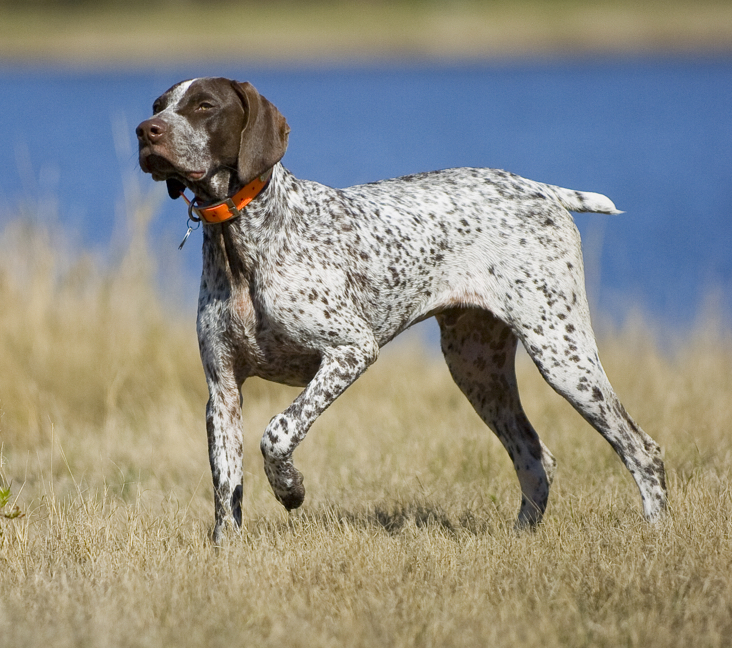
Foster comments: Patroklos is what I think of as a typical German Shorthaired Pointer, lots of energy and a strong nose. With consistent daily exercise outside he has settled so easily into our home. It only took him a couple days here to figure out sleeping on the couch or in a bed beats anything else. He enjoys being close to us without being underfoot and has become accustomed quickly to our home routine.
Foster location: Waukesha, WI
Transport note: We are able to arrange volunteer transport to get dogs from their foster home to their adopter as long as the adopter and the foster are within a 1,000 mile radius of each other and the adopter is located in the USA. If the adopter is more than 1,000 miles from the foster home, adoption would only be possible if the adopter is willing to drive the distance beyond the 1,000-mile transport limit. Long distance adoptions may also be possible if the adopter is willing to pay for a flight to get their dog from the foster home to their location if the foster feels this is an appropriate arrangement for the specific dog. Canadian adopters would have to drive into the USA to pick up their dog, as we do not transport outside of the USA.
##2714147##