How to Keep Your Pet Safe During the Holiday Season
Everything from tinsel to turkey bones can be a danger to your pet. Here’s how to identify hazards and prevent emergencies.
Everything from tinsel to turkey bones can be a danger to your pet. Here’s how to identify hazards and prevent emergencies.
by Danielle S. Tepper, | November 20, 2025

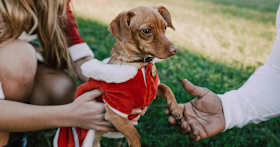
Nastya / Adobe Stock
The holiday season brings festive decorations, delicious meals, and lots of hustle and bustle. For our pets, all that excitement can sometimes be overwhelming — or even risky. From tempting treats on the table to tinsel and ornaments that look like toys, it’s important to take a few simple steps to keep our furry friends safe. With these tips, you can make sure your celebrations are joyful for every member of the family, paws included.
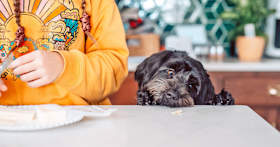
Pets can smell those home-cooked dishes wafting from the kitchen, too. Holiday meals can be all-too-tempting to peckish pups wanting to sneak a taste, and it can be even more tempting to give them one. If you don’t, they might just decide to help themselves when you’re not looking.
Kathleen Summers, director of puppy mills outreach and research at Humane World for Animals (HWFA), remembers a time her dogs got into some trash and fought over turkey bones. Sam, a Rottweiler, and Pete, a Chihuahua, had been left home alone for a while following a Thanksgiving feast.

Here are some symptoms of this serious illness, as well as treatments that can help.
“Pete was nipped on the head,” she says. “His vet visit was expensive, but we were very lucky that both dogs recovered and no one required surgery.”
It’s a common occurrence during the holiday season, making it important to exercise extra caution around table scraps. If you’re hosting a big family dinner, keep an eye on your pets, who might be hoping you’re too distracted preparing and entertaining to notice that they’re sniffing out the table settings. And be sure your guests know your policy on slipping your pup people food.
Most holiday treats actually pose serious health risks for animals. For instance, high-fat holiday foods, such as butter and gravy, can cause painful pancreatitis in dogs. “One year, our dog ate an entire stick of butter off the dining room table,” Lynsey White, HWFA director of humane wildlife conflict resolution, says. “My sister, who is a vet, tried to induce vomiting, but it didn’t work right away. Of course, Lily finally vomited a foamy mess on the kitchen rug while we were eating Thanksgiving dinner. My mom is much more careful about leaving butter out unattended during holidays now.”

Pekic / iStock
Poultry bones, unlike those snacks made for dogs, can easily splinter and cause internal damage — even death. Also, avoid giving them chocolate and xylitol, which is an artificial sweetener that’s especially toxic to dogs. It’s found in a wide array of diet drinks and foods, including some peanut butters. And the list doesn’t stop there; there is a wide-ranging list of common foods that can be dangerous to animals, especially during the holidays.
Chocolate
Grapes and raisins
Onions, garlic,
Rich, fatty foods
Xylitol
Alcohol
Yeast dough
Bones
Accidents can still happen. Dr. Barbara Hodges, program director of advocacy and outreach at Humane Veterinary Medical Alliance, recommends seeking emergency help rather than trying to remedy the problem at home.
“If you even suspect your pet has ingested something inappropriate — food or otherwise — err on the side of caution and immediately contact your veterinarian or the nearest emergency clinic for advice,” she advises. “You can also call the ASPCA Animal Poison Control Hotline at 888-426-4435. They are available 24-7, and a consultation fee may apply.”

Alie Lengyelova / Stocksy
While our tables are laden with tantalizing treats, our homes are also brimming with decorations that can pose unique threats. Tinsel, in particular, can be very dangerous to cats if swallowed.
Kristin Stone, senior web program manager at HWFA, recalls her family using tinsel when she was a kid. “One year, our cat ate some. It took $2,000 in surgery — in 1980s dollars — so it wouldn’t wrap around his intestines and kill him,” she says. Here are a few other things to consider:
Given the dangers mentioned above, kitchen trash cans should have lids or covers. If you’re throwing away a lot of food, consider taking it straight to the curb, so the scent doesn’t entice your pets to investigate.
“Holiday decorations of all kinds are often bright and shiny and interesting to our pets, but they can become dangerous toys,” says Dr. Hodges. “When [decorating] your tree, windows, and other areas of your home, make sure to secure them firmly and place them out of reach of your pets. And remember, cats are curious and athletic. Some will climb quite high to reach these tempting baubles. Strands of holiday lights can be pet strangulation hazards, and battery-operated lights are safer than electric lights in terms of fire risk.”
Christmas pet safety also includes caution around plants. Pine needles can get lodged in the intestinal tract, puncturing the lining or bunching together and causing an intestinal obstruction. Other holiday plants, like poinsettias and mistletoe, can be irritating or toxic if nibbled. And did you know that any part of a lily, even just a few pollen grains, is fatal to cats?
Unattended candles, while great for ambiance, can also be accidentally knocked over by a curious paw. Keeping an eye on your décor and creating a pet-safe environment will ensure your celebrations stay cozy and bright for everyone.
Loud conversations, music, children — parties can easily overstimulate animals. Even if you’re convinced your dog is having a great time getting attention from so many people, make sure you prepare in advance to protect their mental well-being.
For example, provide your cat or dog with a safe space — a quiet room or crate away from the noise — where they can retreat for some alone time to decompress, if needed. If your dog is prone to jumping or barking, having somewhere they can take a break will help calm them down.
Keep them inside during cold weather, and provide plenty of toys to keep them busy. They should still feel comfortable (and welcome) in their own home until the party winds down to a close.
You should also warn your guests in advance in case anyone has allergies or is fearful of dogs. If your animal has a tendency to try to make a break for it, ask folks to keep an eye on doors as people are coming and going.
Most holiday foods pose a significant health risk to dogs and cats. Take care to ensure they avoid ingesting chocolate and sweets containing xylitol, as well as alcohol, citrus and pits, garlic, and nuts. Some healthy foods you can feed your pet: plain parsley, flaxseeds, yogurt, salmon, cranberries, rosemary, and more.
As with many other holiday foods, ham, turkey, and other meats that are raw or undercooked can pose a health risk to your pet. Even cooked meats can be high in sodium, fat, and preservative content. It’s also crucial to avoid seasonings, skin, and bones. Only unseasoned, cooked white meat is a healthy protein source and can be given as a rare treat.
No, dogs cannot eat turkey bones. Cooked poultry bones, including turkey, can easily splinter when chewed. These splinters can cause choking, mouth or throat injuries, and may lead to dangerous blockages or tears in the digestive tract. Even small bones carry this risk. If you’d like to share turkey with your dog, offer a small amount of plain, unseasoned turkey meat with the skin and excess fat removed. Always dispose of bones securely so pets can’t access them.
Poinsettias are often described as highly toxic, due to the milky sap which contains chemicals that irritate the mouth — but they’re generally only mildly irritating to pets. If a dog or cat chews on the leaves, they may experience drooling, mild vomiting, or skin and mouth irritation. Although serious poisoning is unlikely, it’s still best to keep poinsettias out of reach to avoid any stomach upset or discomfort. If you notice persistent symptoms or your pet has eaten a large amount, contact your veterinarian for guidance.
Tree water can contain bacteria, mold, or leftover sap that may upset your dog’s stomach. If the tree has been treated with preservatives, fertilizers, or aspirin-like additives, the water may be more concerning and could lead to vomiting or diarrhea. Most dogs who take a few sips will experience mild gastrointestinal upset, but it’s still better to block access to the Christmas tree stand. Use a tree skirt or cover to prevent drinking, and provide plenty of fresh, clean water nearby so your dog isn’t tempted. If you notice persistent vomiting, lethargy, or signs of discomfort, contact your veterinarian.
“ASPCA Poison Control.” ASPCA, 2015, www.aspca.org/pet-care/aspca-poison-control.
“Holiday Safety Tips for Pets.” Humane World for Animals, 2019, www.humaneworld.org/en/resources/holiday-safety-tips-pets.
“How to Keep Pets Warm in Cold Winter Weather.” Humane World for Animals, 2022, www.humaneworld.org/en/resources/how-keep-pets-warm-cold-winter-weather.
“Keep Your Dog from Running Away by Knowing Why They Escape.” Humane World for Animals, 2022, www.humaneworld.org/en/resources/keep-your-dog-running-away-knowing-why-they-escape.
“Paws off Xylitol; It’s Dangerous for Dogs.” FDA, 9 Sept. 2020, www.fda.gov/consumers/consumer-updates/paws-xylitol-its-dangerous-dogs.
“Plants and Foods That Can Be Poisonous to Pets.” Humane World for Animals, 2022, www.humaneworld.org/en/resources/plants-and-foods-can-be-poisonous-pets.

Danielle Tepper is a writer and editor who works full-time for a global animal welfare nonprofit. She is especially passionate about protecting marine mammals and ending the exploitation of wild animals for human entertainment. Currently based out of her car, she’s trekking across the U.S. on an open-ended road trip, exploring our national parks and photographing wildlife from a safe distance.
Foster & Volunteer
Behavior & Training
Behavior & Training
Adoption Advice
Finding the right crate size is important. But so is considering your dog’s age, circumstances, and training goals. Our guide is here to help.
Behavior & Training
Dogs need attention, love, and a trusting connection with their pet parent.

Adoption Advice
Which dog daycare should you trust? Ask these questions first…

Adoption Advice
Never wait until it’s too late. Here’s how to plan for unexpected emergencies.
Pet Wellness
Curious about how to feed your new dog? This guide will answer your questions.
Behavior & Training
Here are all the subtle (and not-so-subtle) ways cats show affection and love for their humans.