How to Address Your New Adopted Pet’s Anxiety
Anxiety is a very common reaction for a cat or dog entering a new home, but there are several ways to treat this fear-driven behavior.
Anxiety is a very common reaction for a cat or dog entering a new home, but there are several ways to treat this fear-driven behavior.
by Mia Nguyen, CPDT-KA, FFCP, | September 25, 2025

Melinda Nagy / AdobeStock
Adopting a pet is an exciting and rewarding experience, but it can also come with challenges. Many adopted dogs and cats have faced changes, uncertainty, or even trauma before finding their new home, which can leave them feeling fearful or stressed.
Addressing anxiety early on is important not only for their emotional well-being, but also to build trust and create a strong bond with their new family. With patience and the right strategies, pet parents can help their adopted companions feel safe, secure, and ready to thrive in their forever home.
Anxiety in dogs and cats is a natural response to stress and change, often appearing as restlessness, hiding, vocalization, or destructive behavior. For newly adopted pets, this anxiety can be more noticeable as their routine gets disrupted, as they transition out of a shelter environment, or as they recover from past trauma. All of these factors will affect how they cope with new situations.
Research shows that companion animals form strong attachments and can experience fear when routines and familiar social bonds are lost. The 3-3-3 rule suggests that most pets need about three days to begin decompressing, three weeks to adjust to a household’s rhythms, and three months to feel truly secure. Although every animal’s timeline is different, consistent care, structure, and patience generally help ease anxiety as you build trust.
Just like people, cats and dogs can experience anxiety, which often shows up through behavioral changes. While some signs of anxiety may be subtle (such as avoiding eye contact or hiding), others (such as excessive barking or meowing, pacing, or destructive chewing) are more obvious.
Recognizing these signs early on is important, especially for adopted pets who may be adjusting to a new environment and routine. By learning how to spot the signs of anxiety, you can understand what your pet is feeling and take steps to provide support as they settle into their home.

Is your dog bent on destroying everything in sight? (We know the feeling.) Here are the best ways to stop this destructive behavior.
While they may seem like mischief, destructive behaviors are often a way of communicating anxiety. These behaviors are how pets release stress, excess energy, or frustration when they feel unsettled. For adopted animals, destructive behaviors can be especially common during the adjustment period, as they cope with new routines or separation from familiar people and places.
Instead of punishing these behaviors, which can make the problem worse, it’s important to find the trigger. You can then address the root cause of anxiety through enrichment, consistent routines, and positive reinforcement training.
The signs: Chewing on furniture, scratching doors, digging up carpet, or tearing up household items are common signs of anxiety in both dogs and cats.

Is your cat refusing to use their litter box? Explore these tactics to address and resolve this issue.
Stress from changes in their routines, separation from their trusted human(s), or adjusting to a new environment can disrupt normal potty habits. Research shows that separation-related distress in dogs is strongly linked to accidents. They often occur when pets are left alone and are panicking. Similarly, cats may pee outside of their litter box out of anxiety.
Providing predictable routines, safe spaces, and gentle reassurance can help reduce anxiety-related accidents over time.
The signs: Accidents in the home, such as inappropriate urination or defecation, can sometimes be a sign of anxiety in both dogs and cats.

Here are seven reasons why they do this, and how you can help your restless dog.
Pacing and drooling are common signs of anxiety in pets, particularly when anticipating separation from their pet parents. Newly adopted pets are particularly prone to these behaviors, because they may have experienced prior instability, shelter environments, or changes in routines that make separations more stressful.
Recognizing these signs allows pet parents to implement supportive strategies, such as gradual desensitization to departures, creating safe and enriched spaces, and maintaining consistent routines. These can reduce anxiety and help pets feel secure in their new environment.
The signs: In dogs, behaviors like pacing, drooling, or scratching at doors are often linked to separation-related anxiety and reflect stress rather than misbehavior. Cats may show more subtle signs, such as pacing, hiding, or over-grooming, especially when adjusting to a new home.

Dogs whine for a lot of reasons. Understanding why can help you minimize this behavior.
Dogs frequently vocalize when left alone or anticipating their pet parent’s departure. Cats may also vocalize more when anxious: meowing loudly, yowling, or crying, especially in new or unfamiliar environments, or when separated from their trusted humans. Be patient with your new adopted pet if you notice these behaviors. They are adjusting to your home and routine.
The signs: Howling, barking, whining, whimpering, or crying are common signs of anxiety in pets and often indicate stress, insecurity, or separation distress — and are not attention-seeking behaviors.

Is your cat hiding? Don’t worry, it’s totally normal. Here’s how to help them adjust.
Anxious pets may hide under furniture, in closets, or retreat to quiet corners of the home. Hiding is especially common during the first weeks in a new environment, as pets adjust to unfamiliar sights, sounds, and routines.
Although it can be tempting to force interaction or lure your new friend out with food, allowing a pet to come out on their own — while providing gentle reassurance, a predictable routine, and safe spaces — helps them gradually feel more confident in their new home.
The signs: Hiding is a common symptom of anxiety in both cats and dogs, often signaling that a pet feels scared, stressed, or overwhelmed.

Worried about your dog’s sudden fear of the outdoors? It’s a common concern. Here’s how to help them overcome their anxiety.
Fear of loud noises (such as thunderstorms, fireworks, or construction sounds) is a common form of anxiety in both dogs and cats. Adopted animals are often sensitive to loud or sudden noises, especially if they have experienced previous trauma, lived in shelter environments, or existed in unpredictable environments.
Recognizing these reactions as anxiety rather than misbehavior allows pet parents to provide comfort, safe spaces, and gradual desensitization strategies, helping pets feel more secure and reducing the intensity of their fears over time.
The signs: Pets may tremble, pace, hide, vocalize, or attempt to escape, reflecting their heightened stress and discomfort.

davidf / iStock
Treating anxiety in dogs and cats requires a thoughtful, multi-modal approach tailored to each pet’s needs and their history. Because anxiety can manifest in many ways, effective treatment often combines environmental management, behavior modification, and in some cases, veterinary guidance or medication. Early recognition, intervention, and training are crucial, particularly for adopted pets adjusting to a new home. Consistent support can prevent stress from escalating and help pets build trust.
Creating a calm environment is one of the most effective ways to help an anxious pet feel at ease. Predictable routines for meals, walks, playtime, and rest provide a sense of stability, while quiet spaces or a designated safe zone allow pets to retreat when feeling overwhelmed. Reducing sudden loud noises, minimizing chaotic activity, and maintaining consistent cues further reinforce a sense of safety.
Gradual desensitization is a widely used, effective strategy that involves exposing a pet to an anxiety-triggering stimulus at a low, manageable level and slowly increasing exposure over time. This is paired with positive reinforcement, such as high-value treats.
For example, a dog fearful of loud noises might first hear recordings at a very low volume while remaining calm. You gradually progress to higher volumes as their tolerance builds. Similarly, a cat anxious about visitors can be slowly introduced to new people in a controlled, stress-free manner.
By carefully controlling exposure and pairing it with positive experiences, gradual desensitization helps pets learn that previously frightening situations are safe, reducing stress and improving their confidence.
Research shows that dogs who get daily physical and mental enrichment display fewer anxiety-related behaviors, including reduced vocalization, destructive activity, and restlessness.
Physical activity helps release pent-up energy and stress, while mental enrichment (such as puzzle toys, scent games, or training) provides an outlet for focused work that also strengthens your bond. For adopted pets, structured play and exercise also help them feel comfortable in their new environment and strengthen bonds with their pet parents.
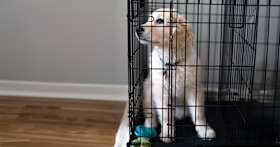
Crate training, when implemented correctly, can be effective at managing separation anxiety in dogs. A crate offers a confined, den-like space that can provide a sense of security to dogs experiencing distress. According to the American Veterinary Medical Association, crate training can help reduce anxiety-related behaviors by teaching dogs that their crate is a safe, comfortable environment during periods of separation.
However, it’s crucial to introduce the crate gradually and associate it with positive experiences, such as treats and toys, to prevent a dog from perceiving it as a punishment. The Humane World for Animals also notes that crate training is not suitable for every dog. Dogs with severe separation anxiety or a history of trauma may become more stressed when confined.
For cats as well as dogs who don’t tolerate crating, look into alternatives such as:
Creating a pet safe room
Using baby gates to confine them to a smaller space
Providing interactive enrichment while unsupervised
For adopted pets adjusting to a new home, these strategies, combined with positive reinforcement and gradual acclimation, can promote confidence.
The most effective treatment for canine anxiety typically involves a combination of behavioral therapy, environmental management, and when appropriate, medication. This multifaceted approach addresses the root causes of anxiety and supports the dog’s emotional well-being. It’s important to consult with a veterinarian, a certified dog trainer, and/or a behavior consultant to tailor a treatment plan to address a dog’s specific needs. Early intervention and consistent, compassionate care are essential to helping your canine companion overcome anxiety.
The best treatment for feline anxiety is very similar to that of dogs. Both benefit from a combination of behavior modification, environmental enrichment, and medication when necessary. But cats rely more on environmental management, enrichment, and subtle desensitization techniques. The approach for cats is often tailored to species-specific behaviors, sensitivities, and communication styles.
Yes, both dogs and cats can be prescribed medications to manage anxiety, but the types, dosing, and usage differ between species. A medication is best used in conjunction with behavioral therapy and environmental management, rather than as a standalone treatment.
“Calm a Dog with Separation Anxiety Symptoms.” Humane World for Animals. Accessed September 3, 2025. www.humaneworld.org/en/resources/calm-dog-separation-anxiety-symptoms.
“Explaining Destructive Behavior in Dogs.” MSPCA, April 30, 2024. www.mspca.org/pet_resources/explaining-destructive-behavior-in-dogs/.
Florsheim, |By Amanda E. “Environmental Enrichment for Dogs: Canine Behavioral Health.” TVMF, October 21, 2024. www.tvmf.org/articles/environmental-enrichment-dogs.
Girão, Marisa, George Stilwell, Pedro Azevedo, and L. Miguel Carreira. “The Influence of Noise Level on the Stress Response of Hospitalized Cats.” Veterinary Sciences 11, no. 4 (April 12, 2024): 173. doi.org/10.3390/vetsci11040173.
Lord, Linda K., Linda Reider, Meghan E. Herron, and Kristy Graszak. “Health and Behavior Problems in Dogs and Cats One Week and One Month after Adoption from Animal Shelters.” Journal of the American Veterinary Medical Association 233, no. 11 (December 1, 2008): 1715–22. doi.org/10.2460/javma.233.11.1715.
Mikkola, Salla, Milla Salonen, Emma Hakanen, and Hannes Lohi. “Feline Litter Box Issues Associate with Cat Personality, Breed, and Age at Sterilization.” Journal of the American Veterinary Medical Association 261, no. 5 (May 1, 2023): 652–60. doi.org/10.2460/javma.22.10.0441.
Moyer, Bethany Joy, Helen Zulch, Beth Ann Ventura, and Oliver Burman. “A Qualitative Exploration of Owner Experiences Following Dog Adoption.” Animal Welfare 34 (2025). doi.org/10.1017/awf.2025.4.
Neilson, Jacqui. “Thinking Outside the Box: Feline Elimination.” Journal of Feline Medicine and Surgery 6, no. 1 (February 2004): 5–11. doi.org/10.1016/j.jfms.2003.09.008.
Ogata, Niwako. “Separation Anxiety in Dogs: What Progress Has Been Made in Our Understanding of the Most Common Behavioral Problems in Dogs?” Journal of Veterinary Behavior 16 (November 2016): 28–35. doi.org/10.1016/j.jveb.2016.02.005.
Platto, Sara, Agathe Serres, Simona Normando, Yanqing Wang, and Dennis C. Turner. “Changes in the Dog’s and Cat’s Behaviors, as Reported by the Owners, before and during the Lockdown in China.” Animals 12, no. 19 (September 28, 2022): 2596. doi.org/10.3390/ani12192596.
The Ohio State University. What to expect when you adopt a shelter pet, September 15, 2023. news.osu.edu/what-to-expect-when-you-adopt-a-shelter-pet.
San Diego Humane Society. “Adopting: Helping a Dog Adjust to a New Home.” San Diego Humane Society, August 6, 2024. https://resources.sdhumane.org/Resource_Center/Behavior_and_Training/Dogs_and_Puppies/Adopting_a_Dog/Adopting%3A_Helping_a_Dog_Adjust_to_a_New_Home.
Takeuchi, Yukari, Katherine A. Houpt, and Janet M. Scarlett. “Evaluation of Treatments for Separation Anxiety in Dogs.” Journal of the American Veterinary Medical Association 217, no. 3 (August 1, 2000): 342–45. doi.org/10.2460/javma.2000.217.342.
Yeon, SC, HN Erb, and KA Houpt. “A Retrospective Study of Canine House Soiling: Diagnosis and Treatment.” Journal of the American Animal Hospital Association 35, no. 2 (March 1, 1999): 101–6. doi.org/10.5326/15473317-35-2-101.

Mia is a Certified Professional Dog Trainer and Behavior Consultant with a deep passion for helping dogs and their families build positive, lasting relationships. As the owner and trainer of Ace’s Pace based out of Sacramento, CA, she focuses on fear-free, science-backed techniques to guide pet parents through the nuances of dog behavior, training, and enrichment. Through a gentle, positive approach rooted in understanding and trust, Mia strives to help every dog live their best life, with the support and guidance that pet parents need to be successful. You can follow Mia and her life with dogs on Instagram at aces.pace.sacramento.

Behavior & Training

Behavior & Training

Behavior & Training

Adoption Advice
From fear to confidence: Here’s how to help your newly adopted anxious dog feel more secure.
Behavior & Training

Behavior & Training

Behavior & Training

Behavior & Training

Behavior & Training