Dog Keeps Peeing in the Crate? Here’s Why—and How to Fix It
There are ways to help your dog stop peeing in their crate, but they require patience and understanding. Here is a guide to get you and your dog back on track.
There are ways to help your dog stop peeing in their crate, but they require patience and understanding. Here is a guide to get you and your dog back on track.
by Dr. Maria Zayas, DVM, | March 23, 2026

Jokiewalker / Adobe Stock
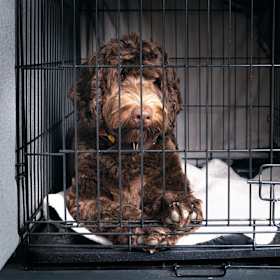
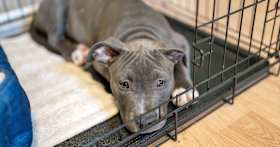
Crate training a dog can be an immensely useful tool throughout their lifetime. Great examples of crates helping you and your dog include: providing a safe space for anxious pups, containing the chaos with a counter-surfer or garbage can diver, and helping new pets succeed faster in house training. For a crate to help prevent peeing in the house, though, there are some things you need to know.
Crates that are too large may leave enough space for a dog to comfortably pee in their crate and still stay away from the mess.
Many medical conditions can affect new or established dogs in your home that might cause them to urinate in their crates.
A dog’s age can significantly impact how long they can go between potty breaks, and being in a crate can only buy so much extra time before they need to go.
Sticking to a routine and not dismissing the chance of underlying health concerns is the best way to avoid or course-correct a dog peeing in their crate.

Finding the right crate size is important. But so is considering your dog’s age, circumstances, and training goals. Our guide is here to help.
There are more reasons a dog might start peeing in their crate than most people realize.
Dogs live for a good routine. If their schedule changes, the stress may be enough for them to start having accidents. If they are usually in their crate for four hours, but now need to wait there for six, they may need time to adjust before they’re prepared to hold it for six hours.
If they’re in their crate at a time of day they used to always go pee, their internal clock might not care where they’re located when nature calls.
A pet’s age affects how well and for how long they can hold their bladder. Puppies can’t hold it as long as adults can, but oftentimes, neither can seniors. Puppies usually cannot hold their bladder for as long as an adult until they’re at least four to six months old.
Seniors may have weakened urinary tract sphincters, problems emptying their bladder fully, or put off going until it’s urgent (because walking or squatting is painful). Urinary incontinence can also develop as a dog ages or, for female dogs, after being spayed.
In a similar vein, many medical conditions can affect bladder control, urgency to urinate, fluid intake, water retention, comfort while peeing, and more.
These conditions include:
Diabetes
Hypothyroidism
Urinary tract infections
Urinary crystals or bladder stones
Adrenal disease
Cancer
Kidney disease
Certain medications, such as steroids
Disc (spinal) disease
Pain
Dementia
Arthritis
Some toxins or drugs, such as marijuana
Dogs who were previously doing well in their crate, but are suddenly urinating there, should always be checked by a vet.

Your dog may be your best friend, but how good are you at reading the signs that they’re hurting?
Dogs who are stressed in their crate are more likely to pee, even if they don’t have space to get away from it.
Here are some common causes of this type of stress:
Separation anxiety
Not having enough training time to be comfortable in their crate
Being in view of the door, street, or backyard, where stressors can trigger the pet through sight or sound
Having excess energy they want to work off
Being bored
Anticipation of abandonment, pain, or stress in dogs who have struggled with or had something negative happen in their crate in the past can also cause accidents. Examples of these include:
Things falling on or near the crate
Getting a paw or tooth stuck in the bars
Not having comfortable enough bedding
Being stuck there when a parent couldn’t make it home when expected
Having something scary happen just outside the crate, like other pets fighting
Being placed in the crate as punishment, or being physically or verbally punished while they’re in the crate

Healthy habits to build with your new dog, plus how to create a schedule that works for both of you.
If your dog is peeing in their crate, here are five tips to help reduce and stop this behavior.
The best way to set up a dog for success is to make it easy for them to anticipate the plan. If they know the first thing you do when you wake up is to let them out of their crate and take them out to pee, they are more likely to wait for that cue. Alternatively, if they don’t know what you usually do before letting them out — or what time of day they usually get to go pee — they have less reason to know not to pee in their crate.
Just as you might drive home from work comfortably but start the potty dance as you unlock your doors after a long day, dogs also feel much of their urgency to pee based on their routine.
An understimulated dog who is focusing on every detail is more likely to encounter a reason to pee, even while they’re still in their crate. Dogs who have had exercise before going into the crate are more comfortable both physically and mentally, and are ready to take a nap until you’re back.
When designing a dog’s kennel space, keep in mind how to help keep them from peeing in the crate.
Choosing the right size crate is important: They need enough space to get up and turn around, but a crate two to three times longer than they are leaves space to pee in one area and lie down in another. If they have bedding, it can be easy to pee on the bedding, which will soak up the mess, and then lie in another spot if they have enough space to do so.
When teaching a dog to hold their bladder in a crate rather than to pee, it’s often best to give them a little less space and less or no bedding until they have it down, then they can graduate to more comfy lodgings.
Because dogs have much more sensitive noses than we do, they rely on smells found in urine to communicate and decide where to pee in the future. Once a dog has one accident in a crate, they may continue to do so simply because a normal cleaner doesn’t remove that “pee here” signal your dog left behind.
Enzymatic cleaners or other products that break down proteins — such as white vinegar — are the best way to do this.
Even with a puppy or a new pet, peeing in the crate is always worth bringing up to your vet. There are so many medical reasons that may cause a pet to pee in their crate that it’s best not to rule out those causes. Vets can also be a great source of advice in dealing with the issue, even if no medical cause is found. They will also be ready with recommendations for trainers.
“Housetraining | Indoor Pet Initiative.” Indoorpet.osu.edu, indoorpet.osu.edu/dogs/puppy/housetraining-dogs.

Dr. Maria Zayas attended Ross University School of Veterinary Medicine where she completed her veterinary degree in addition to participating in and presenting research related to aquatic animal medicine. She spent her first year as a doctor working with a low cost spay/neuter and general practice clinic before returning to her home state of New York and entering the world of housecall veterinary medicine. Falling in love with this area of medicine, she launched her own housecall veterinary practice in addition to writing pet health articles. She loves all things related to water and continues to travel and explore with her three dogs and one cat, all of whom also love to swim.
Behavior & Training
Behavior & Training
Adoption Advice
Behavior & Training
Discover when nighttime crating makes sense, when it doesn’t, and how to make it a positive experience.
Behavior & Training
Set your new puppy up for success by creating house rules that establish boundaries and encourage good behavior.
Behavior & Training
Wondering how many hours you can leave your dog in their crate? Here’s what you need to know.
Behavior & Training
Before you enthusiastically cry out “yes,” it’s important to first consider your lifestyle and training goals.
Behavior & Training
If you want your dog to chill in their crate, you need to make it comfortable. Here’s where to start.