What to Put in Your Dog’s Crate During the Day
If you want your dog to chill in their crate, you need to make it comfortable. Here’s where to start.
If you want your dog to chill in their crate, you need to make it comfortable. Here’s where to start.
by Cammi Morgan, expert review by Mia Nguyen, CPDT-KA, FFCP | October 2, 2025

J.A. / Adobe Stock
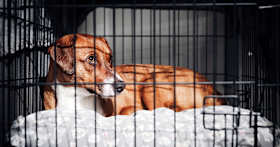
A crate can be a helpful thing, but only when used correctly and thoughtfully. At its best, a crate provides a safe, den-like space where your pup can rest, recharge, and feel secure. The best things to put inside a crate are items that make it comfortable and calming — such as a supportive mat, a few safe toys or chews, and access to fresh water.
These essentials turn the crate from a simple enclosure into an inviting space, helping to build positive associations with spending time there. Below are the four essentials that every pet parent needs for crate training.
Before considering what to place in a crate, it’s important to understand when crating is appropriate and when it is not. Crate training can be valuable, but it isn’t the right choice for every dog. Some dogs, particularly those prone to panic, those who have anxiety around confinement, or those who come with a history of neglect or trauma, may not adjust well to a crate, no matter how carefully it is introduced. For these pups, alternatives such as exercise pens, gated rooms, or creating a safe space with the help of a qualified dog trainer or behavior consultant may be more suitable options.
Crates should never be used as punishment, to avoid addressing behavioral issues, or simply to keep a dog “out of the way.” In cases of separation anxiety, for example, behavior specialists often advise against crating, because it can worsen distress.

Finding the right crate size is important. But so is considering your dog’s age, circumstances, and training goals. Our guide is here to help.
When setting up your dog’s crate, prioritize safety and comfort. Below are some must-haves to incorporate into your pup’s crate.
A soft dog bed, blanket, or pad will make the space inviting, but which one you choose will depend on your dog’s habits. Chewers or puppies may need a durable chew-proof mat to avoid issues with torn bedding, while older or calmer dogs may enjoy a plush or orthopedic bed that feels warm and supportive.
Depending on your dog’s chew style and play habits, toys and chews can be other smart additions, but safety is an important consideration, especially during unsupervised crating. Durable chew toys can provide entertainment and mental stimulation, keeping your dog occupied in a safe way. Avoid fragile toys that can be ripped apart or swallowed.
Fresh water can be provided inside a crate when the door is closed, but whether or not you provide food depends on a few factors. Leaving small treats inside can be a great way to build positive associations with the crate. However, feeding your pup full meals inside a crate should only be done under supervision. If you decide to leave water in your dog’s crate, a crate-mounted water bottle and/or spill-proof dish works best to keep things tidy.
Some dogs appreciate an extra touch of coziness, such as a crate cover or a simple blanket draped over a portion of their crate to create a den-like environment. This can reduce stress during thunderstorms, fireworks, or other noisy situations. However, not all dogs prefer the covered feeling — some feel more secure with an open view of their surroundings. Experiment to see what makes your dog feel most comfortable, and adjust as needed.
The key to keeping your crated dog entertained during the day is to provide safe, engaging enrichment that keeps their mind and body occupied. Offering puzzle toys, stuffed chews (only for certain dogs), plush comfort items, and other durable distractions can prevent boredom and reduce stress for the times they absolutely need to be in the crate.
Puzzle toys and other food-dispensing items, such as treat balls, are excellent for keeping your dog’s mind active. Stuffing them with healthy snacks or freezing them with soft food makes the challenge last longer, giving your pup something rewarding to work on while confined.
Soft, cuddly toys can be a comfort item for some dogs, especially if they enjoy carrying or snuggling with something in the crate. Plush toys should only be offered if your dog is not a chewer and is known to be gentle with their toys, since stuffing and fabric can become a hazard if swallowed.
Long-lasting chews, such as natural rubber toys like Kongs or vet-approved dental chews, are great ways to provide mental stimulation. Rotating different enrichment items keeps things fresh and engaging for your dog. Always make sure any toys or chews are safe, appropriately sized, and durable enough to withstand unsupervised use.

Whether for medical or practical reasons, it is never too late to teach your dog how to comfortably chill in a crate.
Whether you are crate-training an older dog or a puppy during the day, start by creating positive associations with the crate. You can set up a large play pen — which includes their crate within that space — to provide them with a secure resting place, while enabling more freedom of movement, exercise, and enrichment.
One of the most effective ways to help your dog become comfortable within a crate is by incorporating it into their routine and daily life — with the door left open. By giving your dog the ability to explore and rest in the crate voluntarily, without the pressure of being confined, you create a low-stress, positive association with the space.
Gradually introduce your puppy to the crate: Close the door for only a few seconds at a time, slowly increasing the duration as they grow comfortable. If you try to crate-train faster than your pup’s comfort level, you risk creating negative associations and stressful experiences with crating. Also, when house training, it’s crucial to not leave your puppy in the crate longer than their bladder will allow.
Build positive associations using the items discussed earlier — a soft bed or mat, a safe chew toy, a comfort item, and treat-dispensing toys or stuffed Kongs. This helps the crate feel safe and inviting.
Whining or barking usually means your pup’s needs are unmet or that they have anxiety. Check for stress signals such as barking and whining, then address them with care. Do not simply ignore signs of distress — instead, think about your puppy’s unmet needs and address them. For instance, do they need a bathroom break, slower and briefer introductions to the crate, more enrichment and companionship time outside of the crate, and so on?
Yes, dogs should have toys in their crates. But the types of toys depend on your pup. Sturdy rubber toys like Kongs are a good, safe choice, since they provide mental stimulation without presenting a choking hazard. Stuffed plush toys should not be offered to unsupervised dogs, unless they are already comfortable being crated, are proven to be gentle with plush toys, and will not attempt to shred and consume the fabric or stuffing.
The best crate pad or bedding for your dog depends on their specific needs. Chewers and puppies do best with a durable, chew-proof dog crate, mat, or pad, while calmer adult dogs often prefer a plush bed for added comfort. It’s always a good idea to choose bedding that’s easy to clean in case of any accidents.
Yes, you can leave food in your dog’s crate. Treats and food-stuffed toys can be excellent for short crate sessions. But full meals should only be given under supervision to avoid messes and potential choking risks.
No, a crate will not help with separation anxiety. In cases of separation anxiety, behavior specialists often advise against crating, because it can worsen distress and make treatment more difficult.
No, you should not leave your dog in a crate all day. Dogs are active and social animals, and leaving your dog crated for too long can cause frustration, anxiety, physical health problems, and ultimately result in learned helplessness. Instead, use a crate only when necessary, and prioritize their access to plenty of freedom, exercise, and companionship. If you’re gone for long stretches, consider alternatives such as a puppy-proof safe room, a large exercise or play pen, arranging for a pet sitter, having friends or family watch your pup, or enrolling them in doggy daycare.
Crate training is especially helpful in cases of emergencies. If your dog ever needs to stay at the vet for surgery, boarding, or recovery, they’ll likely be kept in a kennel. A dog who sees the crate as a safe, familiar place is equipped to cope with these unfamiliar situations. Crates can also be lifesavers during unexpected events like natural disasters (storms, wildfires, or floods). This will make transport safer and less stressful for both you and your pup. Emergency shelters, hotels, and even friends’ homes sometimes require that pets be confined. In chaotic moments like these, your dog's familiarity with a crate can make all the difference.
Affective Dog Behavior. (2021, December 24). “Learned Helplessness — a new spin on an old theory.” ADB. www.affectivedog.com/post/learned-helplessness-a-new-spin-on-an-old-theory.
The MSPCA-Angell. (2024, April 30). Separation anxiety and your dog. MSPCA-Angell. www.mspca.org/pet_resources/separation-anxiety-and-your-dog.

Cammi Morgan is a nature and pet care writer living off-grid with her pack of rescue and foster dogs in the mountains of Southeast Appalachia. In addition to her work with Adopt a Pet, she has contributed to Animal Wellness Magazine, PetsRadar, Global Comment, A-Z Animals and other online publications. Her passions include animal rescue, mycology, hiking, and caving.
Behavior & Training
Behavior & Training
Behavior & Training
Adoption Advice
If you haven’t yet discovered, all dog carriers are not created equally. Our guide will help you find the right one for your pup.

Behavior & Training
Dogs need space to live their best lives, but how much is enough?

Behavior & Training
Behavior & Training
If it seems impossible, don’t fret. Every dog can be house-trained.

Behavior & Training
Anxiety is a very common reaction for a cat or dog entering a new home, but there are several ways to treat this fear-driven behavior.
Adoption Advice
With the right care, puppy mill rescues can learn to trust and thrive.