Why Is My Rescue Dog Acting Different Now That They’re Home?
Is your new pet behaving differently than they did at the shelter or rescue? Learn about the decompression phase and how to help your dog settle in.
Is your new pet behaving differently than they did at the shelter or rescue? Learn about the decompression phase and how to help your dog settle in.
by Karen B. London, PhD, CAAB, CPDT-KA, | June 1, 2026

Boris Jovanovic / Stocksy
If you’ve been caught off guard because your new dog isn’t acting the way they did in the shelter, do not panic. You haven’t been tricked, and you’re not alone. This is incredibly common. In fact, changes in behavior are often signs that your dog is beginning to decompress and feeling comfortable in their new environment.
It can feel confusing when the calm, quiet dog you met at the shelter or rescue turns out to have unexpected quirks, fears, or bursts of energy once they come home. Kennel behavior doesn’t always reflect a dog’s true personality. Some dogs shut down emotionally when housed in kennels at shelters and rescues, and appear unusually calm or super chill. Others are overstimulated and become hyper in the shelter, only to become relaxed and peaceful in a home. As your dog starts to feel safe and secure, their true personality will come through.
This “acting different” phase can feel overwhelming, but it’s the beginning of getting to know who they really are. This is the first chapter in your new love story, and your patience during this stage matters a lot.
A dog’s behavior in a shelter is often a reflection of stress, not their permanent personality.
The 3-3-3 rule is a helpful roadmap for expecting milestones at three days, three weeks, and three months.
Decompression is a biological process in which a dog’s cortisol levels drop. This can take weeks to fully resolve.
Establishing a routine early on provides a rescue dog with the security they need to reveal their true self.

adogslifephoto / Adobe Stock
Despite how caring and well-run they are, shelters and rescues can be stressful places. Stress affects behavior, and many dogs in crowded kennels are coping as best they can with behaviors that are often survival mechanisms. Think about what this kind of life can involve: unfamiliar surroundings, loud noises, limited control over their environment, loneliness, and constant uncertainty. These challenges don’t always bring out the best in dogs, especially if they’ve been waiting to be adopted for a long time. They may be withdrawn, fearful, reactive, or bark excessively to cope with a scary and overwhelming situation.
When dogs move into a stable, loving home, they decompress: They are no longer in survival mode, and their true personality shows. So, what’s the decompression phase about? It’s the adjustment to a more relaxed situation, and may involve being calmer, more energetic, super affectionate, playful, or sleepy. Many dogs cautiously explore their environment during this time.
There’s a physiological aspect to the decompression phase. The high-stress environment in a kennel can raise cortisol levels, making dogs more prone to infection, gastrointestinal issues, dehydration, trouble sleeping, slower healing, more anxiety, and increased reactivity. After adoption, when cortisol levels drop, the parasympathetic nervous system takes over from the sympathetic nervous system, leading to deeper breathing and a lower resting heart rate. Many dogs show a decrease in tension in their shoulders, necks, and jaws.
Many newly adopted dogs go through a “honeymoon phase” and may seem incredibly quiet, sleepy, clingy, or unusually well-behaved. This is simply because they are overwhelmed, unsure what to expect, or drained from being on edge or sleep-deprived while waiting to be adopted.
A helpful guideline known as the 3-3-3 rule is useful for understanding what to expect. There’s a ton of variation (not all dogs read the manual), but this framework can help set realistic expectations. During the first three days, the dog is in shock and may not show much of their true selves to you. In the first three weeks, the dog starts to settle in, understand the routine, and get to know you — and they begin to relax, so you see more of who they really are. It often takes three months for dogs to fully adjust and for their behavior to stabilize. If they are quite young, they may still change as they mature into and beyond adolescence.

Find out how to set your adopted rescue dog up for success.
Any aspect of your dog’s behavior can change.
Energy: Energy levels may change, either from shut down to super energetic or in the opposite direction — frantic and restless to calm and peaceful.
Accidents: Potty accidents often decrease as your dog learns where to potty or becomes unafraid of that space.
Chewing: Many dogs chew a lot at first, possibly to calm themselves and lessen feelings of anxiety. Other dogs are too exhausted to chew. By the time you find out it’s their favorite hobby, you are days, weeks, or months into your new relationship.
Barking: Dogs may bark a lot at first, possibly due to being vigilant in their new place, but then they may quiet down. Or, they may be quiet at first and only later seek to communicate with you more.
Attachment: It’s very common for newly adopted dogs to become extremely attached to their people. You may be their only link to everything they’ve ever known before, or maybe they are desperately seeking information about where to sleep, when they will be fed, how to find the water bowl, and if there are any toys. As they grow more independent, it’s usually a sign they feel more secure and not that your bond is weakening.
Confidence: Dogs who are overcoming their fears may hide less, seek affection more often, or become more playful. They may sleep more deeply, eat more enthusiastically, or explore the house and yard with increasing confidence.
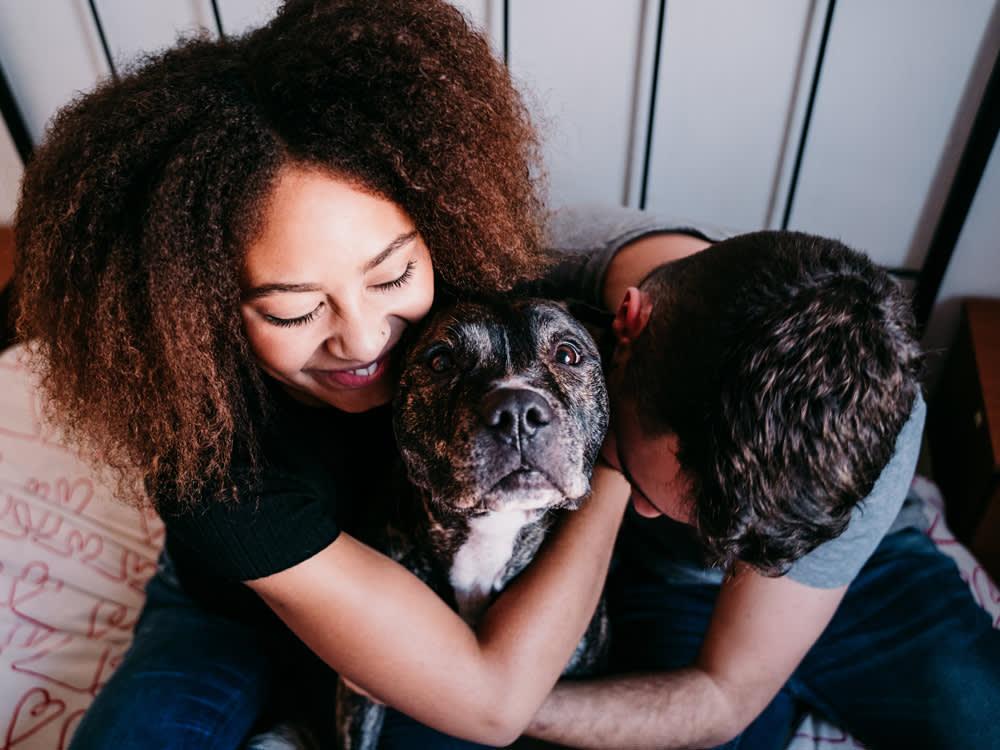
Eva / AdobeStock
Even though it’s a positive one, adoption is a big life change, and your dog will need your support. One of the kindest things you can do is accept them for who they are, right now, in this moment. Their behavior may change quickly or gradually, but they deserve to be loved and respected for who they truly are, not for who they seemed to be, or who you imagined they might become.
Creating a safe space for them can make a tremendous difference. That might be a crate, a cozy dog bed, or even an entire room where your dog can retreat without being disturbed. Providing a place where peace is guaranteed is an excellent way to support your dog.
Routines are another powerful source of comfort. Predictable mealtimes, walks, bedtime routines, and daily rhythms help dogs understand what to expect. That sense of consistency creates stability and security for greater well-being and contentment, especially for dogs who have experienced chaos or uncertainty in the past. Making life more predictable for recently adopted dogs is an act of love.

Healthy habits to build with your new dog, plus how to create a schedule that works for both of you.
Training your new dog with positive reinforcement is incredibly valuable. Beyond teaching them useful skills, training with positive methods gives them control over their world. When dogs learn that offering certain behaviors leads to treats, play, toys, and other good things, life starts to feel safer and more predictable. That sense of predictability and control over what happens leads to feelings of security. That can be deeply healing to dogs who previously felt powerless.
It’s important to distinguish between normal adjustment woes and a serious behavior problem that would benefit from professional guidance. It’s wise to seek help from a qualified behaviorist if your dog shows behaviors, such as:
Biting
Lunging or snapping
Aggression or threats, especially towards children
Intense fearfulness
Panic when left alone
Guarding food, toys, or people
Lots of drooling
Nonstop pacing
Trembling
Signs of pain or physical illness
A noticeable worsening of behavior over time
Safety concerns that make daily life difficult for the household
Whether a behavioral issue has a genetic basis, a medical cause, or comes from previous trauma, professional support can make a huge difference for you and your dog.
Every dog is different. Some dogs will bond within days, while others need weeks or months to fully connect. A slower bond does not mean a weaker bond. It simply means your dog needs more time.
A dog’s training progress is never perfectly steady. Dogs, like people, have good days and more challenging days. Stress, excitement, lack of sleep, changes in routine, unfamiliar sounds or smells, distractions of all kinds, and even your mood can influence behavior and learning. Many dogs become less focused as they adjust to new changes, which can temporarily make them seem less attentive or responsive.
Dogs personalities do not change completely after adoption. Dogs do, however, reveal more of who they already were beneath stress and survival behaviors. As they settle in, more parts of their personality naturally shine through, and you get to know their true selves.
The guilt of adopting a dog and then wondering if you chose the wrong one is so common that I hardly know anyone who hasn’t experienced it. This horrible feeling almost always goes away, sometimes overnight and sometimes after a bit more time. The beauty and wonder of the human relationship with dogs is that a huge range of dog personalities can fit beautifully into our lives and hearts, no matter what kind of dog you had in mind when you decided to adopt.
“Ebook: Adopting? PLAN SMART: A Guide to Handling the Early Days with Your New Rescue Dog (PDF).” Dogwise, 2026, www.dogwise.com/ebook-adopting-plan-smart-a-guide-to-handling-the-early-days-with-your-new-rescue-dog.
McConnell, Patricia. “What Was I Thinking? (Rescue Regrets Are Usually Temporary) - McConnell Publishing Inc.” McConnell Publishing Inc., 24 July 2017, www.patriciamcconnell.com/theotherendoftheleash/what-was-i-thinking-rescue-regrets-are-usually-temporary.
McConnell Publishing Inc. “Love Has No Age Limit.” McConnell Publishing Inc., 14 Aug. 2025, www.patriciamcconnell.com/product/love-has-no-age-limit.
Things. “Five Things to Focus on with Your Newly Adopted Dog.” Dogminded , 13 Aug. 2020, www.dogminded.training/blog/2020/8/13/five-things-to-focus-on-with-your-newly-adopted-dog.
Karen B. London, Ph.D., is a Certified Applied Animal Behaviorist and Certified Professional Dog Trainer who specializes in working with dogs with serious behavioral issues, including aggression, and has also trained other animals including cats, birds, snakes, and insects. She writes the animal column for the Arizona Daily Sun and is an Adjunct Professor in the Department of Biological Sciences at Northern Arizona University. She is the author of six books about training and behavior, including her most recent, Treat Everyone Like a Dog: How a Dog Trainer’s World View Can Improve Your Life.

Behavior & Training

Behavior & Training

Pet Wellness

Adoption Advice
New rescue dog? Don’t panic — here’s your survival guide for the first few days and how to connect with your new best friend.

Behavior & Training
Plus, four things you should do immediately.
Pet Wellness
Curious about how to feed your new dog? This guide will answer your questions.