Dog Trainer’s Six Essential Tips for House Training Success
If it seems impossible, don’t fret. Every dog can be house-trained.
If it seems impossible, don’t fret. Every dog can be house-trained.
by Mia Nguyen, CPDT-KA, FFCP, | September 15, 2025

Cultura Creative / Adobe Stock
Your rescue dog is finally home, and now comes one of the biggest steps in helping them settle in: house training. Not only does house training create a clean and comfortable environment, but it also builds trust, consistency, and structure — all of which are key ingredients in helping a dog feel secure.
As you get into a house-training routine, you’ll find yourself cleaning up fewer messes, building a relationship founded on trust, and setting yourself up for a more harmonious life together. While it might seem daunting or overwhelming, every dog, no matter their age or background, can learn where to appropriately potty. Here’s how.
Not all rescue dogs need to be fully house-trained, but many benefit from some refresher training. While some dogs may have already been trained, leading to a smoother transition into a new environment, others may never have been taught proper potty habits. In particular, dogs rescued from puppy mills, neglectful situations, or long-term shelter stays may not have foundational potty training knowledge.
But it’s not uncommon for even house-trained dogs to have accidents in a new home while they’re learning where to go. They may regress a little while adjusting to a new routine, home layout, or schedule, so keep this in mind and be consistent and patient when potty training.
So, while not every rescue dog will need full house training, it’s smart to approach it as a fresh start. Regardless of their background, treating the process as a refresher builds consistency, sets clear expectations, and can even help strengthen your bond.

Learn what a rescue dog is and why these pups make the best buddies.
Whether your dog just needs time to adjust to a new routine or they have never been taught proper bathroom habits, house training isn’t just about teaching them where to go. It’s about helping your dog feel safe, secure, and confident in their new home. Here’s a simple guide on how to house-train your dog.
When bringing home a rescue dog, assume they’re starting from square one with house training. A new environment can cause setbacks for any dog. Giving your dog the grace to relearn from scratch not only sets realistic expectations, but also helps build patience and understanding as they settle into a home with new routines and rules.
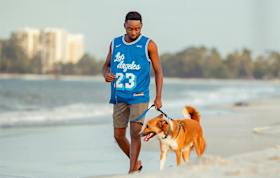
One of the biggest mistakes new pet parents make while house training their adult dog is waiting for them to signal that they need to go out. Don’t wait. Many dogs may have never learned how to communicate their need to potty. Instead, take the lead by setting a consistent schedule for bathroom breaks and guide your dog outside regularly on a leash to make sure they don’t get distracted.
This proactive approach not only prevents accidents but also helps your dog learn what’s expected of them, building their confidence and easing the transition into your home.

LIGHTFIELD STUDIOS / Adobe Stock
When you take your dog outside to go pee, bring your dog to the same area each time. Familiar scents will help them understand the purpose of the trip and encourage them to go faster. Pick a simple phrase like “go potty” and say it each time you take your dog outside. Over time, they’ll associate the words with the action.
When you take your dog outside, potty time comes first. Avoid letting them play until after they’ve gone to the bathroom, so they don’t get distracted. If they don’t go within a few minutes, bring them back inside (under supervision) and try again shortly. Taking your dog out on a leash can help them understand that it’s time for business. Once they go, you can take their leash off and let them play.
Set up your dog for success by taking them outside often and at times when they will likely need to go, such as first thing in the morning, after meals, after naps, after play, and before bed. In the beginning, short intervals work best — every 15 to 20 minutes. Using a timer can help you stay consistent and prevent accidents.
If you have an older rescue, it may be reasonable to extend this time to a few hours soon after adoption. But pay close attention to water intake to predict when your dog will need to go.

Halfpoint / Adobe Stock
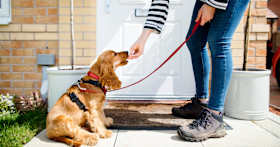
Each time your dog goes potty in the right spot, reward them immediately afterwards with something extra special, such as their favorite, super-smelly treat or a bit of boiled chicken. These high-value rewards make the behavior worth repeating and help your dog quickly connect going outside with something positive.
Pair the reward with a “Yes, good potty!” in your most over-the-top cheerful voice. For many dogs, this kind of encouragement not only speeds up training but also builds confidence and strengthens the bond between you.
When your rescue dog is inside between potty breaks, supervision is important to prevent accidents when house-training them. The more you can prevent accidents from happening, the faster your dog will understand what’s expected of them and feel confident in their new routine.
You can keep your dog in the same room with you, use baby gates to limit their space, or tether them to you on a leash indoors — this way, you’ll be able to spot signs they need to go before it’s too late.
Keeping them close not only helps avoid mistakes but also gives you more chances to guide your dog to the right spot and reward them for success.
Accidents are a normal part of the house-training process, so try not to get discouraged when they happen. Think of each slip-up as information. Accidents mean your dog wasn’t taken out soon enough or needs more supervision. With patience and consistent training, accidents will become less frequent as your dog learns the routine.
If you catch your rescue dog having an accident, calmly interrupt the act and immediately take them outside to finish. Never punish or scold them, because this can create fear and confusion, making training harder. Instead, clean the area thoroughly with an enzymatic cleaner to remove odors that might encourage repeat accidents.
Follow these simple, quick steps if your rescue has an accident.
Keep your cool: Don’t punish or scold them. Accidents are part of the process.
Interrupt them gently: If you catch them in the act, calmly guide them outside right away.
Clean thoroughly: Use an enzymatic cleaner to remove odors so they don’t return to the spot.
Learn from it: Treat accidents as a sign your dog needs more frequent breaks or closer supervision.

These tips on maintaining good hygiene for your dog are crucial for their health, comfort, and overall well-being.
With consistency, kindness, and encouragement, adult dogs can learn house training just as well as puppies, and the process can even strengthen the bond you share with them.
Keep a potty diary: Track the times your dog eats, drinks, naps, and goes potty. Patterns will emerge, making it easier to predict and prevent accidents.
Limit water late at night: Make sure your dog stays hydrated, but removing access to water about two hours before bedtime can reduce overnight pee accidents.
Short and focused potty trips: Keep bathroom breaks calm and to the point. Don’t let your dog get distracted sniffing or playing until after they’ve gone.
Celebrate successes: Be enthusiastic when they go in the right spot. Many rescue dogs blossom with encouragement.
Use confinement wisely: Crates, exercise pens, or baby gates give your dog a smaller, safe space when you can’t supervise them, helping prevent mistakes.
Be consistent with everyone in the home: Make sure the whole family follows the same routine, uses the same verbal cues, and offers the same rewards to avoid confusing your dog.
Stay patient: Progress isn’t always linear. Some days will go better than others. Stick with the plan, and your dog will get it.
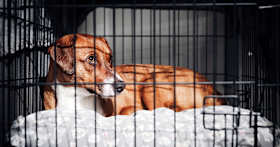
Crate training can be a valuable tool to house-train a rescue dog, when done correctly. A properly sized crate gives your dog a safe, cozy space of their own and helps prevent accidents, since most dogs naturally avoid soiling the area where they sleep. To crate-train a rescue dog, start by introducing the crate to them gradually with treats, meals, and soft bedding, so your dog sees it as a positive place. Use the crate for short periods when you can’t supervise your pup, and take your dog outside right away after each break. Over time, the crate becomes a helpful aid in teaching a routine while preventing accidents.
When a dog pees in the house, it’s usually not an act of defiance or spite. Most of the time, accidents happen due to a lack of understanding or training, stress or anxiety, medical reasons, or scent marking. New environments, changes in routine, or fear can also lead to accidents. Be sure to consider health problems that can cause frequent or uncontrolled urination. Other dogs sometimes mark territory in usual places, which is instinctual. Accidents are usually about communication, confusion, or biology. Viewing it this way helps you respond calmly, with patience, supervision, and training, rather than frustration.
When a dog shows “guilty” behaviors like lowered ears, a tucked tail, or avoidant eye contact, they’re actually responding to your body language and tone of voice, not the accident itself. They are offering appeasement behaviors to de-escalate the situation. Dogs are incredibly good at picking up on human emotions. If they sense you’re upset, they may offer appeasement signals to calm you down.
Admin, AH. “Housetraining Dogs.” American Humane Society, December 13, 2024. www.americanhumane.org/public-education/housetraining-dogs.
“House Training Your Dog.” ASPCA, September 25, 2014. www.aspca.org/news/house-training-your-dog.
“Crate Training Your Dog | Animal Humane Society.” Animal Humane Society. www.animalhumanesociety.org/resource/crate-training-your-dog-or-puppy.
Crowell-Davis, Sharon L. “Elimination Behavior Problems in Dogs: The Behavioral Differential Diagnosis (Proceedings).” DVM 360. www.dvm360.com/view/elimination-behavior-problems-dogs-behavioral-differential-diagnosis-proceedings.
Hecht, Julie. “Don’t Be Fooled When a Dog Looks Guilty.” Scientific American, February 20, 2024. www.scientificamerican.com/article/don-t-be-fooled-when-a-dog-looks-guilty.
Horowitz, Alexandra. “Disambiguating the ‘Guilty Look’: Salient Prompts to a Familiar Dog Behaviour.” Behavioural Processes 81, no. 3 (July 2009): 447–52. doi.org/10.1016/j.beproc.2009.03.014.
Staff, AKC. “How to Potty Train a Rescue Dog: Housetraining Rescue Dogs.” American Kennel Club, July 16, 2018. www.akc.org/expert-advice/training/housetraining-rescue-dog.
Todd, Zazie. “Don’t Punish Your Dog for Peeing in the House.” Companion Animal Psychology, July 15, 2024. www.companionanimalpsychology.com/2018/12/dont-punish-your-dog-for-peeing-in-house.html.

Mia is a Certified Professional Dog Trainer and Behavior Consultant with a deep passion for helping dogs and their families build positive, lasting relationships. As the owner and trainer of Ace’s Pace based out of Sacramento, CA, she focuses on fear-free, science-backed techniques to guide pet parents through the nuances of dog behavior, training, and enrichment. Through a gentle, positive approach rooted in understanding and trust, Mia strives to help every dog live their best life, with the support and guidance that pet parents need to be successful. You can follow Mia and her life with dogs on Instagram at aces.pace.sacramento.
Behavior & Training
Behavior & Training
Adoption Advice
Pet Wellness
Regular vet visits are key to keeping your pet healthy. Here’s what happens during a checkup, when to get them, and what to bring.

Adoption Advice
Find out how to set your adopted rescue dog up for success.
Behavior & Training
Discover when nighttime crating makes sense, when it doesn’t, and how to make it a positive experience.

Adoption Advice
Bringing a new puppy into the house? Learn how to create a safe, comfortable space in every room for their first days.

Adoption Advice
Hesitant to adopt a pet? We break down common adoption worries and offer practical tips for a smooth transition.
Adoption Advice
Pet parenthood can be tough, but finding the right vet doesn’t need to be. These tips will help you find the right vet for your pup.