The Chihuahua Personality, Explained
Let’s demystify the behaviors and traits of the adorable Chihuahua.
Let’s demystify the behaviors and traits of the adorable Chihuahua.
by Danielle S. Tepper, | February 2, 2026

Malambo/peopleimages.com
Chihuahuas can be bold, confident, and fiercely loyal to their pet parents, but they can also be sensitive and even easygoing. Although breed can impact a dog’s personality, it’s certainly not the biggest factor. Behavior is shaped not only by genetics, but also by a dog’s early socialization, training methods, the level of safety they feel in their environment, and their experiences before adoption. So, understanding a dog as an individual is essential. Here’s what you can expect when you adopt a Chihuahua.
Chihuahuas are recognized as one of the smallest dog breeds in the world, generally weighing between two and six pounds. They have a long, culturally significant history tracing back to ancient companion dogs in Mexico. Today, Chihuahuas appear in both short‑coated and long‑coated varieties, and come in many colors and markings. Their size makes them appealing to adopters with limited space, and this means their behavior, temperament, and stress signals are easier to overlook.

Want to know how to tell apart these Chihuahuas? Here’s how.
“It’s hard to generalize, but…they tend to be very attached, loving, and loyal dogs,” says Kathleen Summers, director of puppy mills outreach and research at Humane World for Animals.
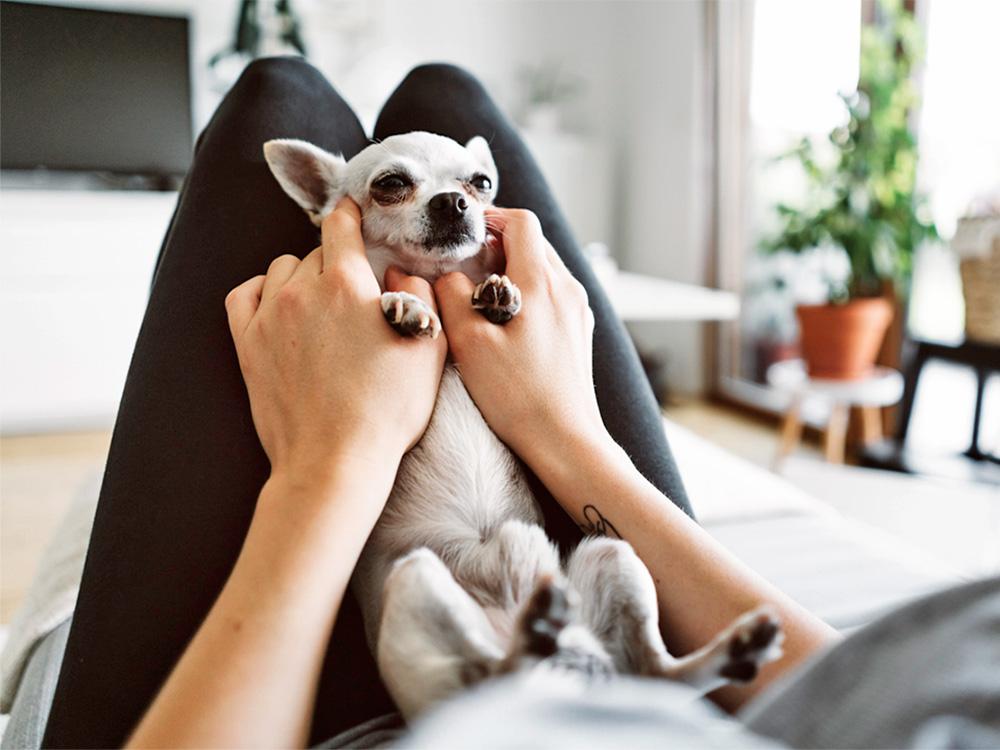
“[Chihuahuas] are intelligent. They don’t need a lot of exercise, and they tend to hate the cold and prefer to snuggle up in a blanket, so they are ideal for people who live in warmer areas or who spend a lot of time indoors. In fact, if you ever lose your Chihuahua, look under every blanket in the house before you panic. I once ran around outside, screaming my foster dog’s name in a panic, only to find him curled up under a blanket in the house.”
Ziga Plahutar / iStock
Chihuahuas tend to be best for people who want a “Velcro dog,” according to Summers. “They will follow you from room to room. The worst quality is really the other side of the same coin: They will not be happy with you if you ignore them.”
Chihuahuas often surprise adopters with their depth of character and how much emotion they express. When given humane care, many demonstrate remarkable strengths that make them beloved companions. Some of the best traits of a Chihuahua include their loyalty, adaptability, charm, and even their voice.
“Chihuahuas are people dogs — they won’t be happy if you can’t spend a lot of time with them,” Summers says. Few breeds match the Chihuahua’s talent for bonding deeply with people.
They sometimes choose a primary favorite, whom they closely accompany throughout daily life — offering their pet parent affection, warmth, and companionship. This loyalty can be especially meaningful for adopters looking for a dog who enjoys closeness without requiring high activity levels.
“Chihuahuas can still be very different from one another. I have two 14-year-old Chihuahuas right now, and their personalities are opposite,” Summers says. “But one thing they both have in common is that they are both very loyal and loving to our immediate family. They both love to be babied and to have as much touch and TLC as possible.” The Chihuahua’s devotion is less about possessiveness and more about trust, which they give generously once they feel safe.
Given reasonable structure and gentle care, Chihuahuas adapt easily to a wide variety of living situations. They thrive in apartments, small houses, and busy cities. Their exercise needs can usually be met through a combination of short walks, indoor play, and mental enrichment. This makes them ideal for adopters who cannot provide high‑intensity exercise, but still want an active companion to share daily life with. Their portable size also allows them to travel comfortably and safely, assuming they are introduced gradually to new experiences.

These cute little pups can develop not-so-cute problems. Here’s how to prevent and detect their common health issues.
Chihuahuas have an impressive ability to communicate their feelings through their faces, posture, and vocalizations. Many develop endearing, theatrical mannerisms and playful routines that make their personalities shine. They often enjoy interactive games, puzzle toys, and gentle affection. The Chihuahua’s expressiveness can be a source of joy for adopters who appreciate a dog with unique character and emotional nuance.
Chihuahuas may be tiny, but they are naturally observant and quick to alert their household to anything unusual. Their awareness and sensitivity help them notice subtle sounds or movements long before people do. With training and redirection, this tendency can become a helpful alerting behavior rather than an overwhelming one. Because barking often stems from excitement or uncertainty, positive reinforcement can help them learn when and when not to bark.

Barillo_Images / Adobe Stock
Every dog comes with considerations adopters should be aware of, and Chihuahuas are no exception. Understanding their needs sets them up for a safe transition from a shelter or rescue to a permanent home.
Despite their tiny size, Chihuahuas require consistent training and socialization from puppyhood (as with any other dog) to help them grow into well-adjusted, secure pets. Here are a few personality traits of Chihuahuas to keep in mind if you’re considering bringing one home.
Without positive early experiences, Chihuahuas may become fearful or reactive in unfamiliar environments. Because their stress cues are small and subtle, people often fail to notice early signs of discomfort. This makes socialization especially important. Gentle, gradual exposure to different people, friendly dogs, and varied environments builds confidence. For rescued Chihuahuas, patience during re-socialization may be needed to help them feel secure after past inconsistencies or hardships.
Adopters understandably want to protect a small dog, but excessively picking them up can unintentionally prevent healthy coping skills. Allowing a Chihuahua to remain on the ground during calm introductions helps build independence. When handled respectfully and given opportunities to explore safely at their own pace, they learn to navigate challenges with less fear and more curiosity.

Olga Sibirskaya / Stocksy
Because Chihuahuas are physically small, many of their communication signals are easy to miss. A barely visible tail shift, a still posture, a subtle tongue flick, or a slight head turn are all meaningful cues. Recognizing and responding to these early body language signals helps prevent escalations. Families with children should be especially mindful, teaching their kids to respect the dog’s boundaries and to give space when requested. When their communication is respected, Chihuahuas feel safer and are more trusting.
Chihuahuas can thrive in homes with respectful, calm children who understand how to interact gently. This pup’s size makes them vulnerable to accidental injuries from falls, rough play, or even being startled. Supervision is crucial, not because the Chihuahua cannot live with kids, but because children may accidentally overwhelm a small dog who is still adjusting. When both sides learn boundaries, the relationship can be rewarding.

Learn more about these cute and loyal pups, who are full of spunk.
Chihuahuas vary widely in confidence. Some eagerly greet strangers, while others observe cautiously before deciding if someone is safe. “Chihuahuas do have the potential to become a ‘one-person dog’ if not properly socialized, but I don’t find that to be a natural tendency of their breed,” Summers says.
Slow introductions work best. Allowing the dog to approach new people on their own time helps avoid stress and creates more positive experiences. Encouraging visitors to let the Chihuahua come to them usually leads to better experiences than forcing an interaction.
Vocalizing is part of how many Chihuahuas express themselves. This can include alert-barking, excitement, or moments of uncertainty. Training to reinforce calm behavior, combined with reducing overstimulation, can help them attain a manageable noise level. Providing enrichment and predictable routines also reduces anxious barking. With patience, most Chihuahuas learn when to speak and when to relax.
Chihuahuas can be easy to train, because they are very intelligent and learn quickly with positive reinforcement, clear communication, and short, engaging sessions. Their small bladders can make house-training slower, but consistent routines, frequent outdoor breaks, and supervision lead to success. “As long as you give them frequent breaks outside, they will train up well like any other dog,” Summers says.
Deer head Chihuahuas have longer noses and a more sloping facial profile compared to apple-head Chihuahuas. Personality, however, is not shaped by head structure. Both types of dogs can be confident, timid, energetic, or mellow. What matters most is each dog’s history, socialization, and the quality of care they receive.
Yes, because they bond strongly with their people, some Chihuahuas may struggle with alone time. Gradual independence training, predictable routines, and enrichment activities help reduce stress. With time and support, many learn to feel secure when left alone.
Many Chihuahuas enjoy companionship with other small or gentle dogs. Introducing them slowly and ensuring they have escape routes helps them feel comfortable. Because they are fragile, care should be taken with large or rough‑playing dogs.
Chihuahuas and other small dogs are sometimes perceived as aggressive — but these behaviors are often mislabeled and stem from fear, uncertainty, or frustration. Their small size makes it easy for people to dismiss their boundaries or overlook stress signals until the dog feels they have no choice but to escalate. A Chihuahua who growls or snaps is communicating discomfort and not acting out of malice. When treated with respect, predictable structure, and positive reinforcement, they become affectionate and well‑adjusted companions.
“Facts about Chihuahuas | ASPCA® Pet Health Insurance.” Aspcapetinsurance.com, 2016, www.aspcapetinsurance.com/resources/facts-about-chihuahuas.
O’Neill, Dan G., et al. “Demography and Commonly Recorded Clinical Conditions of Chihuahuas under Primary Veterinary Care in the UK in 2016.” BMC Veterinary Research, vol. 16, no. 1, 12 Feb. 2020, https://doi.org/10.1186/s12917-020-2258-1.

Danielle Tepper is a writer and editor who works full-time for a global animal welfare nonprofit. She is especially passionate about protecting marine mammals and ending the exploitation of wild animals for human entertainment. Currently based out of her car, she’s trekking across the U.S. on an open-ended road trip, exploring our national parks and photographing wildlife from a safe distance.

Behavior & Training
Behavior & Training

Behavior & Training

Behavior & Training
Your guide to identifying why your pup is barking so much at other dogs, and how to curb that behavior.
Adoption Advice
With the right care, puppy mill rescues can learn to trust and thrive.

Adoption Advice
They’re small on footprints, but big on personality. Follow us for the cutest, coolest, most unique names for your tiny pup that deserves a statement moniker.

Breed Info
Your complete guide to the energetic and charming Jack Russell–Chihuahua mix.

Breed Info
Are you thinking of adopting a small dog? Learn more about small dog breeds and what it takes to keep them happy.

Breed Info
Yes, unicorn dogs do exist. Here are 10 breeds who require little grooming and exercise, but still offer lots of love.