The 6 Most Common Mastiff Mixes (and Why They’re So Popular)
What it’s really like to share your home with one of these gentle giants.
What it’s really like to share your home with one of these gentle giants.
by Liz Finch, | March 12, 2026

primipil / Adobe Stock
Are you searching for a jumbo-sized dog who will bring calm and affection into your home? Mastiffs may be the perfect match. Despite their massive size, these dogs are famously easygoing and happiest when they are close to their people — often acting like oversized lap dogs, even at well over 100 pounds.
And they’re not high-energy athletes or constant barkers. Instead, most prefer a leisurely walk, a comfy spot to lounge, and plenty of attention. Mastiff mixes often inherit those mellow, affectionate traits, making them ideal fits for anyone seeking a giant dog with a calm, steady presence. Here’s what you need to know if you’re considering adopting a Mastiff mix.
Mastiffs have earned a reputation for being gentle, and most Mastiff mixes share this laid-back vibe. The breed’s low-to-moderate energy levels are common among mixes as well. You might also notice serious drooling, a deep bark that commands attention, and a naturally watchful attitude around unfamiliar people. Although they’re slow to react and rarely excitable, their protective instincts and size make early socialization and consistent training especially important.

Find out why big dogs are basically the ultimate pets. We lay it out for you here.
Mixing breeds always brings surprises. Some Mastiff mixes closely resemble one parent, while others are a blend of both. Temperament, size, and energy level can vary, but many Mastiff mixes share the breed’s hallmark loyalty and calm nature.
Here are six popular Mastiff mixes whose gentle demeanors might be the perfect fit for your family.

Nicholas Floyd / Alamy
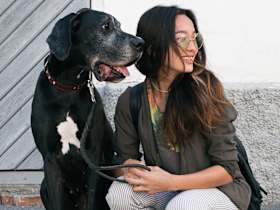
Combining the Great Dane’s height and the Mastiff’s weight, Daniffs can reach up to 230 pounds and 36 inches at the shoulder. Their massive stature can lead to joint issues and a shorter lifespan of seven to 10 years.
These mixes come in many colors and may have a black facial mask. Drooling is common, and their floppy ears add to their soft, expressive appearance. Daniffs have a calm, tolerant nature that makes them surprisingly easygoing family dogs for homes with children and plenty of space.
Estimated size: 110 to 175 pounds
Activity level: Moderate
Best trait: Friendly, protective, gentle

Oleh Strus / iStock
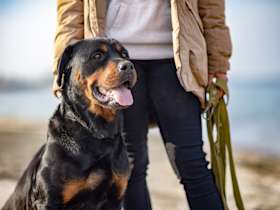
With two guardian breeds as parents, this Mastiff-Rottweiler mix often takes their role seriously. They’re best suited for experienced pet parents seeking a protective companion and willing to provide consistent training and socialization.
Despite their size, Mastweilers are likely to be calm indoors and don’t need intense exercise, but they do require enough space to stretch out and relax.
Estimated size: 80 to 160 pounds
Activity level: Low to moderate
Best trait: Protective, loyal, intelligent

FatCamera / iStock
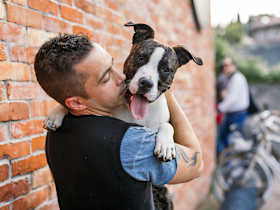
Mastibulls (also called Pit Mastiffs) are typically more energetic and outgoing than purebred Mastiffs. Their Pit Bull heritage often results in friendly, people-loving dogs who thrive on attention and interaction.
Pit Bull–Mastiff mixes tend to form deep bonds with their families and may struggle if left alone too often. Early socialization is essential to help them grow into confident, well-adjusted adults.
Estimated size: 100 to 140 pounds
Activity level: Moderate
Best trait: Outgoing, affectionate

Dastin50 / Dreamstime.com
Depending on training, this Mastiff-German Shepherd mix can be an excellent guard dog or a challenge to manage. Mastiff Shepherds are typically very loyal and protective, and their size makes proper training essential.
Mastiff Shepherds are intelligent, eager to please, and more energetic than most Mastiffs, so they need both physical exercise and mental stimulation. With structure and consistency, they can become devoted, well-mannered companions.
Estimated size: 75 to 160 pounds
Activity level: Moderate to high
Best trait: Energetic, protective

FotoCorn / Adobe Stock
Mastadors often blend the Mastiff’s calm demeanor with the Labrador Retriever’s friendly, highly social personality. Some Labrador Retriever–Mastiff mixes are more outgoing than purebred Mastiffs, though temperament will depend on which traits they inherit and the dog’s individual personality.
Many Labrador Retriever–Mastiff mixes are affectionate, family-oriented dogs who still benefit from early socialization to keep protective instincts in check.
Estimated size: 85 to 160 pounds
Activity level: Moderate
Best trait: Social, calm

israel / Adobe Stock
This mix combines the Mastiff’s size with the Boxer’s playful energy. Boxer-Mastiff mixes can be goofy, expressive, and full of personality. They might enjoy activity and playtime, but shouldn’t be pushed too hard, because their joints are vulnerable to injury. Consistent training and positive reinforcement help them overcome the Mastiff’s stubborn streak and the Boxer’s short attention span.
Estimated size: 65 to 170 pounds
Activity level: Moderate to high
Best trait: Playful, silly

Let’s talk logistics, lifestyle, and if your couch is ready for their size.
Mastiff mixes are relatively low-maintenance when it comes to grooming, but their size impacts nearly every aspect of daily life.
Strength and size matter: Durable toys are a must, because weaker ones can break apart and become choking hazards. Leashes, collars, and harnesses need to be rated for giant breeds. A flimsy clip or thin leash can fail fast when a powerful dog decides to move with purpose.
Food is a big commitment: Adult Mastiffs can eat up to two-and-a-half pounds of large-breed food per day, and meals should be split into multiple feedings to help prevent bloat. They’re also prone to joint issues such as hip dysplasia, so weight management is key.
Think about your environment: Mastiff mixes don’t love the heat and tend to overheat easily, especially in warm weather. Shade, fresh water, and air conditioning are musts. There are indoor considerations, too: Tight hallways, narrow staircases, and small furniture can become daily obstacles. These dogs need room to turn around without knocking things over.
Regular exercise is required: Although they don’t need intense exercise, regular walks help keep them healthy and prevent obesity. And even if they’d rather nap, they’ll always be happy to soak up your attention.
Handling strength matters: Lifting, redirecting, or assisting a large dog who is injured or aging can be physically demanding. Mastiff mixes can also unintentionally knock over kids or seniors simply due to their size, even when they’re being gentle. Everyone in the household should be comfortable managing a big body and strong movement.
Many Mastiff mixes end up in shelters simply because their size can be overwhelming for unprepared pet parents. Adopting one not only saves a life but opens space in the shelter for another dog in need. Check local shelters, breed-specific rescues, or use Adopt a Pet’s search tools (where you can filter dogs by age, color, breed, and more) to find Mastiff mixes available near you.
Female Mastiff mixes typically weigh between 120 and 170 pounds, while male Mastiff mixes can reach 160 and 230 pounds. Heights for these crossbreeds depend on their parent breeds, but they often range from 28 to 36 inches at the shoulder.
Yes, Mastiff mixes are prone to bloat. Gastric dilatation-volvulus, commonly known as bloat, is a serious and potentially life-threatening condition. Feeding smaller, spaced meals and avoiding vigorous activity after eating can help reduce the risk of GDV.
Mastiff mixes are absolutely good dogs for the right adopter. Their calm, affectionate nature makes them wonderful companions for many homes. But due to their size, exercise needs, and temperament, they may require an experienced pet parent.
Most Mastiff mixes live between six and 12 years.
Yes, Mastiff mixes do best with positive reinforcement training. They’re smart and eager to please and benefit from consistent, positive training. Short sessions, clear routines, and rewards for good behavior work best.

Liz is a freelance writer based in Phoenix, Arizona, with a passion for all animals and a master’s degree in nonprofit management and contemporary animal services leadership. After running her own cat rescue organization for 5 years, she dedicated the next 18 years of her career to Best Friends Animal Society. Today, Liz shares her expertise with animal rescues, shelters, and other animal-related businesses as an independent consultant. In her leisure time, she enjoys painting, hanging out with her three feline companions, and embarking on mountain adventures with her senior American Bulldog/Mastiff mix.

Breed Info

Breed Info
Breed Info
Breed Info
Find your loyal sidekick among this list of popular mixes and breeds.
Adoption Advice
Breed Info
Read up on large dog breeds and what it takes to keep them happy.
Behavior & Training

Breed Info
Discover the factors affecting a dog’s lifespan, and learn why size matters for your pet’s longevity.
Breed Info
These mellow pups are here to match your homebody energy.