Why Is My Dog Resource Guarding Their Favorite Human?
If you don’t address this behavior early on, it can become a problem.
If you don’t address this behavior early on, it can become a problem.
by Jackie Brown, expert review by Mia Nguyen, CPDT-KA, FFCP | December 10, 2025

Mary Swift / Adobe Stock
Resource guarding — when a dog possessively growls, snaps, or blocks access to something or someone — is a common canine behavior. And it can cause problems if not properly addressed. Dogs often resource-guard food, toys, or spaces (such as a coveted spot on the couch), but they can also “guard” their favorite person and react when that person is approached by other humans or dogs.
Resource guarding can disturb relationships between the dog and human family members, as well as between the dog and other dogs in the household. If left unchecked, extreme resource guarding can even lead to biting incidents, putting both people and the dog in danger. The good news is that you can manage and eliminate resource guarding before it gets out of control, restoring peace and harmony to your home.
Resource guarding is an instinctual behavior seen in many animals, including dogs. Evolutionarily, this behavior was meant to help animals protect limited resources (water, food, territory, and so on) so they aren’t stolen by other animals. This survival strategy serves animals well in the wild, but it can become problematic when it pops up in domesticated animals living with human families.
Dogs commonly guard food, favorite chew toys, and spaces that provide status (such as couches or the bed). But they can also guard a favorite human in the house, including their physical body and the attention they dole out to other people and dogs.

If your dog is intense about protecting their food, it’s important to address their behavior. Here’s how.
Signs that a dog is resource guarding a person can start so subtly that they might be missed. At first, you might enjoy the extra love and attention that comes when the family dog singles you out as their favorite. Subtle guarding behaviors might even seem funny at first — a harmless and silly quirk from your dog. Over time, however, the guarding can escalate and cause upsetting behaviors that no longer feel safe.
Here are some common signs that a dog is resource guarding a person, starting from mild resource guarding, then moving to moderate and severe guarding behaviors.
Positioning their body between the person and perceived “threats” (other dogs or people)
Directly staring at other dogs or people (a hard stare) when sitting close to their favorite person
Stiffening their body when their person is approached
Growling or lifting their lip (baring teeth) when another person or dog approaches their favorite person
Barking when another person or dog approaches
Snapping when another person or dog gets too close to their favorite human
Barking when anyone gets too close to their favorite person
Aggressively lunging at other people or dogs who approach
Biting other dogs or people who approach
Despite what you might have read on social media or heard from family or friends, resource guarding is not about dominance. It’s also not about jealousy. Although the symptoms look like aggression, the behavior is generally rooted in anxiety and insecurity. The dog is worried that their favorite person will be taken away, so they do what they can to prevent that from happening. We know that worry is unfounded, but a perceived risk to the permanence of their favorite person is real to the dog.
It’s difficult to know exactly what causes a dog to resource guard, especially when it’s a person. If the dog had early experiences with food insecurity, they might resource guard food and other objects of value — including you. If your rescue dog has bounced around several animal shelters or foster homes, they might feel insecure about their resources, including food and connection with safe people.
Dogs who resource guard a person might have also become overly attached to that person due to a lack of self-confidence. The presence of their favorite person makes them feel safe, so they do what they think they need to do to keep you from being taken away. Some experts theorize that resource guarding might even be genetic.
Regardless of the cause, resource guarding can be managed with training and modifications to a home environment and interactions with the dog. It’s important to address resource guarding as soon as you recognize it. The more a dog repeats a behavior and realizes it pays off, the more this behavior settles into their routine — and the harder it becomes to change.
Resource guarding is a complex behavior to modify, especially when the dog is guarding a person. In most cases, you should work with a professional to desensitize and countercondition your dog’s behavior.
If your dog’s resource guarding has already moved into the moderate or severe category (the dog is growling, barking, lunging, or biting when another person or dog approaches), a certified behavior consultant, a veterinary behaviorist, or a certified applied animal behaviorist (CAAB) is your best bet. While most dog trainers work on good manners, leash walking skills, and other basic dog behaviors, these other specialized professionals often have advanced training in serious canine behavior. These professionals are invaluable for helping dogs and people when the behavior has become practiced or has escalated to the point of aggression or biting. Your veterinarian can provide a referral.
If the resource guarding is mild, a certified professional dog trainer or behavior consultant can help implement a behavior modification plan. Start trying some of these strategies at home while you’re looking for a behaviorist or trainer.
Note where and when the guarding behavior occurs, and what happens just before. It can be helpful to keep a journal to find patterns.
While addressing the behavior, ensure the dog isn’t allowed to perform guarding behavior with their person. The more the dog exhibits guarding behavior, the more ingrained it will be. For instance, if your dog growls when your spouse sits next to you on the couch, use baby gates, crates, or pens to separate the dog from you when you both watch TV in the evenings.
If you have been the dog’s main caretaker, have other family members feed, walk, train, and play with the dog without you present to increase their bond and decrease your dog’s dependence on you.
Resource guarding is more pronounced when dogs feel stressed. To reduce your dog’s overall stress levels, feed pets separately and provide separate spaces for them to relax. Provide abundant resources (toys, beds, and so on). Utilizing plug-in dog pheromone diffusers in the spaces your dog spends time can help them feel calmer and less anxious.
As the adage goes, “A tired dog is a good dog.” A tired dog is also a calmer, less-stressed dog. Walk your dog for 30 minutes twice a day at a minimum to help decrease their stress levels and increase their mental stimulation. Active, athletic dogs (think herding breeds and sporting dogs) might need much more than this: Up to two hours a day of vigorous exercise can do wonders for their physical and mental well-being.
If your dog is resource guarding you because they are overly attached and lacking self-confidence, get them positive-reinforcement training. These classes can provide socialization experiences where they can meet people and pets in new places (bring plenty of tasty treats) and challenge their brains with puzzle toys.
These cues can help decrease guarding behavior and create positive associations with sharing. A trainer or behaviorist can show you how to get started.
Don’t get angry or aggressive with your dog when they growl, bark, or display other guarding behavior. Growling is simply communication. Focus on preventing the behavior by modifying the environment and your own behavior, while working with a professional on desensitization and counterconditioning.

Vivian Zottola, MSc, CBCC, has all the answers (not to mention helpful dog-training tips) to transform your unhappy pooch into a calm, content dog.
Resource guarding can become dangerous if it escalates to the point of biting. This can be especially problematic if you have kids at home. It’s important to keep them safe while you work with a professional. Talk to kids about giving the dog plenty of space and backing off if the dog growls. In some cases, you might need to use physical barriers (gates, crates, or pens) to keep kids and dogs separated.
It’s easier to prevent resource guarding than it is to eliminate the behavior once it is ingrained. Whether you adopt a puppy or an adult dog, take some steps to lessen the chances that your dog will resource guard. Here are some tips.
Provide socialization and training to build your dog’s confidence
Teach “bring it,” “give it,” “take it,” and “leave it” to teach cooperation, self-control and limit possessiveness
Feed pets separately at scheduled mealtimes
Have all family members participate in the care and feeding of the dog
In multi-dog households, occasionally spend time with each dog separately, rather than always walking and playing with the dogs together
Recognize the early signs of resource guarding and act promptly to manage it
Signs of resource guarding behavior in dogs include stiffening or tensing their body, eating food very quickly when others approach, blocking an item with their body, staring down people or pets who approach the item, lifting their lips, as well as snarling, growling, snapping, and biting.
You can take many steps to prevent or reduce your dog’s resource guarding behavior toward you, including managing your dog’s access to high-value items, feeding pets separately, and working with a professional behaviorist on a behavior-modification program.
Yes, resource guarding in dogs is sometimes incurable, but this is rare and generally occurs when the behavior has escalated and persisted without intervention. When addressed early, many cases of resource guarding in dogs can be improved or eliminated.
If you have an aggressive dog, connect with a certified behavior consultant or trainer and contact your veterinarian for an evaluation to determine what might be causing the aggression and find out how you can help. If you have an aggressive dog who cannot be handled or poses a danger to people or other animals, contact your local animal control authority for help.
“Anxious Behavior: How to Help Your Dog Cope with Unsettling Situations.” Cornell University College of Veterinary Medicine, 3 Aug. 2022, www.vet.cornell.edu/departments-centers-and-institutes/riney-canine-health-center/canine-health-information/anxious-behavior-how-help-your-dog-cope-unsettling-situations.
College, Animal Behavior. “Signs Your Dog Is Protective over You.” Animal Behavior College, 24 Apr. 2018, www.animalbehaviorcollege.com/blog/lifestyle/is-my-dog-protecting-me-or-is-he-scared/.
Jacobs, Jacquelyn A., et al. “Factors Associated with Canine Resource Guarding Behaviour in the Presence of Dogs: A Cross-Sectional Survey of Dog Owners.” Preventive Veterinary Medicine, vol. 161, Dec. 2018, pp. 134–42, doi.org/10.1016/j.prevetmed.2017.02.004.
Madson, Cathy. “Resource Guarding in Dogs: What to Do (and What NOT to Do).” www.preventivevet.com, 28 July 2020, www.preventivevet.com/dogs/resource-guarding-in-dogs.
Miller, Pat. “Eliminate Aggressive Dog Guarding Behaviors - Whole Dog Journal.” Whole Dog Journal, 19 Aug. 2001, www.whole-dog-journal.com/behavior/resource-guarding/eliminate-aggressive-dog-guarding-behaviors.
“Resource Guarding: Treatment and Prevention.” The Other End of the Leash, 3 May 2013, www.patriciamcconnell.com/theotherendoftheleash/resource-guarding-treatment-and-prevention.
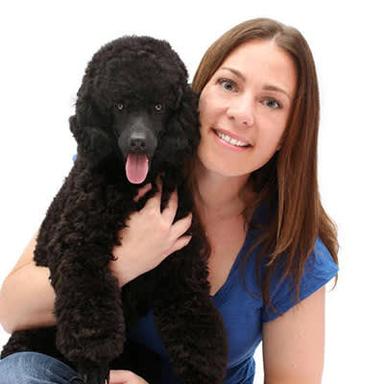
Jackie Brown lives in sunny Orange County, CA, where she works as a freelance writer and editor. When she’s not on deadline, you can find her paddling her outrigger canoe in the Pacific Ocean or hiking in the foothills with her miniature poodle and two young boys.
Behavior & Training

Behavior & Training

Behavior & Training

Behavior & Training
A guide to recognizing and understanding trauma in your new rescue, and how to help them heal.
Shelters & Rescue
Looking to adopt from a shelter? This guide will help you familiarize yourself with common shelter terminology about both the adoption process and pet profiles.
Behavior & Training
Because the pros of neutering your pup far outweigh any cons, especially when it comes to their behavior.

Rehome
There are many resources to help new pet parents troubleshoot even the most frustrating adoption issues. But if those still don’t help, here’s what to do next.

Adoption Advice
Deliberating between the two? One is more affordable, comes with fewer health issues, and saves a life.

Pet Wellness
Too much of a good thing is not a good thing. Find out why spaying or neutering is a smart choice for your pet and the community.