Blue Heeler Mixes: Which One Is Right for You?
Australian Cattle Dogs (or Blue Heelers) can be a handful. But when mixed with other breeds, they may be more your speed.
Australian Cattle Dogs (or Blue Heelers) can be a handful. But when mixed with other breeds, they may be more your speed.
by Jackie Brown, | April 30, 2026

OlgaOvcharenko / Adobe Stock
Blue Heelers are beautiful, intelligent, hard-working dogs. But this breed and their mixes are not for everyone. Due to their working heritage and high activity levels, Blue Heelers are a lot of dog — often too much for the average family, unless you’re looking for a working dog, running partner, or are passionate about training dogs for outdoor activities.
Many Blue Heeler mixes, though, can be good choices for family pets — especially when they are mixed with mellower breeds. The key is to figure out which Blue Heeler mix fits your lifestyle. Below are a few tips to help you find the right mix.
Liudmila Bohush / Shutterstock
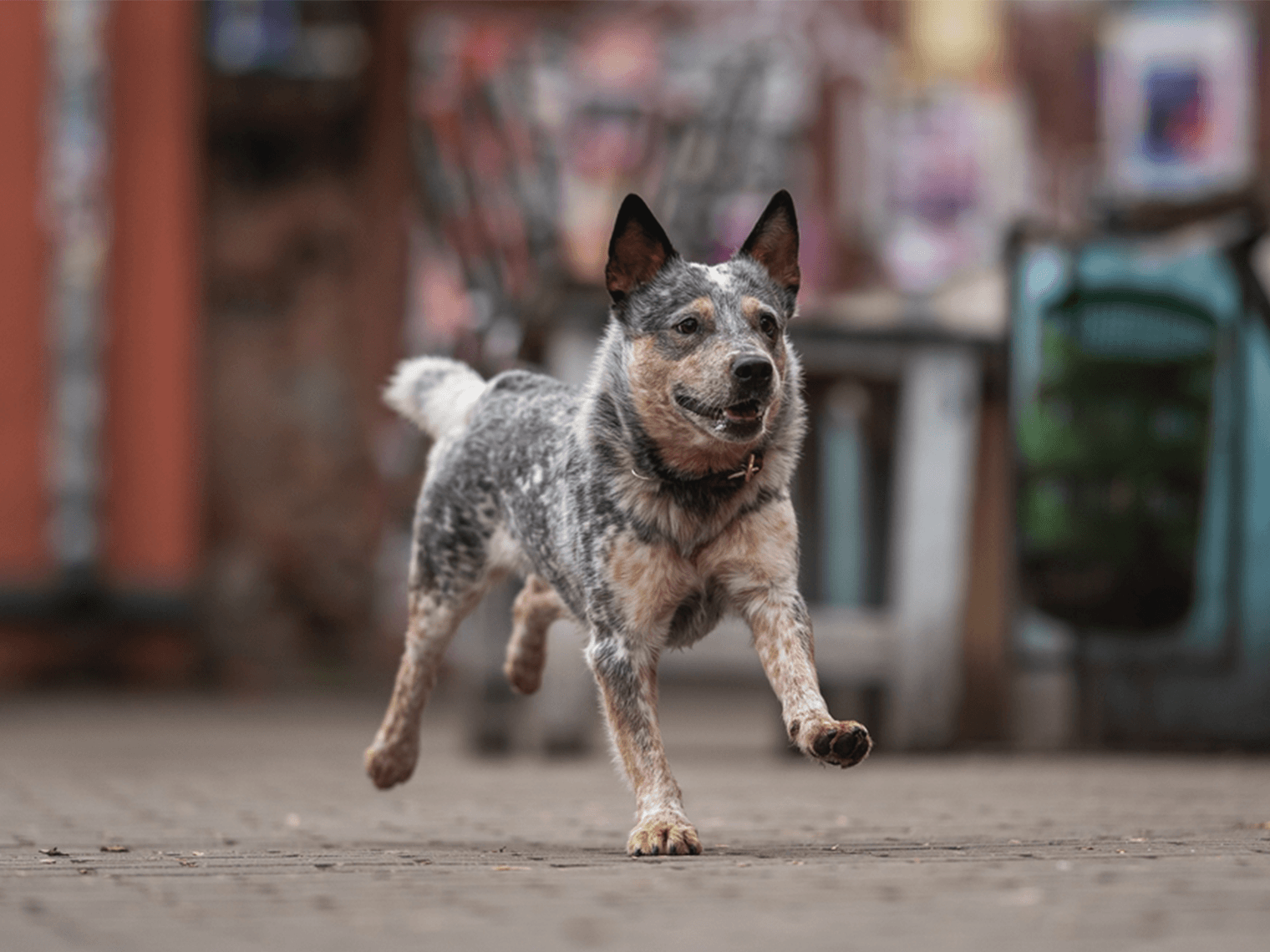
Did you know that Blue Heeler is not an official breed name? Blue Heeler is a nickname for blue-colored Australian Cattle Dogs. Australian Cattle Dogs also come in red, commonly called Red Heelers. You might also see this breed referred to as a Queensland Heeler, after the state in Australia where the breed originated. All these heeler nicknames make sense when you learn that the breed was originally called the Australian Heeler when first developed (the name was later officially changed to “Australian Cattle Dog”).
Australian Cattle Dogs are medium-sized dogs, weighing 35 to 50 pounds. Their short, straight, hard double coat is easy to care for with weekly brushing and the occasional bath.
Whether blue or red, Australian Cattle Dogs are about as intense as they come. They were bred to herd cattle, which requires canine athleticism with tons of agility, endurance, and a tough-as-nails mentality. They’re also extremely intelligent, able to make decisions independently but also take direction from their handler.
Australian Cattle Dogs have extreme energy levels compared to many other breeds. More than just being lively, Australian Cattle Dogs have loads of stamina and drive to work. This breed will never be content with a few walks a day and hanging out in the backyard. To thrive, Australian Cattle Dogs need many hours of daily high-intensity exercise in the form of running, hiking, or swimming. They do best living on property with lots of space to roam and explore, but they can live in suburban neighborhoods if pet parents are very diligent about providing enough exercise and mental engagement.

If you’re a fan of pups like Shepherds, Collies, and Rottweilers, start here to learn more about what to expect once you adopt one of these smart dogs.
Supremely smart, the Australian Cattle Dog is extremely trainable. They want to please their people, so they are eager to learn new skills and put them into practice. However, that big brain means these dogs get bored quickly. Most dogs are happy to master the basics and call it a day. But to keep an Australian Cattle Dog engaged, training should be continuous, so they are always learning and working throughout their life.
The Australian Cattle Dog is a loyal, protective, and very engaged dog. They’re often described as Velcro dogs because of their extreme attachment to their people. Wherever you go, your Australian Cattle Dog will be right by your side. Hopefully, your day involves lots of work and movement outdoors, where the Australian Cattle Dog is happiest. These dogs can be wary of strangers on their property, so socialization in early puppyhood is key to prevent shyness or overprotectiveness.
Australian Cattle Dogs can be wonderful family dogs, but they are generally recommended for kids who are five years and older and can follow instructions about how to behave with the dog. Australian Cattle Dogs enjoy playing with kids, but their intense herding drive can lead them to chase, bark at, and nip the heels of fast-moving children. Some also have less patience with kids than other breeds (such as Labrador Retrievers).

Michael J Magee / Adobe Stock
The Labrador Retriever is the second most popular purebred dog in the United States, so it’s not unusual to find Blue Heeler–Lab mixes in shelters and rescues. Although Labs have plenty of energy, they are certainly less active than Heelers, so this mix will likely be mellower than a purebred Blue Heeler. This mix tends to be highly trainable and could be a good choice for the average active family. Coat and grooming should be similar to those of a Blue Heeler. This mix is likely to weigh about 40 to 60 pounds.

AJ_Watt / iStock
The term “Pit Bull” encompasses several purebred dogs as well as mixes of these breeds. Pit Bulls are, therefore, extremely common — so this type of Blue Heeler mix is widely prevalent in shelters and rescues. This mix will be active, but is more likely to relax at home when they get sufficient daily exercise. Training a Blue Heeler–Pit Bull mix might take a little more effort than working with a purebred Australian Cattle Dog. But they want to please you, so your effort will pay off. Coat and grooming should be similar to those of a Blue Heeler. This mix tends to be 45 to 60 pounds, although they might be slightly smaller or larger.

Sandy Sarsfield / Adobe Stock
One of the most common breeds in the U.S., the German Shepherd Dog is often found in rural areas, much like the Australian Cattle Dog, so this mix is seen somewhat frequently in shelters and rescues. German Shepherds have a love of learning and a work ethic similar to an Australian Cattle Dog, so this mix should be quite easy to train. Though slightly less intense, this mix will likely need as much exercise as a purebred Heeler (two-plus hours daily) to be happiest. Their coat might be longer than a Blue Heeler’s and need more frequent brushing. This mix will likely be on the bigger size, about 50 to 70 pounds.

Sean-ONeill / Shutterstock
The Australian Shepherd half of this mix is as energetic and driven as a Blue Heeler (if not more), so these dogs generally need more than two hours of intense exercise per day — plus lots of mental workouts in the form of training or (preferably) a job to do. The coat might be longer than a Blue Heeler’s, but should still be easy to care for with weekly brushing. This mix usually weighs 40 to 55 pounds.

Mary H. Swift / Alamy
If you think a Blue Heeler–Australian Shepherd mix is intense, get ready to level up for the Blue Heeler–Border Collie. To be honest, this mix is best-suited for ranch life and real work rather than the average family home due to their high energy, exercise, and mental engagement needs. The coat of this mix might be short or slightly long, but shouldn’t need much grooming. This mix typically weighs in at 35 to 45 pounds.

Sean-ONeill / Shutterstock
Although Blue Heeler–Husky mixes are not as common as some other Heeler mixes, it would not be surprising to find one in a shelter setting. Both of the parent breeds are challenging to raise: When you combine their similar high-energy levels and restless drive to work, it’s understandable that this mix just might be too much for your average pet home. However, this could be an exceptional dog for very active, outdoorsy people who want to do a lot with their canine companion. This mix typically weighs in the 40- to 55-pound range.

Timi Drake / Alamy
A Blue Heeler–Beagle mix will likely be a great fit for many families. The Beagle’s happy-go-lucky personality mellows out the intensity of the Blue Heeler, leading to a dog who is content to hang out in the house, as long as they get one to two hours of exercise each day. Beagles are also famously tolerant and friendly with children of all ages. This mix might be a touch harder to train than a purebred Heeler, but their charming temperament makes it easy to forgive them for any missteps. Barking and howling can be an issue, so this is not the best pet for apartment living. This mix is often 35 to 50 pounds.

Preeya / Adobe Stock
What is a supermutt, you might ask? This term describes a dog who’s a mix of different breeds, bringing a lot of genetic diversity. Every Blue Heeler supermutt will be unique. If you know a Heeler is in the mix, you can anticipate some of their known traits, but they will probably be diluted by the characteristics of the other breeds in the dog’s ancestry. Depending on their specific temperament and energy levels, a Blue Heeler supermutt could be a good choice for families.
Blue Heelers and Blue Heeler mixes are commonly surrendered to animal shelters and rescues because people underestimate their needs. Heelers who aren’t properly socialized as puppies and who don’t get enough exercise, training, and attention can become frustrated, restless, and overly protective.
Without daily work to do and one to two hours of vigorous exercise, Blue Heelers can display obsessive behavior (barking, pacing, escape attempts, and chasing cars, bikes, or people). Bored and understimulated Heelers can also turn to destructive behavior, such as digging and chewing. Such behaviors may be amplified when a Blue Heeler is mixed with another high-needs breed, such as a Siberian Husky or Border Collie.

We asked a trainer for tips on how to calm high-energy dogs.
When these dogs are surrendered, it’s not the fault of the dog, but a mismatch between dog and family. Dogs like Blue Heelers do best living on ranches, farms, or in the country where homes have lots of property. In the best cases, the Heeler has a job to do (helping out on a ranch) or trains for a high-energy dog sport like herding trials, agility, or flyball. Blue Heelers can live in more urban environments, but it takes a lot of dedication from the pet parent to be a good leader, socialize and train consistently, and provide some kind of work for the dog as an outlet for their energy and to stimulate their brains.
If you live on a ranch or want to train a dog for serious activities and work, a Blue Heeler mixed with another herding breed might be just what you’re looking for. First-time pet parents, people who work long hours, and families with kids younger than five should look for Blue Heelers mixed with mellower breeds with less energy and drive.
Either way, every Blue Heeler mix is unique, so it’s crucial to consider the specific dog when determining if they are a good fit for your family and lifestyle. If you’re not sure, ask the shelter workers or rescue volunteers for their honest opinion.
You can adopt a Blue Heeler mix through your local animal shelter or rescue group. Start with a search on Adopt a Pet to find adoptable Blue Heeler mixes near you.
The most common Blue Heeler mix in the United States is the Blue Heeler–Pit Bull mix. Their prevalence is due to the fact that various Pit Bulls and their mixes are the most common breeds found in shelter and rescue populations.
Blue Heeler mixes can be good family dogs, depending on the other breeds in the mix. Typically, they are recommended for families with kids aged five and older. Each mix is an individual, so some will be better suited as family dogs than others.
A Blue Heeler mix needs one to two (or more) hours of exercise daily, depending on the other breeds in the mix as well as the individual dog’s specific level of energy and drive.
Blue Heeler mixes can be easy to train, depending on the other breeds in the mix. Blue Heelers are intelligent and highly trainable, and many Blue Heeler mixes share this trait.
ACDCA. “Breed History.” Australian Cattle Dog Club of America, www.acdca.org/breed-history.
ACDCA. “ACD Breed Working Standard.” Australian Cattle Dog Club of America, 29 Dec. 2022, www.acdca.org/acd-breed-working-standard.
Haid, Melanie. “The Most Popular Dog Breeds of 2025: French Bulldog Holds Top Spot.” American Kennel Club, 18 Mar. 2026, www.akc.org/expert-advice/dog-breeds/most-popular-dog-breeds-2025.
Latimer, Matt. “American Kennel Club.” American Kennel Club, 6 Nov. 2017, www.akc.org/dog-breeds/australian-cattle-dog.

Jackie Brown lives in sunny Orange County, CA, where she works as a freelance writer and editor. When she’s not on deadline, you can find her paddling her outrigger canoe in the Pacific Ocean or hiking in the foothills with her miniature poodle and two young boys.

Behavior & Training

Behavior & Training

Breed Info

Breed Info
From Border Collies to Golden Retrievers, we’ll point you toward the breeds who excel in obedience.

Breed Info
Even though smaller dogs live longer, big dogs can still pack a healthy punch.

Breed Info
Find your loyal sidekick among this list of popular mixes and breeds.
Breed Info
Are you thinking of adopting a dog that is easy to care for? Here is what it takes to keep them happy and healthy.
Breed Info
Looking for an adorable pet who can double as an awesome running buddy? Read on for some suggestions.

Behavior & Training
Dogs whine for a lot of reasons. Understanding why can help you minimize this behavior.

Breed Info
Meet the dog breeds who got their start on American soil.

Shelters & Rescue
These cruel, unethical businesses are often hiding in plain sight. Here’s how to spot them.

Breed Info
What makes a dog’s coat so unique? We explain the genetics behind everything from coat color to coat patterns, in a way that’s easy to understand.