What to Put in Your Dog’s Crate at Night
Optimizing their crate experience can make all the difference in ensuring they rest comfortably in it.
Optimizing their crate experience can make all the difference in ensuring they rest comfortably in it.
by Mia Nguyen, CPDT-KA, FFCP, | October 10, 2025

Amber Sallot / Shutterstock
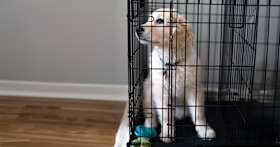
Creating a safe, comfortable nighttime environment for your dog is an important part of crate training. A crate should feel like a cozy den where your dog can relax, sleep soundly, and feel secure. Choosing what to put inside the crate at night can make all the difference in helping them settle down and build positive associations with this space. From bedding and toys, to water and comfort items, knowing what belongs and what doesn’t can set up your dog for a restful night, while keeping them safe.
When it comes to setting up your dog’s crate for the night, a few simple must-haves can make all the difference. The goal is to create a space that feels safe, cozy, and inviting — somewhere your dog actually wants to curl up and settle.
From comfy bedding to the right kind of toys, choosing these essentials helps your dog rest peacefully while also giving you peace of mind. Here are some nighttime crate must-haves that will keep your dog happy and comfortable as they sleep.
Dog crate pad, blankets, or bedding to create a cozy, comfortable, inviting space. Some dogs can destroy softer bedding, so keep your dog’s habits in mind when choosing bedding for their crate, to make sure your dog is safe throughout the night.
Blankets or a crate cover to lay over the crate can help block out sounds and visuals, giving your dog the best environment for settling and resting. Some dogs do best with a den-like environment, which can be created using a crate cover.
Crate-safe plushies or toys can help make your dog’s crate a comfortable place for their favorite activities. If your dog tends to destroy their toys or tries to eat them, this may not be a safe option.
A worn T-shirt or blanket with your scent placed in the crate can comfort your dog and help them feel secure at night. But it’s best to avoid this option if your dog tends to chew or ingest fabric.

Healthy habits to build with your new dog, plus how to create a schedule that works for both of you.
But avoid leaving food and water in your dog’s crate overnight. Food and water can create a mess if they get tipped over, and the two are unnecessary overnight.
Crate training at night works best when you make bedtime a calm, positive routine. Start by crate-training for short periods throughout the day so they form positive associations with the crate. Be sure to do this before having them spend extended periods of time in the crate at night. With patience, consistency, and lots of reassurance, most dogs learn to see their crate as a safe, cozy place to sleep through the night.
Start by placing the crate in a quiet spot where your dog can still feel close to you. This helps ease anxiety.
Give them plenty of exercise and a potty break before bed so they’re ready to settle down.
Encourage your dog to enter the crate with a treat or favorite toy, then keep things calm and consistent.
Avoid making a big fuss or riling up your dog right before bedtime or when saying goodnight.
When crate training your dog at night, it’s just as important to know what not to do.
Avoid using the crate as a punishment, which can make your dog fearful of it instead of seeing it as a safe place. If your dog is distressed in the crate, slow down the crate-training process. Don’t put unsafe items inside, such as easily destroyed toys, loose bedding, or fabric that they might chew and swallow. Try not to leave food in the crate overnight, because it can cause messes and interrupt sleep. And make sure any water source is spill-proof.
Ideally, collars and harnesses should be removed when crating a dog overnight. Collars, especially those with tags, buckles, or loops, can get caught on the bars or in the crate’s latches, which poses a risk of choking or injury. For that reason, many trainers and veterinarians recommend removing your dog’s collar before crating, particularly overnight when you won’t be there to supervise. If you need your dog to wear identification for safety reasons, a breakaway or quick-release collar can be a safer option.
This depends on your dog. Many dogs like having a safe chew toy or comfort toy in the crate, making it feel more inviting and helping them settle down at night. On the other hand, if your dog tends to destroy or swallow toys, it’s safer to skip them and stick to sturdy, vet-approved chews. Or just leave the crate toy-free to avoid choking hazards.
A dog crate cover is used to make the crate feel like a cozy, den-like space by blocking out light, reducing distractions, and helping your dog feel safe and secure. Some dogs sleep more soundly with a cover because it creates a calmer environment, especially at night. Just make sure your dog doesn’t overheat and that the cover allows for plenty of airflow.
You can put a blanket over your dog’s crate if it helps create a calmer, den-like environment, but it’s important to make sure there’s enough airflow and that your dog doesn’t overheat or try to pull the blanket inside to chew on it. Some dogs find it soothing, while others may do better with an uncovered crate.
Usually, no, you should not leave water in your dog’s crate overnight, since it can spill and disrupt sleep. The exception is if your dog has a medical need or if your vet recommends it. In these cases, be sure to use a spill-proof bowl or bottle.
Cosgrove, Nicole. “What to Put in a Dog Crate for Safety & Comfort: Vet Approved Tips | Hepper Pet Resources.” Hepper Blog. https://articles.hepper.com/what-to-put-in-dog-crate.
“Crate Training Your Puppy at Night: Tips & Tricks.” Four Paws. www.fourpaws.com/pets-101/potty-time-and-training/crate-training-puppy-at-night.
“Dog Collar Safety Tips.” Ruffwear. ruffwear.com/pages/dog-collar-safety-tips.
Madson, Cathy. “Setting up Your Dog’s Crate for Comfort & Safety.” Preventive Vet, August 26, 2024. www.preventivevet.com/dogs/what-to-put-in-your-dogs-crate.
Morrison, Barri J. “Blanket Safety for Pets.” PetMD. www.petmd.com/dog/general-health/blanket-safety-for-pets.
Wallani, Shaneez. “Is It Safe for My Dog to Wear a Collar All the Time, Even at Night?” Petco. www.petco.com/content/content-hub/home/questions/01/38/646753.html.

Mia is a Certified Professional Dog Trainer and Behavior Consultant with a deep passion for helping dogs and their families build positive, lasting relationships. As the owner and trainer of Ace’s Pace based out of Sacramento, CA, she focuses on fear-free, science-backed techniques to guide pet parents through the nuances of dog behavior, training, and enrichment. Through a gentle, positive approach rooted in understanding and trust, Mia strives to help every dog live their best life, with the support and guidance that pet parents need to be successful. You can follow Mia and her life with dogs on Instagram at aces.pace.sacramento.
Behavior & Training
Adoption Advice
Behavior & Training

Behavior & Training
What you don’t want to do is force them to get used to their crate. Here’s what you should do.
Behavior & Training
Wondering how many hours you can leave your dog in their crate? Here’s what you need to know.

Behavior & Training
If it seems impossible, don’t fret. Every dog can be house-trained.

Behavior & Training
Whether for medical or practical reasons, it is never too late to teach your dog how to comfortably chill in a crate.

Behavior & Training
Behavior & Training